




Soap removes. Alcohol kills.
They solve different problems. Most people treat them as interchangeable.
The mistake most people make about clean hands
When people think about clean hands, they usually think about germs being killed.
That assumption quietly skips an important step.
-
Alcohol-based sanitizers are designed to kill microbes on contact.
-
They are not designed to lift or remove dirt, grease, or physical debris.
-
Anything that stays on your hands can still transfer to surfaces, food, or your mouth.
This isn’t about one product being “good” or “bad.”
It’s about understanding what each tool actually does.
A simple way to see the difference
SOAP — REMOVES
What it does:
-
Loosens dirt, oils, and debris from the skin
-
Lifts particles away from the surface
-
Allows contaminants to be physically removed
What happens:
-
Dirt and microbes are no longer on your hands
![]()

ALCOHOL — KILLS
What it does:
-
Inactivates many microbes on contact
-
Works best on visibly clean skin
What happens:
-
Microbes may be inactivated
-
Dirt, grease, and residue remain on the skin

Why this difference matters
Clean hands are not just about what’s dead.
They’re about what’s still there.
-
Dirt can trap microbes
-
Residue can transfer
-
Hands touch faces, food, toys, and surfaces constantly
If contaminants aren’t removed, the job isn’t finished.
So why does everyone rely on alcohol?
Because real life gets in the way.
-
Sinks aren’t always nearby
-
Water isn’t always clean or convenient
-
Wipes create waste
-
Carrying extra water isn’t realistic
Alcohol-based sanitizer became the default not because it does everything — but because it’s portable.
Clean isn’t about killing. It’s about removal.
For decades, soap and water worked because they combined two actions:
-
Soap lifts dirt and microbes
-
Water rinses them away
When water disappears, removal usually disappears with it.
Until recently, that was the tradeoff.
What happens when soap removes without water?
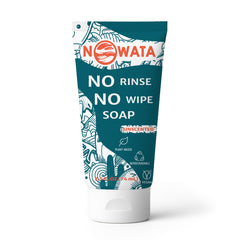
NOWATA was created to answer a simple question:
What if soap could still remove dirt and microbes — even when there’s no sink?
Instead of relying on alcohol, NOWATA uses a physical removal mechanism:
-
Soap binds to dirt, oils, and microbes
-
Particles coagulate together
-
The residue can be brushed off the skin
No rinsing. No wiping. No sticky film.
Just removal.
This difference has been lab tested
Independent laboratory testing using modified ASTM E1174 methods showed that NOWATA physically removed over 99.9% of tested viral and bacterial particles from skin under controlled conditions.
The key distinction:
-
Not just inactivation
-
Physical removal from the surface of the skin
If this made you pause, there’s more
Most people were never taught the difference between killing and removing.
Once you see it, you can’t unsee it.
Leave a comment