



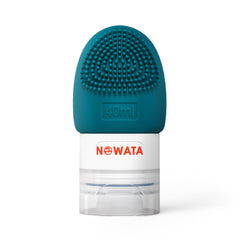

No, alcohol-based hand sanitizers don't kill norovirus, which is exactly why we stopped trying to kill germs altogether.
When Dr. Ruslan Maidans and Dr. Yalda Shahriari couldn't find a way to protect their own children from stomach flu germs without water or harsh chemicals, they asked a different question: Why are we trying to kill germs when we could simply remove them?
That insight changed everything.
Standard sanitizers target the fatty outer layer that norovirus doesn't have. The CDC confirms they're not effective. But NOWATA's plant-based clumping technology physically lifts and removes 99.9%* of germs—including norovirus surrogates—right off your skin. Swiss lab-tested using ASTM E1174 protocols, our rinse-free soap works where sanitizers fail.
No water. No residue. No compromise.
Below, you'll learn why removal beats killing when it comes to norovirus—and how two doctor-parents turned their family's solution into yours.
TL;DR Quick Answers
Does hand sanitizer kill norovirus?
No. Alcohol-based hand sanitizers do not kill norovirus.
Why it fails:
-
Norovirus lacks the fatty outer membrane that alcohol destroys
-
Its protein shell resists alcohol regardless of percentage
-
The CDC confirms sanitizers are not effective against this virus
What works instead:
-
Soap and water (20+ seconds) physically removes norovirus
-
NOWATA's clumping technology removes 99.9%* of germs without water
The insight that changed our approach: As doctor-parents, we stopped asking how to kill norovirus and started asking how to remove it. That question led us to develop NOWATA—a plant-based, rinse-free soap that lifts germs off your hands instead of failing to destroy them.
Top 5 Takeaways
-
Hand sanitizer does not kill norovirus. The CDC confirms that alcohol-based sanitizers cannot penetrate norovirus's protective protein shell, no matter the alcohol percentage.
-
Physical removal works where killing fails. Soap and water eliminate norovirus through friction, not destruction. The virus leaves your skin alive but gone. This insight led us to develop NOWATA's clumping technology.
-
The numbers demand action. Norovirus causes 21 million U.S. illnesses annually, requires only 18 particles to infect, and accounts for 58% of all foodborne illness. Relying on ineffective sanitizer puts families at unnecessary risk.
-
You don't need a sink to remove germs. NOWATA's plant-based formula physically removes 99.9%* of germs (Swiss lab-tested)—including norovirus surrogates—without water, wipes, or harsh chemicals.
-
We built this for our babies first. As doctor-parents, we created NOWATA because our family needed protection that actually worked. Now we're sharing it with yours.
Why Hand Sanitizer Fails Against Norovirus
Alcohol-based sanitizers work by dissolving the lipid (fatty) membrane that surrounds many viruses and bacteria. The problem? Norovirus doesn't have one.
As a non-enveloped virus, norovirus is protected by a tough protein shell that alcohol simply can't penetrate. The CDC states clearly that hand sanitizers are not a substitute for soap and water against norovirus—yet most people reach for that pocket sanitizer anyway, assuming they're protected.
They're not.
Norovirus particles can survive on surfaces for days and require as few as 18 viral particles to cause infection. When your only option leaves those particles sitting on your skin, you're carrying the risk with you.
The Science of Removal vs. Killing
Traditional hygiene products take a chemical warfare approach: deploy alcohol or antimicrobial agents to destroy pathogens on contact. This works well against many germs—but creates two problems.
First, it fails against resilient viruses like norovirus. Second, it leaves behind residue, dead germ particles, and the very chemicals used to kill them.
Physical removal takes the opposite approach. Instead of destroying germs where they sit, removal-based technology lifts contaminants completely off your skin. Nothing left behind. Nothing to resist.
This isn't a new concept—it's how soap and water have worked for centuries. We simply found a way to achieve that same physical removal without needing a sink.
How NOWATA's Clumping Technology Works
Dr. Ruslan Maidans and Dr. Yalda Shahriari spent two years developing a plant-based formula that binds to dirt, oil, and germ particles on contact. As you rub NOWATA into your hands, the formula forms visible clumps that trap contaminants within them.
Brush off the clumps, and the germs go with them.
Swiss laboratory testing using modified ASTM E1174 protocols confirmed that NOWATA physically removes over 99.9%* of tested virus and bacteria particles—including Murine Norovirus, a recognized human norovirus surrogate.
No water required. No chemical residue left behind. Just clean hands in three simple steps: apply, rub, brush off.
Why Removal Works Better for Norovirus
Killing requires vulnerability. The germ must have a weakness your product can exploit. Norovirus has evolved without that weakness—its protein shell resists alcohol, and it can survive extreme pH levels that would destroy other pathogens.
Removal requires only contact. If our formula can bind to it, we can lift it away. The germ's resistance becomes irrelevant because we're not fighting it—we're simply relocating it off your skin entirely.
This distinction matters most when you need protection without access to soap and water: playgrounds, hiking trails, airplanes, classrooms, and everywhere stomach flu spreads fastest.
Doctor-Made for the Moments That Matter
NOWATA wasn't developed in a corporate lab chasing market trends. It was created by two parents—a dentist and a biomedical engineer—who needed a better option for their own children.
Every batch meets the same standard they set from day one: would we use this on our babies? The answer has to be yes.
100% plant-based. No alcohol, parabens, or harsh chemicals. Readily biodegradable. And effective against the germs that scare parents most—including norovirus.

"When our kids got norovirus, we realized every product in our bag was designed to kill germs—but norovirus can't be killed that way. So we asked ourselves: what if clean hands didn't require destruction, just removal?"
— Dr. Ruslan Maidans, DDS, NOWATA Co-Founder
7 Essential Resources Every Parent Needs When the Stomach Bug Hits
We've all been there. It's 2 AM, your little one is sick, and you're frantically Googling whether that hand sanitizer in your bag actually does anything against norovirus.
Spoiler: it doesn't. But don't panic—we've gathered the most trusted resources to help you protect your family with facts, not fear.
1. CDC Prevention Guidelines: The Official Word on What Actually Works
Here's what the CDC says straight out: hand sanitizers don't work well against norovirus. Soap and water do. This is the resource Dr. Ruslan and Dr. Yalda referenced when they realized they needed to create something better for their own kids.
Why it matters: Confirms that physical removal—not chemical killing—is the key to norovirus protection.
URL: https://www.cdc.gov/norovirus/prevention/index.html
2. CDC Hand Sanitizer Facts: The Science Behind Why Your Pocket Sanitizer Falls Short
That 99.9%* germ-killing claim on your sanitizer? It doesn't apply to norovirus. This resource explains exactly why alcohol can't penetrate norovirus's tough protein shell—and names the other stubborn germs sanitizers miss.
Why it matters: Understanding the problem is the first step toward finding a real solution.
URL: https://www.cdc.gov/clean-hands/data-research/facts-stats/hand-sanitizer-facts.html
3. EPA List G: Your Cheat Sheet for Surface Disinfectants That Actually Work
When someone in your house gets the stomach bug, you need to disinfect everything. But not every cleaner cuts it. This EPA database tells you exactly which products have been lab-tested and proven effective against norovirus.
Why it matters: Clean hands are only part of the equation—contaminated surfaces can reinfect your family for days.
URL: https://www.epa.gov/pesticide-registration/epas-registered-antimicrobial-products-effective-against-norovirus-feline
4. CDC Norovirus Overview: Know What You're Dealing With
Norovirus isn't just "the stomach flu." It's incredibly contagious, survives on surfaces for days, and takes as few as 18 viral particles to make someone sick. This overview helps you understand why this bug is so tricky—and why standard sanitizers never stood a chance.
Why it matters: When you know how norovirus spreads, you can outsmart it.
URL: https://www.cdc.gov/norovirus/index.html
5. Mayo Clinic Norovirus Guide: Spot the Symptoms and Protect the Vulnerable
Norovirus hits everyone hard, but little ones, grandparents, and anyone with a weakened immune system face the biggest risks. Mayo Clinic breaks down symptoms, complications, and when to seek medical care.
Why it matters: Quick recognition means faster response—and less spread through your household.
URL: https://www.mayoclinic.org/diseases-conditions/norovirus/symptoms-causes/syc-20355296
6. CDC Handwashing Science: Master the 20-Second Method
Here's the thing about proper handwashing: it's not the soap that kills norovirus. It's the friction that physically lifts and removes it from your skin. This resource explains the science—and the technique—behind why removal works when killing doesn't.
Why it matters: This is the same principle behind NOWATA's clumping technology. We just made it possible without a sink.
URL: https://www.cdc.gov/clean-hands/data-research/facts-stats/index.html
7. CDC Food Worker Fact Sheet: Keep the Kitchen Safe
Here's a fact that keeps parents up at night: you can spread norovirus for two weeks after you feel better. This guide covers safe food handling practices that protect your family long after the worst symptoms pass.
Why it matters: The playground isn't the only danger zone. Your kitchen counter might be, too.
URL: https://www.cdc.gov/norovirus/communication-resources/facts-for-food-workers.html
The Numbers That Changed Everything for Us
When we started researching hand hygiene for our own children, we assumed the data would point us toward a better sanitizer. It didn't. Here's what we discovered—and why it led us to create NOWATA.
21 Million Cases Every Year
We knew norovirus was common. The actual numbers stunned us.
What the CDC reports:
-
19–21 million norovirus illnesses annually in the U.S.
-
1 in 15 Americans gets sick every year
-
Children under 5 have the highest rates: 21,400 cases per 100,000
What this meant for us: When you're watching your toddler touch every playground surface, and the sanitizer in your bag won't help—those numbers get personal fast.
Source: CDC Norovirus Facts and Statistics
58% of All Foodborne Illness
Dr. Ruslan saw it in clinical practice for years: families doing everything "right" with sanitizer—and still getting sick.
The CDC data explained why:
-
Norovirus causes 58% of all U.S. foodborne illnesses
-
50% of food-related outbreaks trace back to norovirus
-
70% of outbreaks involve food workers who used sanitizer, not soap and water
Our turning point: We stopped asking "how do we kill norovirus better?" and started asking "how do we remove it entirely?"
Source: CDC Norovirus Outbreaks
Handwashing Reduces Illness by Up to 40%
This data point confirmed we were on the right track.
CDC findings on soap and water:
-
Reduces diarrheal illness by 23–40% in communities
-
Reduces illness by 58% in immunocompromised individuals
-
Cuts school absenteeism from GI illness by 29–57%
Dr. Yalda's insight: Soap works through friction and physical removal—not chemical destruction. It doesn't kill norovirus. It lifts the virus off your skin,n so water washes it away.
The question that launched NOWATA: What if we could replicate the physics of soap and water without needing the water?
Two years of formulation and Swiss lab testing gave us the answer.
Source: CDC Handwashing Facts
900 Deaths Per Year
When people call norovirus "just a stomach bug," we share these numbers.
Annual U.S. impact:
-
900 deaths
-
110,000 hospitalizations
-
470,000 emergency department visits
-
2.3 million outpatient clinic visits
-
$2 billion in healthcare costs and lost productivity
Why we couldn't accept the status quo: As parents and healthcare professionals, we've seen what severe dehydration does to vulnerable patients. Families deserve protection that doesn't require finding a sink.
Source: CDC Administrative Database Analysis
18 Particles: The Number That Haunted Us
This statistic kept us up at night during development.
The math that changes everything:
-
Infection requires only 10–18 viral particles
-
One gram of contamination contains up to 1 trillion particles
-
That's a paper clip worth of material holding billions of infectious doses
Why "kill rates" don't matter: A 99%* kill rate still leaves billions of particles behind. Physical removal—getting particles completely off your skin—is the only approach that makes sense.
What our Swiss lab testing proved: NOWATA's clumping technology removes over 99.9%* of tested virus and bacteria particles, including Murine Norovirus (a human norovirus surrogate). No residue. No survivors. Just clean hands.
Source: CDC Norovirus Prevention Guidelines
What the Data Taught Us
After two years of research, formulation, and testing:
-
The problem isn't weak sanitizers. Alcohol works as designed—it just wasn't designed for norovirus. The virus's protein shell resists alcohol like a raincoat resists drizzle.
-
The solution isn't stronger chemicals. We didn't need something that kills norovirus. We needed something that removed it.
-
The answer was already in nature. Plant-based ingredients that bind to contaminants, form visible clumps, and lift germs away. No water. No harsh chemicals.
We created NOWATA for our own babies first. Now we're sharing it with yours.
21 million cases a year is too many. Your family deserves protection that works.

Final Thought: Why We Believe Removal Is the Future of Hand Hygiene
After everything on this page—the CDC data, the science behind norovirus resistance, the statistics that keep parents up at night—we want to leave you with something personal.
Our opinion. Based on two years of research, countless failed formulations, and raising our own children while developing NOWATA.
The Hand Hygiene Industry Has Been Asking the Wrong Question
For decades, the conversation has centered on one metric: kill rate.
99.9% killed. 99.99% destroyed. The assumption? Stronger chemicals equal better protection.
We believe this approach is fundamentally flawed.
Here's why:
-
Killing assumes every pathogen has a weakness to exploit
-
Norovirus doesn't have that weakness
-
Neither does C. difficile nor Cryptosporidium
-
These pathogens evolved to survive—and they're winning
Meanwhile, the simple physics of soap and water has worked for centuries. Not by killing. By removing.
What Two Years of Development Taught Us
When we started, we were parents first. Dr. Ruslan had just finished another long shift. Dr. Yalda was pregnant with our second child. We were exhausted and frustrated.
Frustrated because:
-
The sanitizer in our diaper bag couldn't touch norovirus
-
Wipes created mountains of trash we couldn't ignore
-
Proper handwashing required a sink we rarely had access to
We didn't set out to disrupt an industry. We set out to solve a problem for our own family.
The deeper we dug, the clearer it became: The future isn't finding new ways to kill germs. It's finding better ways to remove them—without water, without waste, without compromise.
Our Honest Opinion on Hand Sanitizer
We're not here to vilify sanitizers. They have their place.
Where they work:
-
Enveloped viruses like influenza and coronaviruses
-
Situations where soap and water aren't available
-
Quick protection against many common pathogens
Where they fail:
-
Norovirus (non-enveloped, protein-shelled)
-
C. difficile spores
-
Hands that are visibly dirty or greasy
What concerns us most: The CDC has said this for years. The science is clear. Yet most families still don't know. That's a communication failure—and one we're committed to fixing.
Why Physical Removal Changes Everything
When you remove germs instead of killing them, three things happen:
-
Resistance becomes irrelevant. We're not fighting the pathogen's defenses. We're relocating it off your skin. No protein shell can resist being lifted away.
-
Nothing gets left behind. No dead particles. No chemical residue. No alcohol drying out your child's hands. Just clean skin.
-
The solution works universally. Enveloped viruses, non-enveloped viruses, bacteria, dirt, oil—if our formula binds to it, we remove it.
This isn't a marginal improvement. It's a fundamental shift.
What We Want You to Remember
If you take one thing from this page:
Hand sanitizer does not kill norovirus. The CDC confirms it. The science explains it. Your family deserves to know.
When you have a sink: Use it. Wash for 20 seconds. Scrub between fingers. Dry completely.
When you don't: You now have another option. One that removes 99.9%* of germs without water. Plant-based. Gentle enough for your youngest. Created by doctor-parents for our families first—now for yours.
A Note from Our Family to Yours
We built NOWATA in our kitchen. We tested it on our own hands. Used it on our own babies before offering it to anyone else.
Our standard from day one: Would we use this on our children?
If the answer isn't an unequivocal yes, it doesn't leave our facility.
The stomach bug will always be part of family life. Walking into every situation with a sanitizer that doesn't work shouldn't be.
You deserve better. Your kids deserve better.
Now, better exists.
Next Steps: Protect Your Family Starting Today
You've seen the data. You understand why sanitizer fails against norovirus.
Now it's time to act.
Step 1: Share What You've Learned
Knowledge protects families. Spread the word.
Share this page with:
-
Your partner or co-parent
-
Grandparents and caregivers
-
Teachers and daycare providers
-
Fellow parents in your community
Step 2: Audit Your Hand Hygiene Kit
Check your diaper bag, car, or backpack right now.
Ask yourself:
-
Does my current solution work against norovirus?
-
Am I relying on sanitizer where it can't help?
-
What's my plan when there's no sink?
Common gaps:
-
Sanitizer only (doesn't stop norovirus)
-
Wipes that create waste
-
No outdoor/travel protection
-
False confidence after playground visits
What you get:
-
99.9%* germ removal (Swiss lab-tested)
-
80–100 uses per bottle
-
100% plant-based formula
-
No water, wipes, or waste
-
Safe for toddlers to grandparents
Our promise: 30-day satisfaction guarantee. If it doesn't work for your family, we'll make it right.
→ Order at NowataClean.com
Step 4: Place NOWATA Everywhere You Need It
One bottle is a start. Real protection means coverage everywhere.
Where to keep it:
-
Diaper bag — playgrounds, messy snacks, public outings
-
Car console — school pickups, road trips, drive-thru meals
-
Backpack — hiking, camping, outdoor adventures
-
Kitchen — quick cleanup when the sink's occupied
-
Office desk — shared spaces, before lunch
-
Travel bag — airports, hotels, restaurants
Pro tip: Keep a bottle at every "transition point"—anywhere you move from dirty to clean.
Step 5: Stay Connected
Follow @nowataclean on Instagram, TikTok, and Facebook for:
-
Science updates
-
Family health tips
-
Real-parent stories
Bookmark cdc.gov/norovirus for outbreak alerts.
Quick-Start Checklist
-
Share this article with one parent today
-
Check your bag for sanitizer-only gaps
-
Order NOWATA at NowataClean.com
-
Place it where you need it most
-
Teach your kids: apply, rub, brush off
Your Family Deserves Better
The stomach bug doesn't wait for convenient moments.
Your choice:
-
Keep using sanitizer, the CDC says doesn't work
-
Or try something that removes germs instead of failing to kill them
We made our choice. We built NOWATA for our babies.
Now it's your turn.
FAQ on "Does Hand Sanitizer Kill Norovirus"
Q: Does hand sanitizer kill norovirus?
A: No. This discovery changed everything for us.
What the CDC confirms:
-
Alcohol-based hand sanitizers do not work against norovirus
-
This is true regardless of alcohol percentage
-
Sanitizers are not a substitute for soap and water against this virus
Why it fails: Norovirus has a protein shell that alcohol cannot penetrate. The sanitizer isn't flawed—it just wasn't designed for this virus.
As a dentist and biomedical engineer, we understood immediately: we needed a completely different approach.
Q: Why doesn't hand sanitizer work against norovirus?
A: Dr. Yalda explains it this way: imagine trying to pop a balloon with a feather. The tool doesn't match the task.
How sanitizers work:
-
Alcohol dissolves the fatty outer membrane of many germs
-
This kills enveloped viruses like flu and coronaviruses
Why norovirus resists:
-
Norovirus has no fatty membrane
-
It's protected by a tough protein shell (capsid)
-
Alcohol passes right over it
Pathogens, the CDC says, resist alcohol:
-
Norovirus
-
C. difficile
-
Cryptosporidium
This is why we stopped trying to kill norovirus—and started asking how to remove it.
Q: What kills norovirus on hands if not hand sanitizer?
A: Here's what two years of research taught us: you don't need to kill norovirus. You need to remove it.
How soap and water actually work:
-
Soap doesn't destroy the virus
-
Friction and water physically lift particles of the skin
-
The virus leaves your hands alive—but gone
The insight behind NOWATA: We asked: what if we could replicate removal without water?
How our solution works:
-
Plant-based formula binds to germs and contaminants
-
Visible clumps form as you rub
-
You brush the clumps away—germs included
Swiss lab results (ASTM E1174 protocol):
-
99.9%* removal of tested pathogens
-
Includes Murine Norovirus (human norovirus surrogate)
-
No sink required
Q: How long does norovirus live on hands?
A: Norovirus stays infectious on hands for hours—potentially longer.
The numbers that kept us up at night:
-
Infection requires only 10–18 viral particles
-
One gram of contamination holds up to 1 trillion particles
-
That's a paper clip's weight containing billions of infectious doses
What Dr. Ruslan saw in clinical practice: Child touches contaminated surface → parents apply sanitizer → 24 hours later, whole family is sick.
The problem: That window between exposure and proper hygiene matters enormously. Sanitizer provides zero protection during it.
Our solution: NOWATA goes everywhere our family goes. You can't predict when exposure happens.
Q: What should I use instead of hand sanitizer for norovirus protection?
A: It depends on what's available.
When you have a sink (gold standard):
-
Wash with soap and water
-
Scrub for 20+ seconds
-
Clean between fingers
-
Dry completely
When you don't have a sink: This is why we created NOWATA.
Where sinks aren't available:
-
Playgrounds
-
Hiking trails
-
Road trips
-
Airplanes
-
School pickups
What NOWATA offers:
-
Plant-based, rinse-free formula
-
Removal physics instead of kill chemistry
-
99.9%* germ removal (Swiss lab-tested)
-
Safe for toddlers to grandparents
We built it for our own babies first. Now it goes everywhere our family goes.
Stop Asking "Does Hand Sanitizer Kill Norovirus?"—Start Removing Germs Instead
Now that you know the truth—hand sanitizer doesn't kill norovirus, but physical removal works—it's time to protect your family with a solution built for this exact problem. Visit NowataClean.com today and discover why thousands of parents are making the switch to the doctor-made soap that removes what sanitizers leave behind.
*Based on laboratory testing using a modified ASTM E1174 test, NOWATA physically removed over 99.9% of virus (Murine Norovirus, a human norovirus surrogate) and bacteria (E.Coli) particles from skin. Results do not imply disease prevention. For hand cleansing only.
Leave a comment