



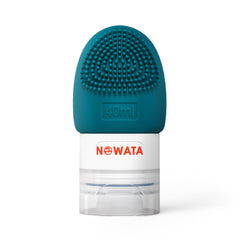

Hand hygiene prevents more infections than any other single intervention—yet most products leave something behind. Traditional sanitizers kill germs but leave dead residue on skin. Soap requires water that isn't always available. Wipes create waste and still miss what matters.
We faced this problem as parents first.
As a dentist and a biomedical engineer, we spent two years developing what we couldn't find: a plant-based soap that physically removes 99.9%* of germs without water, chemicals, or compromise. We created NOWATA for our own children—and learned that the science of removal outperforms the approach of killing germs.
Now we're sharing what we've discovered.
These free downloadable guides—a PowerPoint presentation and PDF resource—distill our research into practical tools for families, educators, and anyone who needs clean hands without a sink nearby. You'll find federal health data alongside the insights we gained developing and testing our clumping technology in Swiss laboratories.
Download your free hand hygiene resources below. No email required—just doctor-developed guidance to help protect the people you care about most.
Click here to download the guide.
TL;DR Quick Answers
What is hand hygiene?
Hand hygiene is the practice of cleaning your hands to remove dirt, germs, and pathogens that cause illness.
It includes:
-
Washing with soap and water
-
Using alcohol-based hand sanitizers
-
Applying rinse-free soap alternatives
Why it matters:
The CDC calls hand hygiene the single most effective way to prevent infection.
Key statistics:
-
Prevents 30% of diarrhea-related illnesses
-
Prevents 20% of respiratory infections
-
Your hands touch 300+ surfaces every 30 minutes
What we learned as doctors and parents:
Most hand hygiene methods require trade-offs.
-
Soap needs water (not always available)
-
Sanitizers leave residue behind
-
Wipes create waste
Our insight after two years of research:
Killing germs isn't the same as removing them.
Dead pathogens stay on your skin. Physical removal—lifting contaminants completely off—leaves nothing behind to spread.
That's why we developed NOWATA. A plant-based, rinse-free soap that physically removes 99.9%* of germs without water.
The bottom line:
Hand hygiene saves lives. The best solution is one you'll actually use—anywhere, anytime.
Top Takeaways
Here's what matters most:
1. Hand hygiene prevents illness—but only if you can actually do it.
The CDC data is clear:
-
Handwashing prevents 30% of diarrheal illnesses
-
It prevents 20% of respiratory infections
The challenge? Sinks aren't always available.
That's the gap we built NOWATA to fill.
2. Killing germs isn't the same as removing them.
Traditional sanitizers kill pathogens. But dead residue stays on your skin.
Physical removal works differently:
-
Contaminants lift completely off
-
Nothing left behind
-
Nothing left to spread
3. Alcohol-based sanitizers don't work on every pathogen.
Norovirus infects 19–21 million Americans annually.
It survives alcohol-based sanitizers. The outer shell is too tough.
The CDC recommends soap and water for norovirus. Why? The virus must be physically removed—not chemically killed.
4. The best hand hygiene solution is the one you'll actually use.
Compliance rates remain low despite decades of education.
The problem isn't knowledge. It's practical.
People who need better options:
-
Parents at playgrounds
-
Hikers on trails
-
Teachers in classrooms
-
Anyone without sink access
5. Effective, safe, and sustainable aren't trade-offs.
NOWATA delivers all three:
-
Plant-based formula
-
Gentle on sensitive skin
-
Saves up to two gallons of water per use
-
99.9%* germ removal (Swiss lab-tested)
Protecting your family and protecting the planet? You don't have to choose.

Click here to download the guide.
Why Hand Hygiene Matters More Than You Think
Your hands touch an average of 300 surfaces every 30 minutes. Each contact creates an opportunity for germs to transfer—to your face, your food, your family.
The numbers tell the story. According to the CDC, handwashing with soap could prevent approximately 1 in 3 diarrhea-related illnesses and 1 in 5 respiratory infections like colds and flu. The WHO reports that proper hand hygiene in healthcare settings alone could prevent up to 50% of healthcare-associated infections.
Yet compliance remains stubbornly low. Studies consistently show that fewer than 50% of adults wash their hands after using the restroom—and even fewer wash correctly for the recommended 20 seconds.
The gap between knowing and doing creates real consequences for families, schools, and communities.
The Problem with Traditional Hand Hygiene Methods
Most hand hygiene options require trade-offs that make consistent use difficult.
Soap and water remain the gold standard—when available. But sinks aren't portable. The average handwash consumes 1.5 to 2 gallons of water. For families on the go, outdoor enthusiasts, or classrooms without convenient bathroom access, traditional washing simply isn't always possible.
Alcohol-based sanitizers work quickly but come with limitations. They require 60% alcohol concentration to be effective. They fail against certain pathogens, including norovirus, the leading cause of foodborne illness outbreaks. And crucially, they kill germs but leave the dead residue behind on skin.
Disposable wipes create convenience at an environmental cost. They contribute to landfill waste and often contain chemicals that parents prefer to avoid on young skin.
Each method addresses part of the problem while creating new ones.
What We Learned Developing a Better Solution
When we set out to create NOWATA, we started with a question most products don't ask: what actually happens to the germs?
Traditional sanitizers use alcohol to kill pathogens on contact. Effective—but incomplete. Dead germs remain on the skin surface alongside the oils, dirt, and debris they were attached to. The next thing you touch picks up that residue.
Our backgrounds in dentistry and biomedical engineering led us toward a different approach: physical removal.
NOWATA's plant-based clumping technology binds to contaminants and lifts them away from skin entirely. Swiss laboratory testing using ASTM E1174 protocols confirmed what we hoped—this method physically removes over 99.9%* of tested bacteria and viruses, including E. coli and norovirus surrogates.
No water required. No residue left behind. No harsh chemicals on little hands.
We developed this for our own children first. Now these guides share what we've learned with your family.
What's Inside Your Free Hand Hygiene Guides
We created these downloadable resources to make hand hygiene education accessible and practical.
The PowerPoint Presentation provides a ready-to-use slide deck for educators, healthcare trainers, workplace safety coordinators, and community health advocates. You'll find clear visuals explaining proper technique, key statistics from federal health agencies, and engaging content suitable for audiences from elementary classrooms to professional training sessions.
The PDF Guide offers a comprehensive reference covering infection control fundamentals. It includes the science behind germ transmission, comparison of hand hygiene methods, best practices for different settings, and practical tips for improving compliance at home and in group environments.
Both resources draw from CDC, WHO, and peer-reviewed research—presented in accessible language that anyone can understand and apply.
Who Benefits from These Resources
Parents gain tools to teach children why clean hands matter—turning battles into understanding.
Teachers and childcare providers receive presentation-ready materials for classroom hygiene education, especially valuable during cold and flu season.
Outdoor enthusiasts and travelers learn strategies for maintaining hand hygiene when water access is limited or unavailable.
Workplace safety managers find training content that meets health compliance requirements while actually engaging employees.
Healthcare professionals discover supplementary education materials backed by the same federal data they trust.
"Most people don't realize that killing germs isn't the same as removing them. Our research showed that physical removal eliminates both the pathogen and the debris it clings to—a difference that matters for every surface those hands touch next."
— Dr. Yalda Shahriari, PhD in Biomedical Engineering, NOWATA Co-Founder
7 Hand Hygiene Resources We Actually Use (and Think You Should Too)
Look, we're doctors—but we're parents first. When we started developing NOWATA, we spent countless hours digging through research, guidelines, and studies. These seven resources helped shape how we think about hand hygiene, and we believe they'll help your family too.
1. CDC Clean Hands: Where We Start Every Conversation
The Centers for Disease Control and Prevention gets it right. Their hand hygiene guidance is clear, evidence-based, and—thankfully—written for real people. We've printed their posters for our own kids' bathroom. You can download them for free.
Perfect for: Families, teachers, anyone who wants the facts without the jargon
Find it here: https://www.cdc.gov/clean-hands/about/index.html
2. WHO Hand Hygiene Guidelines: The Science Behind Everything We Do
When we developed NOWATA's formula, we didn't guess. The World Health Organization's guidelines gave us the clinical framework—their "Five Moments for Hand Hygiene" is brilliant. If you want to understand why hand hygiene matters so much, start here.
Perfect for: Healthcare professionals, the science-curious, anyone who loves a deep dive
Find it here: https://www.who.int/publications/i/item/9789241597906
3. FDA Hand Sanitizer Safety: Because Not All Products Are Created Equal
Here's something that surprised us as parents—some hand sanitizers on store shelves contain dangerous ingredients. The FDA maintains a searchable list of products to avoid. We check it. You should too.
Perfect for: Parents shopping for safe products, caregivers, anyone who reads labels
Find it here: https://www.fda.gov/consumers/consumer-updates/safely-using-hand-sanitizer
4. APIC Infection Prevention Toolkit: What the Pros Use
The Association for Professionals in Infection Control and Epidemiology creates the resources hospitals actually rely on. Their Patient Hand Hygiene Toolkit helped us understand how healthcare facilities reduce infections—and inspired some of our own thinking.
Perfect for: Nurses, infection preventionists, healthcare educators
Find it here: https://apic.org/resources/topic-specific-infection-prevention/hand-hygiene/
5. Global Handwashing Partnership: Making Hand Hygiene Fun for Kids
October 15 is Global Handwashing Day—and yes, we celebrate it at our house. This coalition provides free classroom activities, planning guides, and creative ways to teach kids why clean hands matter. No battles at wash time, just giggles and learning.
Perfect for: Teachers, childcare providers, parents who want to make hygiene a game
Find it here: https://globalhandwashing.org/
6. OSHA Workplace Standards: The Rules Employers Need to Know
Hand hygiene isn't optional in the workplace—it's the law. OSHA's bloodborne pathogen standards clarify when soap and water is required and when alternatives are acceptable. If you manage a team, bookmark this one.
Perfect for: Employers, HR managers, workplace safety coordinators
Find it here: https://www.osha.gov/laws-regs/standardinterpretations/2003-03-31
7. AHRQ Hand Hygiene Toolkit: Turning Good Intentions into Real Results
Here's the challenge—knowing about hand hygiene isn't the same as doing it. The Agency for Healthcare Research and Quality created tools to help healthcare facilities improve compliance. Their "4 Es" framework (Engage, Educate, Execute, Evaluate) actually works.
Perfect for: Quality improvement teams, hospital administrators, anyone tackling low compliance
Find it here: https://www.ahrq.gov/hai/tools/mrsa-prevention/toolkit/hand-hygiene.html

The Numbers That Changed How We Think About Hand Hygiene
We're doctors. We've spent careers reading research.
But when we became parents, statistics stopped being abstract. They became personal.
These three findings from federal health agencies drove us to create something better.
30% of Diarrheal Illnesses Are Preventable Through Handwashing
We'll never forget the week both our kids had a stomach bug simultaneously.
Sleepless nights. Endless laundry. Missed work.
Every parent knows that exhaustion.
What the CDC reports:
-
Proper handwashing prevents approximately 30% of diarrhea-related sicknesses
-
It also prevents about 20% of respiratory infections like colds and flu
What this means for families:
-
Nearly one-third of stomach bugs are preventable
-
One in five colds your kids bring home? Also preventable
The problem we identified:
The best hand hygiene advice doesn't help when you're standing in a parking lot with no sink in sight.
That gap between "knowing" and "doing" is exactly why we developed NOWATA.
Source: CDC, "Handwashing Facts" https://www.cdc.gov/clean-hands/data-research/facts-stats/index.html
19–21 Million Americans Get Norovirus Every Year
This statistic changed everything for us.
The CDC data:
-
Norovirus infects 19–21 million Americans annually
-
It causes 58% of all foodborne disease outbreaks
-
It's the leading cause of foodborne illness in the United States
What most parents don't realize:
Alcohol-based hand sanitizers don't effectively eliminate norovirus.
Why this happens:
Yalda's biomedical engineering background includes work with viral structures. Here's what we know:
-
Norovirus has a tough outer protein shell
-
Alcohol can't penetrate this shell
-
The virus survives on hands even after sanitizer dries
-
Intact norovirus particles spread with every surface your child touches
Our solution:
Traditional sanitizers kill what they can reach. Norovirus particles remain intact.
We needed a different approach:
-
Physical removal instead of chemical killing
-
Plant-based clumping technology that binds to contaminants
-
Complete lift-off from skin—not residue left behind
Swiss laboratory testing confirmed it works against norovirus surrogates.
Removal succeeds where killing fails.
Source: CDC, "Norovirus Facts and Stats" https://www.cdc.gov/norovirus/data-research/index.html
1 in 31 Hospital Patients Has a Healthcare-Associated Infection
Ruslan sees this statistic differently than most people.
After years in clinical dentistry, he's watched infection control protocols evolve. He's witnessed what happens when they fail.
The AHRQ data:
-
1 in 31 hospitalized patients has a healthcare-associated infection at any given time
-
That's 633,000+ patients annually contracting infections they didn't have when they arrived
-
Primary transmission route: contaminated hands
What the CDC says:
Hand hygiene is "the single most important practice in the reduction of the transmission of infection in healthcare settings."
Our realization:
This principle doesn't stop at hospital doors.
Where our kids pick up germs:
-
Playgrounds
-
Schools
-
Restaurants
-
Shopping carts
-
Everywhere families gather
The same hand-to-face transmission that spreads infections in hospitals happens every time a toddler touches a surface and rubs their eyes.
What we built:
Hospital-grade germ removal in a format that fits in a diaper bag.
No harsh chemicals. No running water required.
Source: AHRQ, "Healthcare-Associated Infections" https://psnet.ahrq.gov/primer/health-care-associated-infections
Why We Believe Hand Hygiene Is Due for a Revolution
We've shared resources, statistics, and science throughout this page.
Now we want to share something more personal.
Our honest perspective after two years of research, countless formula iterations, and the daily experience of raising young children in a germ-filled world.
The Uncomfortable Truth About Hand Hygiene
Here's what we've come to believe:
The hand hygiene industry has been solving the wrong problem for decades.
The focus has always been on killing germs:
-
Stronger alcohol concentrations
-
More powerful antibacterial agents
-
Faster kill times
But killing isn't the same as cleaning.
What happens when you kill a pathogen on your skin?
It stays there.
Dead microbial matter. Oils. Dirt. Debris. All of it remains—ready to transfer to the next surface you touch.
Ruslan experienced this firsthand. After sanitizing his hands dozens of times during clinical work, his skin was dry and irritated. When we tested what remained on the surface?
Residue. Lots of it.
That's when our thinking shifted completely.
What Two Years of Research Taught Us
Lesson #1: Access determines behavior.
Every major health organization agrees—hand hygiene works. The data is overwhelming.
But compliance rates remain stubbornly low.
Why?
The "right" solution isn't always available:
-
Sinks aren't portable
-
Sanitizers don't work on every pathogen
-
Wipes create waste and leave residue behind
We stopped asking "how do we make people wash their hands more?"
We started asking "how do we remove the barriers that prevent them from doing it?"
Lesson #2: Parents will do anything to protect their kids—if you give them the tools.
We've never met a parent who didn't care about their child's health.
What we've met are exhausted caregivers juggling impossible logistics:
-
The mom at the trailhead with muddy-handed toddlers and no bathroom for miles
-
The dad at the airport keeping little fingers clean between security and boarding
-
The teacher managing 25 students with one classroom sink
These aren't people who need more education.
They need better options.
Lesson #3: Sustainability and safety aren't trade-offs.
Conventional wisdom says you have to choose:
-
Effective or gentle
-
Convenient or eco-friendly
-
Safe for kids or tough on germs
We rejected that premise.
What NOWATA delivers:
-
Saves up to two gallons of water per use
-
100% plant-based and readily biodegradable
-
Gentle enough for sensitive skin
-
Physically removes 99.9%* of tested pathogens
Compromise isn't inevitable. It's a design failure.
Our Opinion: The Future of Hand Hygiene Is Physical Removal
If we could change one thing about how people think about hand hygiene, it would be this:
Stop focusing on what you kill. Start focusing on what you remove.
Dead germs don't disappear. They accumulate.
Some pathogens—like norovirus—don't respond to alcohol at all. They survive sanitizer application completely intact. Waiting to spread.
Physical removal changes the equation:
-
Contaminants bind to our plant-based formula
-
Clumping technology lifts them off the skin
-
Everything brushes away completely
-
Nothing remains—no residue, no dead matter, no surviving pathogens
This isn't just our opinion.
It's the principle behind traditional soap and water—the gold standard every health organization recommends.
We simply found a way to deliver that same physical removal without requiring a sink.
What We Hope You Take Away
We created this page to provide genuinely useful resources.
The CDC guidelines, WHO frameworks, FDA safety information, and federal statistics aren't marketing. They're tools that can help protect your family.
Your next steps:
-
Download our free PowerPoint and PDF guides
-
Explore the resources we've compiled
-
Make hand hygiene education part of your home, classroom, or workplace
And if you're looking for a solution that works where traditional options can't?
On hiking trails. At playgrounds. During road trips. In classrooms without convenient sink access.
We invite you to try what we built for our own family.
Why We Made NOWATA
NOWATA isn't just a product we developed.
It's the answer to a problem we lived with every day as parents.
We wanted:
-
Clean hands for our children
-
No harsh chemicals
-
No wasted water
-
No nagging worry that sanitizer wasn't enough
We couldn't find it.
So we made it.
Now it's yours.
FAQ on Hand Hygiene
Q: Why is hand hygiene important?
A: We answer this question differently now than before becoming parents.
What the CDC reports:
-
Handwashing prevents 30% of diarrhea-related illnesses
-
It prevents 20% of respiratory infections
-
Hands touch hundreds of surfaces daily
-
Germs transfer to faces, food, and family members
What parenting taught us:
Knowing the statistics is one thing. Feeling them is another.
The first time both our kids had a stomach bug simultaneously changed our perspective. The sleepless nights. The worry. The exhaustion.
We asked ourselves: how many of these illnesses were preventable?
The research says a significant portion.
That realization led us to create NOWATA.
Hand hygiene isn't just important. For families, it's one of the most powerful protective tools we have.
Q: What is the proper technique for hand hygiene?
A: Ruslan teaches this to patients daily. We practice it with our kids.
The CDC's five steps:
-
Wet hands with clean, running water
-
Apply soap and lather thoroughly
-
Scrub all surfaces for at least 20 seconds
-
Rinse under clean, running water
-
Dry with a clean towel or air dryer
What we've observed:
Most people rush through step three.
Areas commonly missed:
-
Between fingers
-
Under fingernails
-
Back of hands
-
Thumbs
Twenty seconds feels like forever to a five-year-old.
Why NOWATA's process works for kids:
The clumping action is tactile and engaging. Kids can see and feel dirt lifting off their hands.
No battles. Just clean hands.
Q: When should you practice hand hygiene?
A: The official guidance covers the obvious moments. Parenting taught us the real answer is more nuanced.
The standard list:
-
Before eating or preparing food
-
After using the restroom
-
After coughing, sneezing, or blowing your nose
-
After touching animals
-
Before and after caring for someone sick
What we learned to add:
-
After the playground (every single time)
-
After the grocery store cart
-
After library books
-
After petting the neighbor's dog
-
After picking up that "cool rock" from the parking lot
Our kids touch everything. That's developmentally appropriate. Curiosity drives exploration.
The challenge we faced:
We knew when hand hygiene mattered.
We didn't have practical solutions for moments far from any sink.
Parking lots. Trailheads. Outside restaurants.
Hand sanitizer felt like a compromise. Wipes created trash and left residue.
That frustration drove two years of development.
Now we carry NOWATA everywhere.
Q: Is hand sanitizer as effective as washing with soap and water?
A: This question changed the direction of our research.
Short answer: no, not always.
What sanitizers do effectively:
-
Kill many bacteria and viruses on contact
-
Provide quick, convenient application
-
Work when hands aren't visibly dirty
What sanitizers don't do:
Yalda's biomedical engineering background revealed critical gaps.
Alcohol can't penetrate certain viral structures—including norovirus.
Norovirus facts:
-
Infects 19–21 million Americans annually
-
Survives alcohol-based sanitizers
-
Outer shell is too tough for alcohol to break
Sanitizers also can't remove:
-
Visible dirt and grime
-
Bacterial spores like C. difficile
-
Chemical contaminants
-
Dead microbial matter they create
The insight that stopped us cold:
When sanitizer kills a pathogen, what happens to it?
It stays on your skin.
Dead germs don't disappear. They accumulate. Oils, dirt, debris—all of it remains. Ready to transfer to the next surface you touch.
How soap works differently:
Soap physically lifts contaminants and washes them away. Nothing remains.
How we applied this insight:
NOWATA's clumping technology binds to contaminants and removes them completely.
Same benefits as soap. No water required.
Traditional sanitizers kill and leave behind.
NOWATA is removed entirely.
Q: How can I improve hand hygiene when soap and water aren't available?
A: We spent two years answering this question. Not theoretically—practically.
Options we tried as parents:
Alcohol-based sanitizers:
-
Worked in a pinch
-
Left kids' skin dry and irritated
-
Didn't address norovirus during outbreak season
Wipes:
-
Seemed convenient initially
-
Created significant waste
-
Still left residue behind
Waterless cleansers:
-
Existed but contained concerning ingredients
-
Not comfortable for repeated use on children's hands
What we couldn't find:
A solution that was:
-
Genuinely effective against broad-range pathogens
-
Plant-based and gentle for sensitive skin
-
Residue-free
-
Environmentally responsible
-
Practical for real-life parenting
It didn't exist.
So we made it.
How NOWATA works:
Simple enough for kids to do independently:
-
Apply a small amount to dry hands
-
Rub until the plant-based formula clumps with dirt, oil, and germs
-
Brush away the residue completely
The results:
-
No water needed
-
No harsh chemicals
-
No dead germ residue left behind
Laboratory confirmation:
Swiss testing using ASTM E1174 protocols confirmed NOWATA physically removes over 99.9%* of tested bacteria and viruses.
Including norovirus surrogates.
Why we created it:
We needed it ourselves.
Every playground visit. Every hiking trip. Every road trip snack stops.
We needed clean hands for our kids. Without compromise.
Now we're sharing that solution with your family.
Get Your Free Hand Hygiene Guides and Start Protecting Your Family Today
Download our doctor-developed PPT and PDF resources to bring infection control education to your home, classroom, or workplace—no email required. Visit NowataClean.com to access your free guides and discover how rinse-free hand hygiene can keep your family protected anywhere life takes you.
*Based on laboratory testing using a modified ASTM E1174 test, NOWATA physically removed over 99.9% of virus (Murine Norovirus, a human norovirus surrogate) and bacteria (E.Coli) particles from skin. Results do not imply disease prevention. For hand cleansing only.
Leave a comment