


Day three of our last Walt Disney World trip, our 4-year-old licked her own palm right after stepping off Big Thunder Mountain. Five minutes later, she was eating a churro. As parents, we cringed. As doctors (a DDS and a biomedical engineer), we already had a sense of how the next 48 hours might go.
That moment is the reason we wrote this guide. The routine below is what we now use with our own kids on every trip. It's built around what regular hand hygiene can't cover in a theme park: no sinks at the rides, long lines at every bathroom, and small hands that go from clean to grimy in twenty minutes. We made NOWATA™ for our family before sharing it with yours. What follows is the playbook we actually pack, from rope drop to fireworks.
TL;DR Quick Answers
Hand Hygiene At Theme Parks
Park-day hand hygiene comes down to consistency. Clean often. Use a product that physically removes germs rather than one that only kills them on contact. Carry something that works without a sink. CDC guidance has been clear for years that alcohol-based sanitizer struggles against norovirus, the most common stomach bug at Disney and Universal. Soap-based mechanical removal is the proven first line. NOWATA's plant-based rinse-free soap removed over 99.9% of E. coli and norovirus surrogate particles in modified ASTM E1174 lab testing,* which is the exact scenario we built it for: clean hands when handwashing isn't an option.
Top 5 Takeaways
-
Theme parks are germ traffic centers. Lap bars, queue rails, character costume hands, and food-court tables get touched by millions of guests a year. Hand-to-mouth contact is the single biggest illness risk for kids on a park day.
-
Hand sanitizer alone won't cut it for norovirus. The CDC is direct: alcohol-based sanitizers don't work well against norovirus. Soap-based mechanical removal is the method that actually works.
-
"Removes" beats "kills" when sinks aren't an option. Rinse-free soap that physically lifts dirt and germs off the skin works in queues, on rides, and in stroller lines where no faucet exists.
-
Plant-based formulas are kinder to kids' skin. After a 14-hour park day with reapplication every couple of hours, alcohol sanitizer leaves small hands raw. Plant-based ingredients are designed for repeated use, especially for kids with eczema or sensitive skin.
-
A simple seven-step routine prevents most park sickness. The trigger moments: park entry, before every meal, after every ride, after character meet-and-greets, and before returning to the hotel. Pack a kit you can grab in under five seconds.

Why Theme Parks Push Hand Hygiene To Its Breaking Point
If you've ever held a sticky-handed toddler in a 75-minute queue, you already understand the math. Walt Disney World draws tens of millions of guests across its four Florida parks every year. Every one of those guests touches lap bars, turnstiles, restroom door handles, FastPass scanners, character costume hands, and shared food-court tables. By the time your child reaches the front of the line for Peter Pan's Flight, more hands than you'd want to count have been there first.
This isn't fearmongering. It's the reality of high-density tourism. Norovirus is hardy. It survives on surfaces for days. Tiny doses can make someone sick, and it spreads fast wherever people share food, queues, and air. Cruise ships make headlines for outbreaks. Theme parks have the same dynamic with fewer headlines.
For the lab specifics on why standard sanitizer can't reliably handle norovirus, we have a separate write-up that walks through the Swiss lab protocol and the structural reason alcohol falls short.
Children make this harder. Kids under six contact their own mouths with their hands many times an hour. Add a Mickey-shaped pretzel, a churro, and an ice cream sandwich into the equation, and the route from contaminated handrail to sick toddler at midnight is unfortunately short.
The Doctor's 7-Step Theme Park Hand Hygiene Plan
This is the routine we actually run with our own kids. It assumes you'll be in the parks 12 to 14 hours, that bathrooms will have lines, and that your patience will be tested by 4:00 p.m. Build the habit on day one, and it runs on autopilot by day two.
-
Pack the hygiene kit before you leave the hotel. Travel-size rinse-free soap in a side pocket, a small microfiber cloth, and a refillable water bottle. Skip the bulky wipe packs. They hate Florida humidity.
-
Clean hands at park entry, before the first photo. The turnstile is the busiest spot of the day. Set the tone.
-
Clean before every meal and snack. Non-negotiable. Funnel cake hands without a clean is how stomach bugs win.
-
Clean after every ride. Lap bars, side rails, sleds, and shoulder restraints get touched by everyone. A 30-second reset between rides is plenty.
-
Clean after character meet-and-greets. Costume gloves get hugged a hundred times a day and don't go through a wash cycle between visits.
-
Clean before getting back into the hotel room. Decontaminate at the door, before anyone touches a remote, light switch, or pillow.
-
If anyone in your group feels off, isolate, hydrate, and break out the gloves. Norovirus moves fast in a hotel room. Treat the first sign as the early warning, not a maybe.
Why Rinse-Free Soap Beats Sanitizer When The Sink Is A Mile Away
Most parents reach for alcohol sanitizer at theme parks because that's what the gift shops sell. But sanitizers were built for a hospital corridor, where skin is clean, and debris is low. They weren't built for a 6-year-old whose hands have just held a corn dog and the back of a stroller.
Alcohol sanitizers chemically inactivate some germs but leave dirt and oils on the skin, and they struggle with non-enveloped viruses like norovirus. Soap works differently. Soap-based cleaners physically lift contaminants off the skin and carry them away. That's the principle behind regular handwashing, and it's also the principle behind NOWATA's clumping technology, which traps germs in tiny peelings you brush off without water. No sink required. For more on why this matters specifically for young children, our deeper look at plant-based, kid-safe hand hygiene for children walks through the formulation choices we made for sensitive skin and frequent reapplication.
There's also an environmental angle that matters at parks. A traditional handwash uses about 2 gallons of water. Multiply that by a family of four reapplying eight times a day across a 5-day trip, and you've used roughly 320 gallons just to keep hands clean. Rinse-free changes that math entirely. In drought-affected destinations, that matters.

“Two years of formulating in our own kitchen taught us something we didn't expect. The most important hand-hygiene moment of a family's day often isn't at home. It's happening in a theme park queue, three states away, with no sink in sight. That gap is exactly what we built NOWATA to close.”
— Dr. Ruslan Maidans, DDS & Dr. Yalda Shahriari, PhD, NOWATA Co-founders
Essential Resources On Hand Hygiene At Theme Parks
If you're researching how to keep your family healthy at Disney, Universal, or any high-traffic park, these are the seven authoritative reads we'd send a parent to next. We've worked through all of them and pulled the most useful insight from each.
1. The CDC's Step-By-Step Norovirus Prevention Playbook
The official U.S. public-health guidance on how norovirus spreads, why soap and water beat sanitizer, and what to do if your family gets exposed. Read this before any cruise or park trip.
Source: CDC — How to Prevent Norovirus
2. Pediatrician-Backed Handwashing Habits That Actually Stick With Kids
The American Academy of Pediatrics on why and when to wash kids' hands, with the under-celebrated point that plain soap beats antibacterial soap for everyday family use. Practical, parent-to-parent.
Source: HealthyChildren.org — Hand Washing: A Powerful Antidote to Illness
3. The FDA's Safety Guide To Hand Sanitizers Around Children
Required reading before you toss a bottle of alcohol sanitizer in a kid's backpack. The FDA covers ingestion risks, watch-out ingredients, and storage tips for families with toddlers.
Source: FDA — Safely Using Hand Sanitizer
4. The EPA's Verified List Of Disinfectants That Actually Work On Norovirus
If you need to disinfect a hotel room surface after a stomach bug incident on a trip, this is the official registry of products with EPA-verified effects against norovirus. Match the EPA Reg. No, on the bottle to the list.
Source: EPA — Registered Antimicrobial Products Effective Against Norovirus (List G)
5. The Peer-Reviewed Science Of How Germs Travel Via High-Touch Surfaces
A foundational NIH-published review showing how viruses transfer from contaminated surfaces to clean hands and onward to seven additional surfaces without rehandling. Read it once,e and you'll never look at a turnstile the same way again.
Source: NIH / NCBI — Significance of Fomites in the Spread of Respiratory and Enteric Viral Disease
6. The Red Cross Guide To Flu Prevention Built Around Handwashing
Practical, family-focused guidance from the American Red Cross on flu prevention. Built around handwashing as the highest-leverage habit during outbreak season and family travel.
Source: American Red Cross — Flu Symptoms and Flu Prevention Guide
7. The OSHA Norovirus Factsheet For Anyone Cleaning A Sick-Day Mess
Originally written for occupational settings, but invaluable for parents who end up cleaning up a hotel-room norovirus situation at 2 a.m. Covers safe handling, double-bag protocols, and disinfection contact times.
Source: OSHA — Noroviruses Factsheet for Cleaning and Containment
Supporting Statistics
Three numbers we keep returning to when we talk to families about why theme park hand hygiene deserves a real plan, not an afterthought.
1. $75 billion.
That's the annual U.S. cost of foodborne illness in medical care, lost productivity, and related health complications, with norovirus as the leading cause. The same federal report flags over 9,000 outbreaks reported to the CDC across an 11-year window. As parents, the part that hit us hardest wasn't the dollar figure. It was that most of those outbreaks started with someone touching food without clean hands.
Source: GAO — Food Safety: Status of Foodborne Illness in the U.S.
2. 80–100 gallons.
That's the daily indoor water use of the average American, per the U.S. Geological Survey. A single conventional handwash runs about 2 gallons. A family of four reapplying eight times a day across a 5-day Disney trip uses roughly 320 gallons just to keep hands clean, and that assumes every restroom has a working sink. They won't. The math is what made us build a rinse-free soap in the first place.
Source: USGS — Water Q&A: How Much Water Do I Use At Home Each Day
3. Millions of lives are saved every year.
Global Handwashing Day data from the International Federation of Red Cross and Red Crescent Societies shows that handwashing with soap is one of the most affordable and effective disease-prevention habits available anywhere. We see it on a small scale on every park trip. Families who build a hand-hygiene rhythm get sick less. What works at a global scale also works in a stroller lineup at Magic Kingdom.
Source: IFRC — Global Handwashing Day 2025: Clean Hands Save Lives
Final Thoughts And Opinion
After two Disney trips with our own kids and two years inside the lab refining NOWATA, here's the honest opinion we've earned.
Most theme park hand-hygiene advice was written by people who haven't tried to apply hand sanitizer to a 4-year-old whose fingers are coated in melted ice cream and pretzel salt. The advice doesn't survive contact with reality. What does survive is a routine that's fast enough to run in under 30 seconds, forgiving enough to work on dirty hands, and gentle enough not to dry out small skin after the eighth reapplication of the day.
A few honest beliefs we hold more strongly today than when we started. Mechanical removal beats chemical kill, especially against norovirus, which is the actual stomach-bug villain at parks and on cruises. Sink access is a luxury most parks don't provide between rides, and any hygiene plan that depends on luxury will break down by 3 p.m. And kid-skin matters more than most adult formulations account for. The products that win on a hospital ward lose on a humid August day in Orlando, when a small hand needs its eighth wash since lunch.
Build the routine, pack the kit the night before, and enjoy the fireworks knowing you've done the part you can control.
Frequently Asked Questions
Q: Can you bring hand sanitizer or soap to Disney World?
A: Yes. Personal-use hand cleaners (liquid sanitizer, sanitizer wipes, travel-size soap) are permitted in carry-in bags at all four Walt Disney World parks, Disneyland, and Universal Studios properties. Small bottles fit easily in a fanny pack or stroller pocket. We pack one travel-size NOWATA tube per adult, and it lasts the whole trip.
Q: How do I keep my kids from getting sick at Disney?
A: Build a hand-hygiene rhythm that doesn't depend on finding a sink. Clean before park entry, before every meal, after every ride, after every character interaction, and before getting back into the hotel room. Pair that with sleep, hydration, and the willingness to call a half-day if someone shows early symptoms. Most parent advice on this is overcomplicated. The actual playbook is simple repetition.
Q: Is hand sanitizer enough at theme parks?
A: The CDC's position is direct. Alcohol-based hand sanitizers don't work well against norovirus, the most common stomach bug at parks and cruises. Sanitizer can help between full handwashes, but as a stand-alone strategy on a 14-hour park day, it leaves real gaps. Mechanical removal (soap that lifts and brushes off contaminants) is the proven first line.
Q: What's the best hand soap for a Disney trip?
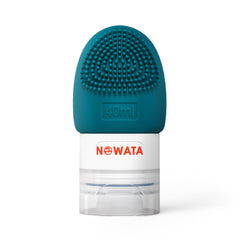
A: As the doctor-parents who built one for exactly this scenario, here's what to look for: plant-based, rinse-free, lab-tested, and TSA-friendly. NOWATA's 1.35 fl oz silicone refillable bottle was designed for fanny-pack carry, the formula is rinse-free, and it physically removed over 99.9% of E. coli and norovirus surrogate particles in modified ASTM E1174 testing.* If our brand isn't right for your family, the criteria still are.
Q: How often should I sanitize my hands at amusement parks?
A: For adults, realistically, 8 to 12 hand cleans across a full park day. For kids under eight, closer to 12 to 15. The trigger moments: park entry, before every meal or snack, after every ride, after every character meet-and-greet, and before re-entering the hotel. Frequency matters more than duration with a rinse-free formula.
Q: What germs are on theme park rides?
A: The realistic short list: norovirus, rhinovirus (common cold), influenza A and B in season, RSV in late fall, and gastrointestinal bacteria like E. coli when food handling overlaps with ride queues. The high-touch hotspots are lap bars, queue rails, sled and seat dividers, restroom door handles, FastPass scanners, and character costume hands. None of this is exotic. Its volume.
Q: What should I do if my child gets a stomach bug at Disney?
A: Isolate the affected child in the hotel room. Hydrate with small, frequent sips. Pedialyte beats water for electrolyte replacement. Don't share food or utensils. Wash all soiled laundry on the hottest setting. Disinfect bathroom surfaces with an EPA-registered norovirus-effective product (see our Essential Resources section). If symptoms last more than 48 hours, if there's blood, or if your child can't keep fluids down, get medical attention. Most parks have first-aid stations and concierge medical services on call.
Q: How do I clean my hands without water on rides?
A: This is exactly the gap a rinse-free soap is built for. Apply a dime-sized drop, rub for about 15 seconds until the formula clumps, then brush off the peelings into a trash can or napkin. The whole process takes under 30 seconds, needs no faucet, and works mid-queue or just after stepping off a ride. The same packing logic applies to backcountry trips: our eco-friendly hand-soap guide for camping walks through trail conditions in detail.
Pack NOWATA Before Your Next Park Day
If this guide gave you a routine you'll actually use, the next step is the doctor-built rinse-free soap engineered for moments when sinks aren't an option. Tap below for the trip-ready bundle, with a 30-day satisfaction guarantee, free shipping on orders over $45, and US manufacturing.
*Based on laboratory testing using a modified ASTM E1174 test, NOWATA physically removed over 99.9% of virus (Murine Norovirus, a human norovirus surrogate) and bacteria (E.Coli) particles from skin. Results do not imply disease prevention. For hand cleansing only.
Leave a comment