




Our kids were six and four the first time we packed them onto a plane bound for a country where locals warn tourists not to drink the tap water. As doctors and parents, we'd already mapped out a hand hygiene plan before takeoff. Within forty-eight hours, we'd thrown half of it out.
The plan failed for a reason most travel guides don't talk about. The water you're warned not to drink is rinsing pathogens right back onto your skin every time you wash. Sanitizer can help, but only on hands that are already clean and only against certain germs. We needed a third option, and the soap aisle didn't offer one. So we made it. NOWATA™ is what came out of those two years of research, and this guide is what we wish someone had handed us before that first family flight.
TL;DR Quick Answers
Hand Hygiene For International Travel
In a destination where the tap water is unsafe, run hand hygiene as a sequence rather than a single step. Start with a rinse-free, plant-based soap like NOWATA™ to physically lift dirt and 99.9% of germs off the skin.* Follow with a sanitizer of 60% alcohol or higher right before meals. Use travel wipes for surfaces—tray tables, hotel remotes, market handles—but never as your primary hand cleaner. Skip the local tap water entirely. Rinsing under contaminated water can put pathogens back on the hands you just cleaned.
Top 5 Takeaways
-
Per the CDC, 30–70% of travelers to high-risk destinations get travelers' diarrhea. Poor hand hygiene is a primary contributor that travelers can actually control.
-
If the tap water is unsafe to drink, it's unsafe to rinse hands with too. Washing in contaminated water can recontaminate the skin you just cleaned.
-
Alcohol sanitizer disinfects already-clean hands but does nothing for visible dirt, oils, or grime. It cannot replace soap on hands fresh off a market or a trail.
-
Rinse-free, plant-based soap like NOWATA™ physically lifts dirt, oil, and 99.9% of germs off the skin with no water needed at all.*
-
Travelers who get sick less often pack a layered hygiene kit, soap, sanitizer, and a clear sequence for moving between them, instead of betting on a single product.

Why Hand Hygiene Looks Different Once You Cross A Border
At home, hand hygiene is a one-step ritual: soap, water, twenty seconds, done. In a high-risk destination, every assumption inside that ritual breaks down.
The CDC's Yellow Book divides international destinations into three risk categories. High-risk regions—Asia, the Middle East, Africa, Mexico, Central and South America—report a 30–70% rate of travelers' diarrhea, most of it caused by bacteria spread through fecal-oral transmission. The condition is so widely studied that medical literature gives it its own entry. A useful overview lives on the Wikipedia page for travelers' diarrhea, which summarizes the bacterial, viral, and parasitic culprits clinicians treat most often. Hands carry those pathogens from contaminated surfaces straight to mouths and food. Hands are the bridge.
When you cross a border, your biology stays the same, but your access changes. The water you'd normally rinse with may itself be contaminated. The soap you'd reach for in a public restroom often isn't there. Surfaces you touch carry pathogens your immune system has never met—bus poles, market produce, hotel keypads, the back of a tuk-tuk seat. We learned this on our own family trips. The clean infrastructure we rely on at home doesn't fly with us.
The Unsafe-Water Paradox
Most travel guides skip this part. If a sign tells you not to drink the tap water, don't wash with it without a backup plan. Rinsing under contaminated water can transfer norovirus, E. coli, Giardia, Cryptosporidium, and Hepatitis A right back onto the skin you just cleaned. The water that brushes your teeth carries the same risk. Even ice cubes count. The CDC says it plainly. In regions with inadequate water treatment, tap water can be unsafe for drinking, cooking, ice, brushing teeth, and in some scenarios, hand washing too.
How Travelers Actually Get Sick
Bacterial pathogens cause 80–90% of traveler's diarrhea cases according to the CDC, and the chain runs the same way almost every time. Pathogens land on a surface. The traveler touches the surface. The traveler then touches food, lips, or a child's face. Infection lands hours later. Cut the chain at the hand stage, and you've cut it everywhere. Hand hygiene is the one prevention control fully within a traveler's grasp. You can't always control restaurant kitchens or street-food prep, but you can control what's on your fingers before they meet your lips.
The Hand-Hygiene Hierarchy When Water Isn't An Option
No single tool covers every travel hand-hygiene situation. What works is a layered system, applied in the right order based on what your hands have just touched. Here's how we run it.
Soap And Verifiably Clean Water (When You Can Get It)
With bottled or boiled water and proper soap, traditional handwashing remains the gold standard. The mechanical action of soap plus water lifts dirt, oils, and microbes off the skin and rinses them away. The trouble is the word verifiable. In a public restroom in a high-risk destination, you often can't tell whether the tap is safely treated. Assume it isn't unless you know otherwise.
Alcohol-Based Hand Sanitizer (60% Or Higher)
The CDC recommends carrying alcohol-based sanitizer at 60% concentration or higher when handwashing isn't an option. Sanitizer disinfects already-clean hands and works well as a pre-meal layer. But the limits are real. Sanitizer doesn't remove dirt or grime, performs poorly on visibly dirty hands, can sting cracked or kid skin, and is less effective against certain pathogens, including norovirus. Treat sanitizer as the closer of a hand-hygiene routine, used last on clean hands right before food touches lips.
For families traveling with young children, especially, we go deeper on what sanitizer can and can't do in our companion piece on the rinse-free, plant-based hand sanitizer alternative for kids and families.
Rinse-Free, Plant-Based Soap
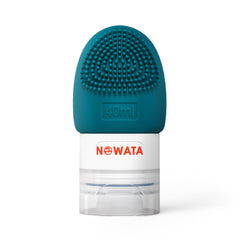
Rinse-free soap is a newer category, which is why most travel guides still don't list it as an option. NOWATA™ uses a clumping technology that physically lifts dirt, oil, and 99.9% of germs off the skin, with no water or rinsing required and no sticky residue afterward.* It's plant-based, biodegradable, and safe enough for toddler snack hands while tough enough for trail grime. We made it because sanitizer wasn't enough on dirty hands, and unsafe tap water turned traditional soap into a liability. We get deeper into use cases for travelers, hikers, mission workers, and study-abroad students in our companion piece on the best portable hand soap for travel, camping, and hiking.
Travel Wipes
Wipes earn a spot in the kit for surface contact: airplane tray tables, hotel remotes, the restaurant booth, before kids' hands hit it. They're not a strong primary hand cleaner because most travel wipes use alcohol or quaternary ammonium compounds that struggle with visible grime. Save them for the things hands touch.
A Doctor's Pre-Trip Hand-Hygiene Checklist
This is the checklist we run before every international family trip. It takes about ten minutes and has saved us multiple long days of hunting for a clean restroom in places where there isn't one.
-
Look up your destination's CDC risk level (high, intermediate, or low) and read the country-specific travel-health page two weeks before departure.
-
Pack a rinse-free soap in your carry-on for visibly dirty hands and any moment without a working sink.
-
Pack a backup sanitizer with at least 60% alcohol for fast pre-meal use, especially in restaurants.
-
Pack travel wipes for surface contact: tray tables, doorknobs, and the kid toys that always end up on hostel floors.
-
Bring a refillable bottle with built-in filtration so drinking water never becomes a separate problem.
-
Talk with traveling kids about the rule of the trip: hands stay away from mouths until they're cleaned.

"Two years of developing NOWATA™ and packing for international trips with our own kids taught us this: travelers who get sick less often abroad rely less on the strength of any one product and more on the order in which they use them—soap first on dirty hands, sanitizer next when the hands are clean, and a meal is imminent."
— Dr. Ruslan Maidans, DDS & Dr. Yalda Shahriari, PhD
Essential Resources On Hand Hygiene For International Travel
Below are the seven resources we'd hand any friend before they boarded a flight to a high-risk destination. Each one answers a different question, and together they cover the ground every international traveler should know before going.
1. The Definitive Medical Guide To Travelers' Diarrhea
The CDC Yellow Book chapter on travelers' diarrhea is the clinical reference doctors use. It walks through risk by region, lists the bacterial and viral culprits behind most cases, and gives the explicit recommendation to carry hand sanitizer of at least 60% alcohol when handwashing isn't an option.
Source: CDC Yellow Book — Travelers' Diarrhea Chapter
2. The Global Reality Of Unsafe Drinking Water
The World Health Organization's drinking-water fact sheet explains why the assumption that 'the tap is fine' doesn't hold across most of the world. It also quantifies the global gap in safely managed water and outlines the disease risks that follow.
Source: WHO Drinking-Water Fact Sheet
3. The U.S. Government's Pre-Trip Health Briefing
The State Department's Medicine and Health page is the official pre-departure starting point for U.S. citizens. It connects vaccination requirements, CDC destination guidance, insurance issues, and the special considerations around chronic conditions or traveling with kids.
Source: U.S. State Department — Medicine and Health for International Travelers
4. The Peer-Reviewed Deep Dive On Traveler Illness
This NIH-hosted PMC review consolidates the academic literature on travelers' diarrhea, including incidence rates, regional patterns, pathogen breakdowns, and the well-documented limits of food-and-water precautions alone. It builds the case for hand hygiene as the single most controllable prevention variable on a trip.
Source: NIH Peer-Reviewed Review of Travelers' Diarrhea
5. The Pediatrician-Reviewed Guide For Family Travel
The American Academy of Pediatrics' parent-facing site covers what concerned parents actually search for: how to protect kids on international trips, what foods and drinks to skip, and which precautions move the needle on childhood illness rates abroad.
Source: American Academy of Pediatrics — Precautions for International Travel
6. The Global Handwashing Authority
UNICEF's handwashing hub explains why handwashing with soap ranks among the highest-impact public health interventions in the world. It also covers why so many destinations still lack the infrastructure to deliver it consistently. Useful context for the scale of the problem your single trip walks into.
Source: UNICEF Global Handwashing Program
7. The Hard Numbers On Where The World Stands
WashData hosts the WHO/UNICEF Joint Monitoring Programme reports, which are the gold-standard data on global access to safely managed drinking water, sanitation, and handwashing facilities at home. The reports show exactly which destinations require travelers to pack their own hygiene kit rather than assume local infrastructure will deliver.
Source: WHO/UNICEF Joint Monitoring Programme — 2023 WASH Households Report
Supporting Statistics
We spent two years researching this category before launching NOWATA™. The same finding surfaced across every credible data source we examined: most destinations Americans visit lack the public infrastructure that makes routine hand hygiene easy, and the illness burden that follows is significant. The numbers below stuck with us the most.
Diarrheal Disease Is Still A Top Global Killer Of Children
The Global Handwashing Partnership reports that roughly 525,000 children die each year from diarrheal diseases, making it one of the top causes of preventable child mortality worldwide. The same body of research consistently identifies handwashing with soap as one of the most cost-effective interventions to reduce that toll. We built our soap specifically for the gap—places where soap is needed but clean water isn't available.
Source: Global Handwashing Partnership — Health Impact of Handwashing
In Just The Americas, 35 Million Children Get Foodborne Illness Each Year
The Pan American Health Organization estimates that in the Americas alone, 35 million children under five suffer from foodborne illnesses each year. The illnesses come from food and water contaminated by bacteria, viruses, or parasites. As parents who've traveled with toddlers in Latin America, this is the number that hits hardest, and it's the one that pushed us to be more rigorous about what we tell other families to pack.
Source: Pan American Health Organization — Foodborne Illness in the Americas
Diarrheal Disease Caused 1.2 Million Deaths Globally In 2021
The Institute for Health Metrics and Evaluation, drawing on the Global Burden of Disease Study, reported 1.2 million deaths from diarrheal diseases worldwide in 2021. That's down from 2.9 million in 1990, real progress, and yet the burden stays concentrated in the same regions American tourists visit most. Both facts hold simultaneously, and both belong in a traveler's planning.
Source: Institute for Health Metrics and Evaluation — Global Burden of Diarrheal Disease
Final Thoughts And Opinion
Across years of research and our own family trips, the strongest advice we can give any international traveler is to treat hand hygiene as a layered system instead of a single product.
Most product marketing in this space picks one solution and sells it as the answer. Sanitizer brands sell sanitizer alone. Traditional soap guides assume safe tap water nearby. Wipe brands assume a trash bin. Across most of the destinations Americans actually visit, none of those single-solution assumptions hold up.
Here's how we'd structure the layers, in the order we use them on the road:
-
Rinse-free soap first, when hands are visibly dirty—markets, transit, public restrooms, after kids touch anything outside.
-
Alcohol sanitizer second, as a finishing layer right before meals, once hands are already clean.
-
Wipes third, used only on surfaces.
Our honest opinion, formed across two years of formulation work and dozens of real-world family trips, is that rinse-free soap is the layer most travel guides still leave out. It addresses the exact gap travelers face most often—visibly dirty hands plus no safe water to rinse them under—and it's why we built NOWATA™ in the first place. The world didn't need another sanitizer. It needed something that could clean hands when sanitizer couldn't.
Frequently Asked Questions
Q: Is it safe to wash my hands with tap water in third-world countries?
A: Often, no. The CDC notes that in regions with inadequate water treatment, tap water may be unsafe for drinking, cooking, ice, brushing teeth, and in some cases, handwashing too. Rinsing under contaminated water can recontaminate hands you just cleaned. When in doubt, default to rinse-free soap or a 60% alcohol sanitizer instead of unverified tap water.
Q: How do I clean my hands if there's no clean water available abroad?
A: Start with a rinse-free, plant-based soap like NOWATA™ for visibly dirty hands, then layer on an alcohol sanitizer of 60% or higher right before eating. The two work in sequence. Soap removes the dirt, oil, and grime that sanitizer can't penetrate, and sanitizer adds disinfection on top of clean skin.
Q: Is hand sanitizer alone enough for international travel?
A: Not always. Sanitizer is a strong layer, but the CDC notes it works best on hands that are already clean. It doesn't remove dirt, oils, or grime, and it's less effective against certain pathogens like norovirus. For visibly dirty hands, you need something that physically removes contaminants first.
Q: Can I bring NOWATA™ on an airplane?
A: Yes. Our travel-size tube fits within standard TSA carry-on liquid limits at 3.4 oz / 100 ml or smaller. We designed it that way on purpose. One tube lasts 80–100 uses, which covers most multi-week trips and most semesters abroad.
Q: Is NOWATA™ safe for kids traveling internationally?
A: Yes. NOWATA™ is 100% plant-based, free of alcohol, parabens, phosphates, and forever chemicals. We formulated it for our own kids, and it's gentle enough for sensitive skin while strong enough for trail grime. As with any new product, do a small spot test first if your child has known allergies or sensitivities. For more on what we left out and why, see our companion guide on the all-natural, non-toxic hand soap families trust for daily use.
Q: What's the real difference between rinse-free soap and hand sanitizer?
A: Sanitizer chemically reduces germ counts on the skin. Rinse-free soap physically lifts dirt, oils, and germs off the skin through a clumping action you brush away. The mechanisms are different, and so are their strengths. Strong traveler kits use both.
Q: Does NOWATA™ remove norovirus and E. coli?
A: In Swiss laboratory testing using a modified ASTM E1174 protocol, NOWATA™ physically removed over 99.9%* of Murine Norovirus (a human norovirus surrogate) and E. coli particles from skin. Results do not imply disease prevention. NOWATA™ is for hand cleansing only and does not replace medical care or other CDC-recommended food and water precautions. More details on the testing methodology and why physical removal matters for travelers are in our deep dive on the Swiss laboratory testing behind our 99.9% norovirus removal claim.
Pack The Soap That Works Where Water Doesn't
Hand hygiene for international travel has to work without a sink, and that's the exact problem we built NOWATA™ to solve. Order a tube before your next trip and travel with the same doctor-made, plant-based soap we keep in our own family's carry-on.
*Based on laboratory testing using a modified ASTM E1174 test, NOWATA physically removed over 99.9% of virus (Murine Norovirus, a human norovirus surrogate) and bacteria (E.Coli) particles from skin. Results do not imply disease prevention. For hand cleansing only.
Leave a comment