




Flu season doesn’t wait for everyone to wash their hands. In a classroom of 25 kids sharing pencils, tablets, and door handles, the difference between a healthy week and a germ outbreak usually comes down to one thing: whether clean hands are genuinely accessible, or just theoretically possible somewhere down the hall.
Dr. Ruslan Maidans (DDS) and Dr. Yalda Shahriari (PhD, Biomedical Engineering), the doctor co-founders of NOWATA™ and parents of young children themselves, shaped the science behind what follows. What you’ll find here are practical strategies for keeping students’ hands clean without turning hand hygiene into the hardest part of your day.
TL;DR Quick Answers
What is the best approach to hand hygiene in the classroom?
The best approach combines routine, accessibility, and the right products. Of those three, routine matters most, because no product works if it isn’t being used consistently.
Tie hand hygiene to existing daily transitions so it becomes automatic rather than an added task. Keep supplies visible and within reach at all times, including a rinse-free option for moments when sinks aren’t accessible.
For schools and daycare settings, choose plant-based, alcohol-free formulas gentle enough for daily use on children’s skin. NOWATA™, developed by Dr. Ruslan Maidans (DDS) and Dr. Yalda Shahriari (PhD), physically removes 99.9% of germs without water, making consistent hand hygiene possible at desks, on field trips, and anywhere a sink isn’t available.*
Key principles:
-
Build hygiene into transitions, not around them
-
Keep supplies at the point of need, not only at the sink
-
Choose kid-safe, plant-based formulas for daily use
-
Escalate frequency during flu season
-
Model the behavior yourself. Students follow adult norms more reliably than instructions.
Top 5 Takeaways
-
Clean hands don't require a sink. Access is the real obstacle — not awareness. When hygiene depends on a working sink, a short line, and a full soap dispenser, it fails exactly when it's needed most. A portable, rinse-free option removes every one of those friction points.
-
Routine beats reminder. The most effective programs aren't built on telling kids to wash their hands. They're built on anchor moments already in the school day: entering the room, before snacks, after PE, before dismissal. No extra time. No extra instructions. Just consistency.
-
The product category matters. Alcohol-based sanitizers and plant-based rinse-free soaps are not the same thing:
-
Sanitizers chemically target germs and leave residue on skin
-
NOWATA™ physically removes dirt, oil, and 99.9% of germs through clumping technology — nothing left behind*
-
For daily use on developing skin, that distinction matters
-
Instruction closes the gap that supplies alone can't. Research in Chicago public elementary schools found that brief, repeated hand hygiene instruction improved attendance — even in schools that already had supplies available. Access matters. Teaching matters more.
-
School habits go home. Kids who practice consistent hand hygiene at school carry those habits to siblings, parents, and the whole household. A teacher building a real classroom hygiene routine isn't just protecting their class. They're protecting the families those kids go home to.

Why Hand Hygiene for Students Matters More Than You Think
A classroom brings students together in one of the highest-contact environments in everyday life. Kids touch hundreds of surfaces per hour, share supplies without a second thought, and seem to have an uncanny aim for their own faces between touchpoints.
When one student comes in sick, that illness can spread to half the class within 48 hours. The CDC attributes consistent handwashing with reducing respiratory illnesses by up to 21% and gastrointestinal illnesses by up to 58%.
Making germ prevention a daily classroom priority isn’t an abstract health exercise. It’s one of the most direct investments teachers can make in their students’ well-being, and it pays off in fewer sick days, fewer disruptions, and more weeks where everyone actually shows up. It only works, though, when clean hands are genuinely accessible. Not dependent on a working sink, a waiting line, or a bathroom that’s actually unlocked.
The Real Problem with Classroom Hand Washing
Classroom hand washing is the gold standard. The infrastructure to support it, in most schools, is anything but.
Most elementary classrooms share a single sink among 20 or more students. Some classrooms, especially in older buildings, have no sink at all. Even with a working sink, the process burns instructional time, creates crowding, and depends entirely on whether kids actually use soap and rinse long enough to matter.
Common barriers to effective classroom hand washing include:
-
Long lines that discourage the frequency of hand hygiene actually require
-
Soap dispensers that run empty mid-week with no immediate replacement
-
Students who “wash” with just water and consider the job done
-
No dedicated hand-washing station for classrooms without direct plumbing
-
Shared paper towel dispensers that become contact surfaces themselves
None of this means you abandon the sink. You just need a reliable backup, one that works even when the sink doesn’t. Building a hand hygiene routine that doesn’t depend entirely on sink access is how you close the gap where most classroom germs slip through.
Teacher Hand Hygiene Tips That Actually Work in a Real Classroom
The best hand hygiene routines are invisible, woven so naturally into the rhythm of the school day that students stop thinking of them as extra steps. They’re just what happens. Here are six tips that hold up when school is actually in session:
-
Establish anchor moments. Tie hand hygiene to transitions that already exist in your day: entering the classroom, before snacks, after restroom breaks, after PE, before dismissal. No extra time needed. The transitions are already built into the day. You’re just attaching hygiene to them.
-
Make it visual. Post a simple chart at the.student eye level near your hygiene station. Younger grades respond well to a visual timer or a two-line handwashing song that marks the right duration without a single spoken instruction from you.
-
Keep supplies within arm’s reach. A portable hygiene option at each table cluster, or near high-touch zones, takes the sink out of the equation entirely. Students clean their hands in seconds without leaving their seats, with zero water, zero rinse, and nothing left behind.
-
Model it yourself. Children follow adult behavior more reliably than they follow instructions. When students watch you clean your hands before handling materials, passing back papers, or setting out supplies, you set the standard more clearly than any classroom poster.
-
Escalate for flu season. During cold and flu season, increase hand hygiene frequency and add a post-shared-item step: any time students handle shared supplies like scissors, tablets, or library books, their hands get cleaned before moving on.
-
Use peer accountability. Designate a rotating weekly “hygiene helper” who reminds the class at anchor moments. Kids take the role seriously, and the group follows their lead.
These aren’t complicated. But they’re consistent, and in a classroom, consistency is what makes anything actually work.
The Best School Hand Sanitizer Alternative for Your Classroom
Let’s talk about what’s actually on most classroom shelves: alcohol-based hand sanitizer.
Sanitizers work, to a point. They’re fast, convenient, and effective against many common pathogens. In a classroom setting, though, they carry genuine tradeoffs worth understanding. Alcohol-based formulas can irritate young skin with repeated daily use. They leave chemical residue on their hands that later touch eyes, mouths, and food. And they target germs chemically rather than physically removing them, which means the residue stays on the skin surface rather than coming off it.
Teachers looking for a school hand sanitizer alternative that’s safe for continuous, all-day use on developing skin have a better option.
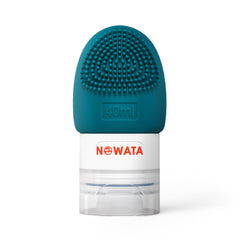
NOWATA™ is a doctor-made, plant-based rinse-free soap that physically removes dirt, oil, and 99.9% of germs through revolutionary clumping technology. Apply a small drop, rub until clumps form, then brush them away. The clumps carry germ particles off the skin completely, with no water, no rinsing, and nothing left behind.* NOWATA works anywhere: at desks, on the playground, during field trips, or in buildings where the nearest sink is two hallways away. It’s 100% plant-based, with no alcohol, parabens, or harsh chemicals, and gentle enough for the most sensitive skin. Because it was created by two doctor-parents for their own children.
If your class takes outdoor trips or your school runs nature programming, see how NOWATA performs as a portable hand soap for travel, camping, and hiking. Same formula, same science, built for wherever the school day takes you.

“As doctors and parents, we saw firsthand that the choice between safe and convenient was a false one — so we built something that’s both. NOWATA was engineered to work in exactly the moments where a sink isn’t an option, because those moments are where hygiene breaks down most.”
— The NOWATA™ Team
Essential Resources on Hand Hygiene in the Classroom
Keeping your students' hands clean is one of the most direct health investments you can make as a teacher — and you shouldn't have to figure it out alone. These seven resources give you the science, the strategies, and the policy backing to build a hand hygiene routine that actually holds up in a real school day.
1. Hand Hygiene in Schools and Early Care and Education Settings — CDC
This is the one to bookmark first. The CDC's dedicated school hand hygiene hub covers infrastructure, visual cue strategies, supply recommendations, and how to weave handwashing into the transitions your class already has. Whether you're building a hygiene plan from scratch or strengthening one that keeps slipping, this is your starting point.
2. Hand Hygiene in PreK–12 Schools and Child Care Settings — American Public Health Association
If you've ever needed hard numbers to make the case to your principal, this is the document. APHA's policy brief connects school hand hygiene programs directly to lower illness-related absenteeism, and it goes into compliance data across grade levels — including the uncomfortable truth about how rarely older kids actually use soap. Evidence-backed and worth sharing up the chain.
3. Handwashing to Prevent Illness at School — Washington State Department of Health
Written for real school environments, not ideal ones. This resource explains why hand sanitizer alone isn't always enough, walks through age-appropriate handwashing steps, and gives teachers a clear, printable reference they can actually hand to students or post near the sink. Straightforward, practical, and easy to share with families at the start of flu season.
Source: https://doh.wa.gov/community-and-environment/schools/environmental-health/handwashing
4. Managing Infectious Diseases in Schools — American Academy of Pediatrics
Doctors who work with children every day put this one together — and it shows. The AAP's school infectious disease resource covers hand hygiene protocols, illness exclusion policies, and vaccination guidance, all designed for practical application in a school setting. If you want pediatrician-backed answers to the questions parents are going to ask you, start here.
Source: https://www.aap.org/en/patient-care/school-health/managing-infectious-diseases-in-schools/
5. Ensuring Water, Sanitation, and Hygiene in Schools — World Health Organization
Clean hands require more than good intentions — they require access. WHO's school WASH guidance tackles the infrastructure side of hand hygiene: what adequate facilities look like, what to do when yours fall short, and how schools across diverse environments have made hygiene genuinely accessible for students and staff. Useful for any teacher or administrator asking whether the building is actually set up to support the habits we're trying to build.
Source: https://www.who.int/europe/activities/ensuring-water-sanitation-and-hygiene-in-schools
6. Hand Hygiene Instruction Decreases Illness-Related Absenteeism in Elementary Schools — NIH / PubMed Central
Here's what the research actually found: brief, repeated hand hygiene instruction during the school day improved attendance at Chicago public elementary schools compared to hygiene access alone. Supplies matter. Teaching matters more. If you're making the argument that instruction time spent on hand hygiene pays off in attendance, this peer-reviewed study makes that case with real school data.
Source: https://pmc.ncbi.nlm.nih.gov/articles/PMC3470997/
7. Using Chemicals and Cleaning Supplies at School — U.S. Environmental Protection Agency
Young children's skin is more sensitive to repeated chemical exposure than most product labels acknowledge. The EPA's school cleaning toolkit helps teachers, nurses, and facility managers choose safer sanitizing products for K–12 and early care environments — including green cleaning approaches and EPA-registered disinfectants. A smart read before restocking your classroom hygiene supplies, and a useful reference when parents ask what's actually on their kids' hands.
Source: https://www.epa.gov/schools/using-chemicals-and-cleaning-supplies-school
Supporting Statistics on Hand Hygiene in the Classroom
The numbers behind classroom hand hygiene confirm what most teachers already know: the gap between awareness and execution is real — and measurable.
1. Nearly Half of School-Age Children Are Not Always Using Soap When They Wash Their Hands at School
A Global Hygiene Council survey found that 42% of children aged 5–10 are not always using soap when washing their hands at school.
What that means in a real classroom:
-
Water alone removes almost nothing — soap is where the cleaning happens
-
Nearly half your students may be "washing" without it
-
Routines that depend on students making the right choice at the sink, every time, will have gaps
The takeaway: building systems that don't rely on independent student compliance at the sink isn't overcautious. It's just realistic.
2. Nearly Half of Schools Worldwide Still Lack Basic Handwashing Facilities with Soap and Water
UNICEF data shows that almost half of all schools globally lack a basic handwashing facility with soap and water — affecting approximately 802 million school-age children.
This matters closer to home, too:
-
U.S. schools in older buildings and high-enrollment districts regularly operate with too few sinks for too many students
-
"We have a sink," and "handwashing is genuinely accessible for 25 students in a 10-minute transition" are two different statements.
-
For many students, hand hygiene isn't just a behavior problem — it's an access problem.
Source: https://www.unicef.org/wash/handwashing
3. Rinse-Free Hand Wash May Reduce Illness-Related School Absenteeism
A 2020 Cochrane systematic review — drawing on 19 randomized controlled trials across multiple countries, including 8 studies conducted in the United States — found consistent evidence that rinse-free hand wash programs may reduce illness-related absenteeism compared to no rinse-free hand wash option.
Key findings:
-
When children have a practical, no-sink hygiene option, illness-related absence goes down
-
The effect held across school and preschool settings
-
The direction of evidence is consistent across studies, even where certainty levels vary
This is exactly the science that shaped how Dr. Ruslan and Dr. Yalda built NOWATA™ — not as a supplement to handwashing, but as a real solution for the moments when a sink simply isn't within reach.
Final Thoughts and Opinion
Hand hygiene in the classroom isn’t a burden. It’s one of the most direct health choices a teacher can make, available every day, at virtually no cost to instruction time.
The challenge was never awareness. It’s always been execution: building routines that actually hold up in the controlled chaos of a school day.
A small shift in approach can meaningfully reduce germ spread across an entire school year. Anchor moments, visible supplies, and a portable option for no-sink situations are low-effort adjustments with real impact on how healthy your class stays from September through June.
We believe clean hands shouldn’t depend on whether there’s a working sink nearby. That was true when Dr. Ruslan and Dr. Yalda created NOWATA for their own children, and it’s just as true for the kids sitting in your classroom right now. Teachers already do so much. Hand hygiene should be the easy part.
Frequently Asked Questions
Q: How often should students wash their hands during the school day?
A: The CDC recommends hand hygiene at key daily moments: before and after eating, after bathroom use, after blowing their nose or sneezing, after handling shared items, and after outdoor time. For most classrooms, that works out to four to six hand hygiene moments per day, all attachable to existing transitions without adding a single minute to your schedule.
Q: Is hand sanitizer safe for young children in the classroom?
A: Alcohol-based hand sanitizers are generally considered safe when used as directed, but they carry real caveats for classroom settings. Repeated daily use can dry and irritate young skin, and they require supervision with younger students to prevent accidental ingestion. Plant-based, rinse-free soap alternatives like NOWATA™ offer a gentler option with no alcohol, parabens, or harsh chemicals, making them better suited for high-frequency, all-day classroom use.
Q: What’s the best alternative to hand washing when there’s no sink in the classroom?
A: When classroom hand washing isn’t accessible, the best alternative is a plant-based rinse-free soap that physically removes germs rather than chemically targeting them. Unlike sanitizer gels, NOWATA™ lifts and removes dirt, oil, and germs through a clumping process. Apply it, rub until clumps form, and brush them away. The process takes seconds and leaves nothing behind. Suitable for all grade levels and effective at desks, on field trips, and anywhere a sink isn’t available.
Q: Can a rinse-free soap really remove 99.9% of germs without water?
A: Yes, and the science behind it is specific. NOWATA™ physically removes over 99.9% of germs through clumping technology, verified by Swiss laboratory testing using the ASTM E1174 protocol. The clumps that form during rubbing physically carry germ particles off the skin when brushed away. This is a different mechanism from hand sanitizers, which chemically target germs and leave residue behind. Results do not imply disease prevention. For hand cleansing only.*
Q: How do I prevent flu spread in my classroom?
A: Flu prevention in the classroom comes down to three things: hand hygiene, surface cleaning, and respiratory etiquette. For hand hygiene, build anchor moments into daily transitions. For surfaces, wipe desks, door handles, and shared devices daily. For respiratory etiquette, teach and reinforce cough and sneeze protocols from day one. A portable hand hygiene option at each desk cluster makes the hand hygiene piece significantly easier to execute consistently during peak flu season.
Q: What hand hygiene products are safe for daycare and preschool-aged children?
A: For daycare and preschool settings, prioritize products that are gentle on developing skin, free from harsh chemicals, and safe if accidentally contacted in small amounts. Look for 100% plant-based formulas with no alcohol, parabens, phosphates, or synthetic fragrances. NOWATA™ was specifically developed by doctor-parents with young children’s safety as the first design requirement, and it meets every one of those criteria.
Ready to Make Clean Hands the Easiest Part of Your School Day?
Hand hygiene in the classroom just got simpler. NOWATA™ is the doctor-made, plant-based rinse-free soap that keeps students’ hands clean anywhere, anytime, no sink required. Shop NOWATA™ for Your Classroom Today.
*Based on laboratory testing using a modified ASTM E1174 test, NOWATA physically removed over 99.9% of virus (Murine Norovirus, a human norovirus surrogate) and bacteria (E.Coli) particles from skin. Results do not imply disease prevention. For hand cleansing only.
Leave a comment