


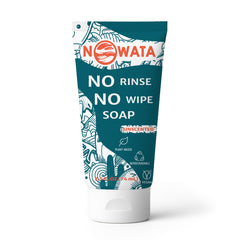


In 2025, 22 cruise ships hit the CDC's threshold for reportable gastrointestinal outbreaks. That's the highest count since federal tracking began in the 1990s, and norovirus drove most of them. We've spent the past two years formulating a plant-based soap specifically against norovirus, and we're also parents who took our own kids on a cruise this past summer. The playbook below is the one we follow ourselves. It works whether you pack our soap or someone else's.
TL;DR Quick Answers
Cruise Ship Norovirus Prevention
Cruise ship norovirus prevention runs on one principle: physical removal. Norovirus has a non-enveloped capsule that alcohol-based hand sanitizer cannot break down. The CDC's stance has not budged in two decades: wash with soap and water for at least 20 seconds. When you can't get to a sink—on the buffet line, the pool deck, or a port excursion—a rinse-free soap that physically lifts virus particles off skin gives you the same mechanism without the water.
The four highest-impact actions, in order:
-
Clean hands before every meal and after every shared surface. Use soap and water, or a rinse-free soap that does the same physical removal job.
-
Skip the welcome buffet on embarkation day. The first four hours on board are the highest-risk window of any cruise.
-
Wipe down stateroom high-touch surfaces on day one: door handle, remote, light switches, balcony rail. Use a bleach-based or quaternary-ammonium wipe, not an alcohol-only one.
-
Report any vomiting or diarrhea to the ship's medical center within 60 minutes. Hiding symptoms doesn't save your vacation. It spreads the outbreak shipwide.
Top 5 Takeaways
-
2025 set the modern record for cruise ship gastrointestinal outbreaks. The CDC logged 22 in total, up from 18 in 2024 and 14 in 2023.
-
Hand sanitizer does not work well against norovirus. The virus has a non-enveloped capsule that alcohol cannot break down. Soap-based mechanical removal is the gold standard.
-
The buffet is the single highest-risk zone on a cruise ship. Clean hands before AND after serving yourself, not just after.
-
Rinse-free soap solves cruise hygiene's hardest problem: there's no sink at the buffet, the pool deck, or the gangway. NOWATA™ physically removes 99.9% of germ particles without water.*
-
If you feel sick, report within 60 minutes. Hiding symptoms doesn't save your vacation. It spreads the outbreak and shortens everyone else's.

Why 2025 Was The Worst Year On Record For Cruise Ship Norovirus
The CDC's Vessel Sanitation Program only reports outbreaks that hit the 3% passenger-and-crew threshold, which means the real infection numbers run higher than the published count. In 2025, the program logged outbreaks across nearly every major brand. Royal Caribbean reported three of them: 160+ ill on Radiance of the Seas in February, 140+ on Navigator of the Seas in July, 94+ on Serenade of the Seas in September. Holland America reported three more on Eurodam, Rotterdam, and Zuiderdam. Princess Cruises had two on Coral and Ruby. Oceania's Insignia logged its first GI outbreak ever.
Reading the 2025 data, one pattern jumps out: the cruise brand barely matters. What matters is hand-to-mouth transmission in shared dining and on high-touch surfaces. The fix is hand hygiene that actually works against this virus, not a different cruise line.
How Norovirus Spreads On A Cruise Ship (And Why Hand Sanitizer Falls Short)
Eighteen viral particles can start an infection, and a single infected person sheds billions in one bathroom visit. Norovirus is also unusually tough: it survives on stainless steel, plastic, and fabric for two weeks or longer, and it laughs at most routine cleaners. Put all of that in a closed cruise ship environment with thousands of people in shared spaces, and outbreaks become inevitable on some percentage of voyages.
Three transmission routes account for nearly every cruise outbreak:
-
Person-to-person contact through handshakes, shared utensils, elevator buttons, handrails, and kids touching every surface in sight.
-
Contaminated food and water from buffet serving spoons, ice scoops, raw oysters, salad bars, and ice in mixed drinks.
-
Aerosolized vomit particles, where a single vomiting incident can contaminate a 25-foot radius.
The fact most cruise passengers miss is that alcohol-based hand sanitizer doesn't work well against norovirus, and the CDC has been saying so plainly for years. The reason is structural. Sanitizers dissolve the lipid envelope of viruses like flu and COVID, deactivating them on contact. Norovirus has no lipid envelope. Its outer protein capsid is alcohol-resistant. You can rub gel on your hands until they're dry, and the virus is still there.
That's why the CDC's recommendation has stayed the same for two decades: wash with soap and water for at least 20 seconds. Soap doesn't try to deactivate the virus chemically. It physically lifts the particles off the skin so they wash down the drain. Mechanical removal is what works.
That's not a new idea. We've written about how it's the same physical-removal principle behind every effective handwashing recommendation since ancient Babylon — four millennia before anyone had a microscope to confirm what soap was actually doing.
Cruise ships have a layout problem: no sink at the buffet, no sink at the pool, no sink at the gangway, no sink on the excursion bus. NOWATA™ closes that gap. We tested its clumping technology using a modified ASTM E1174 protocol against Murine Norovirus, a recognized human norovirus surrogate. It physically removes 99.9% of germ particles from skin. No sink required.*
The Doctors' On-Board Hygiene Routine
This is the day-by-day protocol we use ourselves. None of it requires special equipment beyond what fits in a quart-sized travel bag.
Pre-Cruise (The Week Before Sailing)
-
Confirm flu and COVID vaccinations are current. For international itineraries, add hepatitis A.
-
Pack a TSA-friendly rinse-free soap. We're partial to ours, of course, but here's our deeper guide on choosing the best portable hand soap for travel and what to look for in a no-water formula.
-
Pack disinfectant wipes that specifically list norovirus or feline calicivirus on the label.
-
Pack oral rehydration salts. They're the difference between bouncing back in 24 hours and ending up in the ship's medical center.
Embarkation Day (The Highest-Risk Four Hours)
-
Clean your hands the moment you clear the security line at the terminal.
-
Skip the welcome buffet. Eat in the dining room or grab pre-packaged items.
-
Wipe down stateroom high-touch surfaces: door handle, remote, light switches, phone, balcony rail, faucet handles. Five minutes. Worth it.
At The Buffet
-
Clean hands before AND after serving yourself. The “before” half is the part most people skip and the part that matters most.
-
Use a napkin as a glove on shared serving tongs and ice scoops.
-
Skip raw oysters and undercooked shellfish. Norovirus's favorite vehicle.
-
Avoid ice in mixed drinks during the first two days of the cruise.
Pool Deck, Spa, And Public Areas
-
Re-clean hands when transitioning between zones. Pool to lunch. Hot tub to bar. Loungers to the elevator.
-
Don't share towels with kids who've been touching everything.
-
If a shipwide GI illness has been announced, skip the hot tub entirely.
Port Days And Excursions
-
Public restrooms in port often lack soap. Bring your own.
-
Clean your hands before opening any street-food packaging.
-
Re-clean hands at the gangway before touching anything onboard.

“After two years of formulating against this virus and a year of watching cruise ships set the modern outbreak record, our family rule is simple. We never trust the sanitizer dispenser at a cruise buffet. We bring our own soap, we use it before we eat, and we don't apologize for it. The biology doesn't leave room for opinion: alcohol can't break down norovirus, so you have to physically lift it off your skin. We're parents first, scientists second, and that's the whole reason we built NOWATA™ this way.”
— Dr. Ruslan Maidans, DDS, & Dr. Yalda Shahriari, PhD, NOWATA™ Co-Founders
Essential Resources On Cruise Ship Norovirus Prevention
If you want to dig deeper before your cruise, these seven resources from federal agencies and major U.S. medical institutions cover everything from live outbreak alerts to cabin cleanup protocols. We've ordered them by what you're most likely to need first.
1. See Live Outbreak Reports Before You Sail
The CDC's Vessel Sanitation Program publishes every cruise ship gastrointestinal outbreak that meets the 3% reporting threshold. You'll see ship name, line, voyage dates, case counts, and the response taken. Bookmark this page and check it the week before you sail. If your specific ship had a recent outbreak, expect enhanced cleaning protocols on board.
Source: Outbreaks on Cruise Ships in VSP's Jurisdiction (CDC)
2. Choose A Cabin Wipe That Actually Works On Norovirus
The Environmental Protection Agency maintains “List G,” the only authoritative directory of disinfectants proven effective against norovirus. Most drugstore wipes don't qualify. Use this page to verify a product's EPA registration number before you pack.
Source: Selected EPA-Registered Disinfectants (EPA)
3. Get The Workplace-Grade Cleanup Protocol You Can Use In Your Cabin
The Occupational Safety and Health Administration's norovirus fact sheet was written for healthcare workers and food handlers, but the cleanup steps translate to a cruise stateroom: PPE, surface contact times, and laundry handling. It's the most useful free download in this space.
Source: Norovirus Fact Sheet (OSHA)
4. Spot Symptoms In The First 12 Hours So You Can Isolate Faster
Mayo Clinic's patient-education page lays out the symptom timeline (12 to 48 hours after exposure), red-flag dehydration signs in children and older adults, and when to seek the ship's medical center. Read this on day one of your cruise so you know what to watch for.
Source: Norovirus Infection — Symptoms & Causes (Mayo Clinic)
5. Care For A Sick Kid In The Cabin Without Sending Everyone Home
The American Academy of Pediatrics' parent-facing guide on HealthyChildren.org explains how to keep one sick child isolated from a cabin-mate, what to feed them, and the dehydration warning signs that warrant a call to the ship's doctor.
Source: Norovirus: What to Do If Your Child Catches This Stomach Bug (HealthyChildren.org)
6. Get A Doctor-Reviewed Treatment Walk-Through If You Get Sick At Sea
Cleveland Clinic's medically-reviewed norovirus page covers diagnosis, hydration strategy, and recovery timeline in plain English. It's the best one-stop reference for what to do during the 24 to 72 hours of active symptoms.
Source: Norovirus Patient Guide (Cleveland Clinic)
7. Understand How Norovirus Hits Children Differently
Lurie Children's Hospital explains why kids tend to vomit more (adults lean toward diarrhea), how dehydration moves faster in small bodies, and how long children stay contagious after symptoms stop. The contagious window is often 48 hours longer than parents assume.
Source: What Is Norovirus? (Lurie Children's)
Supporting Statistics: The Numbers Behind The 2025 Surge
Three statistics frame the current cruise norovirus picture. Each comes from a different U.S. federal agency or peer-reviewed source. We've added the why-it-matters context based on what we've seen formulating against this virus for two years.
1. On outbreak voyages, 37% of passengers who consumed tap water or tap-water ice ended up infected.
A peer-reviewed systematic review and meta-analysis of cruise ship norovirus outbreaks from 1990 to 2020 found this exact pattern across the literature, with a 95% confidence interval of 24% to 58%. Our take: this is the statistic almost no cruise blog mentions, and it changed how we order drinks at sea. We stick to bottled water for the first 48 hours of every cruise, and we never accept ice in port.
2. Norovirus causes an estimated 19 to 21 million U.S. illnesses every year.
The U.S. Department of Agriculture's National Institute of Food and Agriculture factsheet on norovirus, citing CDC estimates, reports 19 to 21 million annual illnesses, 56,000 to 71,000 hospitalizations, and 570 to 800 deaths in the United States. Cruise ships represent roughly 1% of those cases. Our take: cruise ship outbreaks get the headlines, but the real norovirus risk for most families is the school cafeteria, the daycare changing table, and the holiday family gathering. The cruise hygiene routine in this guide works at home, too.
Source: Preventing Foodborne Illness: Norovirus (USDA NIFA)
3. Norovirus accounts for roughly 52% of all U.S. foodborne illness cases.
Per the FDA's Retail Food Risk Factor Study factsheet on norovirus, the virus is the leading cause of foodborne illness in the United States, accounting for roughly 52% of all foodborne illness cases. Our take: This is why cruise lines screen embarking crew so aggressively. It's also why your own pre-meal hand cleaning is a redundant layer of protection that costs nothing. You're not insulting the chef. You're closing the gap the chef can't always see.
Source: FDA Retail Food Risk Factor Study — Norovirus Findings (FDA)
Final Thoughts And Opinion
After two years of formulating against norovirus and one year of watching cruise ships set a modern outbreak record, here's our honest opinion.
Cruising is still worth it. We're going on one this fall. The 2025 outbreak surge is real, and it's also a reminder that the prevention playbook of physical hand cleaning, smart buffet behavior, and fast symptom reporting is highly effective when families actually use it. The problem is that most travelers were taught a hand sanitizer routine that doesn't work for this specific virus, and nobody has updated them.
Our short list of what we'd change if we could redesign cruise hygiene from scratch:
-
Replace alcohol gel dispensers at buffet entrances with rinse-free soap stations. Sanitizer is a placebo against norovirus. Real soap, even without water, is not.
-
Include a small EPA List G wipe pack in every embarkation welcome kit. It costs the cruise line less than a cocktail and prevents shipwide outbreaks.
-
Train every crew member to spot the napkin-as-glove technique, and to thank passengers who use it instead of frowning at them.
Until cruise lines do those things, the responsibility lies with you. Pack the soap, skip the welcome buffet, wipe down the cabin, and report symptoms early. None of it is glamorous, and all of it works.
And one more thing, parent to parent. The kids will grumble when you make them clean their hands for the fourth time at lunch. Do it anyway. The grumbling lasts 30 seconds. A norovirus voyage lasts 48 hours and ruins the whole vacation.
Frequently Asked Questions
Q: How common is norovirus on cruise ships in 2026?
A: 2025 set the modern record with 22 reported outbreaks, the highest count since CDC record-keeping began in the 1990s. Early 2026 is on a similar pace. That said, fewer than 1% of all U.S. cruise passengers are affected in any given year. The risk is real but manageable with smart hand hygiene.
Q: Why doesn't hand sanitizer work against norovirus?
A: Norovirus is a non-enveloped virus, meaning its outer protein capsule is alcohol-resistant. Alcohol-based sanitizer is excellent against flu and COVID (both enveloped), but cannot penetrate the norovirus capsid. The CDC's travel medicine guidance for norovirus explicitly states that sanitizer is not a substitute for handwashing. When no sink is available, the same goes for any soap-based mechanical removal product. We unpack the kill-versus-remove biology in more depth in our breakdown of why no-rinse soap outperforms sanitizer on hard-to-deactivate viruses.
Q: Is rinse-free soap better than hand sanitizer for cruises?
A: For norovirus prevention specifically, yes. Hand sanitizer relies on chemical deactivation, which doesn't work on norovirus. A rinse-free soap like NOWATA™ relies on physical removal, the same mechanism the CDC recommends for soap and water. We tested NOWATA using Murine Norovirus, a recognized human norovirus surrogate, under a modified ASTM E1174 protocol. We're the only consumer brand we know of whose published 99.9% claim that was measured against this specific virus family.* Read the full lab-test story, including the Microbe Investigations AG protocol and findings.
Q: How long is norovirus contagious after symptoms stop?
A: At least 48 hours, and often longer. The virus can be shed in stool for two weeks or more after a patient feels fine. This is why the CDC recommends staying isolated in your cabin for at least 48 hours after symptoms end, and why you should keep rigorous hand hygiene going for the rest of the voyage.
Q: Can children use NOWATA on a cruise?
A: Yes. NOWATA is 100% plant-based, contains no alcohol or harsh chemicals, and we formulated it to be safe enough for toddler snack hands. We use it on our own kids. As with any new skincare product, do a small spot test first if your child has known sensitivities.
Q: What should I do first if I feel sick on a cruise?
A: Three things, in order. First, report to the ship's medical center within 60 minutes. Second, return to your cabin and isolate yourself. Use the bathroom your cabin-mate isn't using if possible. Third, start oral rehydration salts immediately. Dehydration is the actual danger, not the virus itself. Don't try to power through the symptoms. Powering through spreads the virus shipwide and shortens everyone else's vacation.
Q: Does the cruise line refund passengers affected by a norovirus outbreak?
A: Sometimes. It depends on the line's specific policy, the severity of the outbreak, and whether you reported symptoms promptly. Most major lines offer a pro-rated future cruise credit if your isolation period covers more than 24 hours. Travel insurance with a “sickness during covered trip” clause is the more reliable backstop.
Q: Which cruise lines have had the most norovirus outbreaks?
A: 2025 outbreak counts spread across nearly every major brand: Royal Caribbean (Radiance, Navigator, Serenade of the Seas), Holland America (Eurodam, Rotterdam, Zuiderdam), Princess (Coral, Ruby), and Oceania (Insignia, the line's first ever). The pattern shows that no specific line is the problem. Close-quarters dining and shared surfaces are. Pick the cruise you want and bring the right hygiene kit.
Q: How much NOWATA Soap should I pack for a 7-day cruise?
A: One 2.5 oz tube comfortably covers a family of four for a 7-day cruise with hand cleanings before every meal and every cabin re-entry. For longer voyages or larger families, our Super Saver Bundle works out to roughly 80 to 100 uses per tube. Keep the main tube in the cabin and the small refillable travel bottle in your daypack.
Q: Can I bring NOWATA on a plane and a cruise ship?
A: Yes on both. Our 2.5 oz tube is under TSA's 3.4 oz carry-on liquid limit, and cruise lines have no restrictions on personal-use soap products. Keep it in your carry-on so you can clean your hands during the flight to your departure port. Airline tray tables are the warm-up round for buffet handles.
Q: What's the single most important habit for avoiding norovirus on a cruise?
A: Cleaning your hands BEFORE you eat, not just after. Most people skip the “before” step because their hands aren't visibly dirty. The buffet serving spoons are. The handrail you held on the way to the dining room is. The before-meal hand cleaning is the single habit that closes the most outbreak loops, and it's the one almost no one does.
Pack The Soap That Was Built For Exactly This
Your next cruise is already booked, and the buffet is non-negotiable. Pack a doctor-made, plant-based, rinse-free soap that physically removes 99.9% of germs without water, and treat this prevention playbook as your real travel insurance against the only virus that closes cruise ships.
*Based on laboratory testing using a modified ASTM E1174 test, NOWATA physically removed over 99.9% of virus (Murine Norovirus, a human norovirus surrogate) and bacteria (E.Coli) particles from skin. Results do not imply disease prevention. For hand cleansing only.
Leave a comment