



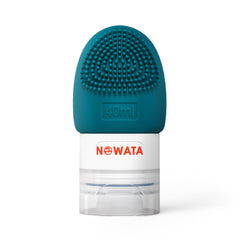

Eighteen viral particles. That's all norovirus needs to ruin a vacation, and it's why we don't travel without a plan. We're Drs. Ruslan and Yalda, the doctor-parents behind NOWATA™. Too many families come home from cruises wondering how the hand sanitizer let them down. This guide is the prevention plan we use ourselves. We wrote it for travelers who'd rather pack right than apologize on Day 3.
TL;DR Quick Answers
Norovirus And Travel
Norovirus is the stomach bug travelers catch most, particularly on cruises, planes, and at theme parks, hotels, and crowded resorts. It's a non-enveloped virus, so alcohol-based hand sanitizer can't reliably inactivate it. The CDC recommends washing with soap and water for at least 20 seconds, and using a rinse-free, soap-based hand cleaner that physically removes germs when a sink isn't available. Skip raw shellfish, stick to sealed bottled water in higher-risk destinations, and stay home for 48 hours after symptoms stop.
Top 5 Takeaways
- The CDC reports roughly 2,500 norovirus outbreaks in the U.S. each year, with most happening from November through April. That window covers most family travel.
- Hand sanitizer is not enough on its own. Norovirus has a hard protein shell that alcohol can't get through, which is why physically removing the virus with soap matters more than killing germs where they sit.
- Cruise ships, planes, theme parks, and all-inclusive resorts share the conditions norovirus loves: close quarters, shared surfaces, and a churn of new arrivals. The virus survives on tray tables, doorknobs, and remote controls for days to weeks.
- Build a layered defense: soap and water at the sink, rinse-free soap when there isn't one, and an oral rehydration solution in the carry-on for the worst-case day.
- The bag you pack at home decides what protection you have at the airport gate, on the trail, and at the buffet. Pre-trip prep beats mid-trip damage control.

What Norovirus Actually Is — And Why Travel Is Its Favorite Setting
Norovirus is a highly contagious virus that causes acute gastroenteritis: sudden vomiting, watery diarrhea, stomach cramps, and sometimes a low-grade fever. Symptoms usually appear 12 to 48 hours after exposure and clear in one to three days. What surprises most travelers is that you can keep shedding the virus for two weeks after you feel fine, which is how outbreaks rebound across back-to-back cruises and resort guest cycles.
Norovirus is a fine starting place if you want the full biology.
A few things make travel its preferred environment:
- A tiny infectious dose. As few as 18 viral particles can make someone sick, a much lower bar than most pathogens.
- A hardy capsid. Norovirus is non-enveloped, so it survives on surfaces for days to weeks and shrugs off many common disinfectants.
- The right settings. Cruise cabins, planes, hotel buffets, and theme park lines combine shared food, shared rails, shared bathrooms, and a constant churn of new arrivals.
That's why it earned its nickname as "the cruise ship virus." In 2025, cruise-ship gastrointestinal outbreaks set a record for the most reported since CDC tracking began in 1994. The same dynamics apply at scale to airports, hotels, and family resorts.
Why Hand Sanitizer Fails Against Norovirus On The Road
Alcohol works by dissolving the lipid envelope around viruses like influenza and coronaviruses. Norovirus doesn't have a lipid envelope. Its protein capsid is built differently, and alcohol can't get through it. The CDC, Yale School of Medicine, and Vanderbilt University Medical Center have each said publicly that alcohol-based hand sanitizers are not reliably effective against norovirus.
Soap works differently. As a detergent, it lifts dirt, oil, and viral particles off the skin so you can rinse them away. The complication on the road is the rinse, because there's rarely a sink at the moment you need one most. We get into the full sanitizer-vs-norovirus science on our NOWATA vs. Sanitizers comparison page.
That gap is the problem we built NOWATA™ to solve. We sent our soap to an independent Swiss laboratory, Microbe Investigations AG, which spun out of ETH Zürich. The team ran a modified ASTM E1174 protocol with murine norovirus, the accepted scientific surrogate for human norovirus. They measured 99.94% physical removal in 45 seconds, with no water, alcohol, or harsh chemicals.* The tube fits in a carry-on, which means soap can finally do its job in the places soap usually can't. We tell the longer story of that lab announcement in our deeper post on the norovirus removal results.
A Doctor's 7-Step Travel Hand Hygiene Protocol
This is the protocol we follow ourselves. None of it is exotic. The order and the consistency are what make it work.
- Wash with soap and running water for 20 seconds whenever possible. Always go to the sink first.
- Build the habit before you need it. Wash before eating, after using the bathroom, and after touching shared surfaces such as tray tables, key cards, hotel TV remotes, and the kids' snack bags.
- Don't trust hand sanitizer alone, especially on a cruise or at a buffet. Use it alongside actual handwashing, not in place of it.
- Carry a rinse-free soap. When there's no sink, physical removal still beats letting the virus sit on your hands.
- Stop touching your face. Norovirus enters through the mouth, so breaking the hand-to-face habit is the real win.
- Disinfect your personal high-touch items: phone, water bottle cap, hotel remote, ship cabin door handle. Wipe them down once a day.
- Model it for the kids. Watching parents take 20 seconds at the sink is worth ten lectures. For more on what works for younger travelers, our guide to a hand sanitizer alternative for kids and families covers the full case.
If anyone in your party does come down with symptoms, isolate them in the cabin or hotel room and push fluids. We pack an oral rehydration solution like Pedialyte or DripDrop for exactly that reason. Tell the ship's medical team or the hotel concierge.

"In 20+ years of clinical practice, we hear the same sentence after almost every travel-related stomach bug we treat: 'But I had hand sanitizer.' Norovirus is the bug that taught us, and taught our patients, that physically removing germs beats trying to kill them in place. That principle is what NOWATA™ is built around."
— Dr. Ruslan Maidans, DDS & Dr. Yalda Shahriari, PhD, NOWATA™ Co-founders
Essential Resources On Norovirus And Travel
If you're researching norovirus before a trip, these are the seven sources we point our patients and families to first.
How To Prevent Norovirus — The CDC's Official Playbook
The U.S. Centers for Disease Control and Prevention publishes the most-cited prevention guidance for U.S. travelers. It says explicitly that hand sanitizer is not a substitute for handwashing.
Source: CDC — How to Prevent Norovirus
WHO Norovirus Briefing — The Global Burden In Plain Numbers
The World Health Organization's briefing places the disease in a global frame, with 685 million cases per year and roughly 200,000 deaths, most of them preventable.
Source: World Health Organization — Norovirus Disease Overview
Norovirus — StatPearls Clinical Reference (NIH)
This is the clinical reference doctors actually read. The NIH's National Library of Medicine hosts it, with full coverage of transmission, symptoms, and clinical management at the level your own physician would.
Source: NIH StatPearls — Norovirus Clinical Reference
U.S. State Department — Medicine And Health For International Travelers
Before any international trip, check the State Department's official health and medicine page for vaccination requirements, embassy support, and the limits of U.S. insurance coverage abroad.
Source: U.S. State Department — Medicine and Health for Travelers
MedlinePlus Travelers' Health — A Plain-Language Pre-Trip Checklist
MedlinePlus, run by the National Library of Medicine, translates the medical jargon into a clean checklist on water safety, food caution, and what to pack. A good one for the family member who doesn't want a research paper.
Source: MedlinePlus — Traveler's Health Guide
HealthyChildren.org — Norovirus And Your Child (American Academy Of Pediatrics)
Written and reviewed by AAP pediatricians, this is the single best parent-facing resource we've found on what norovirus looks like in kids and when to call the doctor.
Source: HealthyChildren.org (AAP) — Norovirus Guide for Parents
FoodSafety.gov — Bacteria And Viruses In Travel Food
The federal interagency food-safety hub gives plain-English guidance on every major foodborne pathogen, including norovirus, plus the four-step Clean–Separate–Cook–Chill framework you can apply to Airbnb kitchens and hotel rooms.
Source: FoodSafety.gov — Bacteria and Viruses Guide
Supporting Statistics
Three numbers we keep coming back to when we explain the scope of this problem:
1 In 15 Americans Get Norovirus Every Year.
The National Foundation for Infectious Diseases reports 19 to 21 million U.S. cases annually, which means the average American family will run into it during travel at some point.
Source: NFID — Norovirus Disease Facts and U.S. Burden
Roughly 70% Of Foodborne Norovirus Outbreaks Involve An Infected Food Worker.
We can’t stop thinking about that ratio when we read the University of Florida IFAS Extension’s peer-reviewed publication on foodborne norovirus, which traces the figure back to CDC outbreak surveillance. The buffet line is far more often the source than the kitchen.
Source: University of Florida IFAS Extension — Preventing Foodborne Illness: Norovirus
Norovirus Is The Leading Cause Of Foodborne Disease In The United States.
The USDA's Food Safety and Inspection Service has explicitly named it a cross-agency control priority because of that, a fact you won't usually find until you read the federal documents directly.
Source: USDA FSIS — Control Strategies for Reducing Foodborne Norovirus Infections
Final Thoughts And Opinion
Two years of building a soap surfaced something we hadn't fully felt as clinicians. The gap between what experts recommend and what's actually in your pocket on Day 3 of vacation is where most preventable illnesses live. The CDC says to wash with soap and water. Of course it does. The real question is what you do at the airport gate, on the trail, or at the cruise ship buffet line where the sink is six bulkheads away.
A few honest opinions, after building NOWATA™ and after watching our own kids survive a few stomach-bug seasons:
- Don't oversell hand sanitizer to yourself. Against norovirus, it's a partial defense at best. Use it, but layer it.
- Treat hand hygiene as gear, not advice. Pack rinse-free soap the same way you pack sunscreen.
- Buy your family the 30 seconds. Vacation days are too expensive to lose to a virus that, in most cases, was preventable with a soap that fits in a side pocket.
This isn't a sales pitch. It's the protocol we'd follow if you asked us how we travel with our kids. The product is a part of the protocol that didn't exist until we built it.
Frequently Asked Questions
Q: Can You Really Get Norovirus While Traveling?
A: Yes, and often. Norovirus is the most common stomach bug travelers catch, especially on cruise ships, planes, at hotels, and at theme parks. The CDC tracks roughly 2,500 outbreaks in the U.S. each year, with peaks from November through April that match most family travel windows.
Q: Does Hand Sanitizer Kill Norovirus?
A: Not reliably. Norovirus is a non-enveloped virus, and alcohol-based sanitizers cannot penetrate its protein shell. The CDC and major academic medical centers recommend soap and water as the primary defense, with rinse-free soap as the practical fallback when no sink is available.
Q: What Is The Best Hand Soap To Bring On A Trip?
A: A soap that physically removes germs without water. NOWATA™ is the first doctor-made, plant-based, rinse-free soap independently lab-tested under modified ASTM E1174 to physically remove ≥99.9% of murine norovirus and E. coli particles from skin.* It is TSA-friendly, biodegradable, and doesn't leave alcohol residue on the skin.
Q: How Long Does Norovirus Actually Last?
A: Symptoms usually appear 12 to 48 hours after exposure and resolve within 1 to 3 days. People can keep shedding the virus for up to two weeks after feeling better, which is why outbreaks ripple through cruise sailings and resort guest cycles.
Q: Can I Fly With Stomach-Flu Symptoms?
A: We don't recommend it, and most airlines don't either. Cabin air is dry; dehydration speeds up at altitude, and you put fellow travelers at risk. Most travel insurance policies cover trip changes for active gastrointestinal illness when you have documentation.
Q: What Should I Pack To Avoid Stomach Bugs While Traveling?
A: A short, doctor-built kit: a rinse-free hand soap, oral rehydration salts (Pedialyte or DripDrop), disinfecting wipes for tray tables and remotes, a refillable water bottle, and a small bottle of bleach-based disinfectant if you have a long stay. Skip ice and raw shellfish in higher-risk destinations.
Q: Is Norovirus The Same As The Stomach Flu?
A: Norovirus is one of the leading causes of what people call the stomach flu, although the medical name is acute gastroenteritis. It is not influenza. People also confuse it with food poisoning, which is fair, because norovirus is the leading cause of foodborne illness in the U.S.
Q: How Does NOWATA™ Actually Remove Norovirus From Hands?
A: Through clumping technology. The plant-based formula binds to dirt, oil, and viral particles on the skin's surface. Rub for 30 to 45 seconds, and the bound material lifts away as small clumps you brush off. An independent Swiss lab using a modified ASTM E1174 protocol measured 99.94% physical removal of murine norovirus particles in 45 seconds, with no water needed.*
Pack The Soap Built For The Moments Hand Sanitizer Can't Reach
NOWATA™ is the rinse-free, doctor-made, Swiss-lab-tested soap that physically removes 99.9%* of germs, including the kind alcohol gel misses. Try it on your next trip with our 30-day satisfaction guarantee.
*Based on laboratory testing using a modified ASTM E1174 test, NOWATA physically removed over 99.9% of virus (Murine Norovirus, a human norovirus surrogate) and bacteria (E.Coli) particles from skin. Results do not imply disease prevention. For hand cleansing only.
Leave a comment