



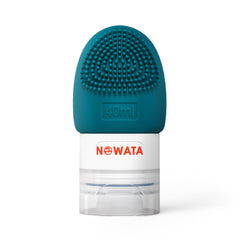

We got tired of packing two different soaps. One "eco-friendly" option for camping that couldn't handle real dirt. One effective option for home that wasted water and came with ingredient lists we couldn't pronounce. As doctors, parents, and backpackers, we kept waiting for someone to solve this. Eventually, we built it ourselves.
NOWATA is the soap we created after asking a question nobody in the industry seemed to ask: Why can't one plant-based formula work everywhere?
Two years of development gave us the answer. Our clumping technology physically removes 99.9%* of germs without water—no runoff contaminating streams, no gallons wasted at home sinks. The same bottle we pack for backcountry trips sits on our kitchen counter. Same formula. Same effectiveness. Zero compromise.
Here's what we learned through hundreds of trail tests and thousands of everyday uses: truly eco-friendly soap shouldn't require trade-offs. It should be readily biodegradable because that's non-negotiable near waterways. It should skip the water entirely because conservation matters everywhere—not just at campsites. And it should actually work on real messes, not just laboratory conditions.
Every ingredient in NOWATA breaks down naturally. Every use saves approximately two gallons of water. And every bottle replaces the compromise products we used to settle for.
Below, you'll find the science behind our plant-based formula, the environmental impact we've measured, and why outdoor enthusiasts and families are switching to one soap that does it all.
Quick Answers
What is biodegradable soap?
Definition: Soap that breaks down into natural elements (water, carbon dioxide, biomass) through microbial action after disposal.
What we learned developing NOWATA:
The term "biodegradable" has no legal regulation without third-party certification.
Verified biodegradable soap requires:
-
Complete decomposition within one year (FTC standard)
-
60-70% biodegradation within 28 days (OECD 301 standard)
-
Plant-based or naturally-derived ingredients
-
Third-party testing documentation
Important: Even genuinely biodegradable soap requires proper disposal—200 feet from waterways, on soil where microorganisms enable breakdown.
Bottom line: Biodegradable soap can be both effective and environmentally responsible—but only when claims are verified. Look for certifications, not just label language.
Top Takeaways
-
"Biodegradable" without certification means nothing.
-
FTC requires complete decomposition within one year
-
Enforcement is rare
-
Verify with: EPA Safer Choice, USDA BioPreferred, OECD 301, or ASTM testing
-
Fewer than 20% of cosmetic ingredients have been independently safety-assessed.
-
FDA gained meaningful oversight authority only in 2022
-
Third-party testing is the exception, not the norm
-
Even biodegradable soap shouldn't go directly into waterways.
-
Biodegradation requires soil microorganisms
-
Always dispose 200+ feet from lakes and streams
-
Let soil act as natural filter
-
Biodegradability and effectiveness are separate claims.
-
Eco-friendly doesn't guarantee effective
-
Effective doesn't guarantee eco-friendly
-
Demand documentation for both
-
Your choices compound.
-
Average family: 20,000+ gallons annually on handwashing
-
Every decision scales across millions of households
Why Most "Eco-Friendly" Soaps Fall Short
Walk down any camping aisle or browse "green" cleaning products online. You'll find plenty of options labeled eco-friendly, natural, or biodegradable. But read the fine print—or test them in real conditions—and the compromises become clear.
We learned this firsthand on backpacking trips. The biodegradable camp soap couldn't cut through trail grime. The plant-based option at home required running water for 30 seconds per wash. The "natural" products still contained ingredients we had to research. Everything marketed as sustainable came with trade-offs we were supposed to accept.
We stopped accepting them. Instead, we spent two years building something better.
What "100% Plant-Based" Actually Means in Our Formula
Plant-based is an easy claim. The execution is harder.
What we included:
-
Naturally derived cleansing compounds
-
Biodegradable binding agents
-
Gentle, skin-safe ingredients
What we excluded:
-
Alcohol (dries skin, unnecessary)
-
Parabens (questionable safety profile)
-
Phosphates (harmful to waterways)
-
Sulfates (too harsh for daily use)
-
Synthetic fragrances (potential irritants)
-
Any ingredient we couldn't explain to our kids
Every compound in NOWATA comes from plant sources. Not "mostly" plant-based. Not plant-based "where possible." One hundred percent—because near a stream or in your home, that distinction matters.
Biodegradable by Design, Not by Marketing
Here's what we learned researching camp soaps: "biodegradable" has no legal standard. Companies use it freely. Some products take months to break down. Others leave residues that persist in soil and water.
We designed NOWATA for backcountry use where environmental impact is immediate and visible.
Our biodegradability standard:
-
Breaks down naturally in soil and water
-
Leaves no harmful residue
-
Safe for use near (not in) natural waterways
-
Won't disrupt aquatic ecosystems when used responsibly
The test we applied: Would we use this product 200 feet from our favorite alpine lake and feel good about it? If the answer was no, we reformulated until it was yes.
Zero Water Waste: The Environmental Benefit Nobody Talks About
Most eco-friendly soap conversations focus on ingredients. Almost nobody mentions water.
Here's the math that changed our perspective:
-
Standard handwashing: ~2 gallons per wash
-
Average person washes hands: 8-10 times daily
-
Annual water use per person: 5,800-7,300 gallons
-
Family of four: 23,000-29,000 gallons annually
That's just handwashing. Add dishwashing, bathing, and cleaning—water consumption becomes staggering.
NOWATA's approach: Eliminate the water entirely.
Our formula works without rinsing. No faucet required. No runoff created. Every use conserves approximately two gallons.
Why this matters for camping:
-
No need to haul water for hand hygiene
-
No greywater disposal concerns
-
Leave No Trace principles easier to follow
-
Water reserves saved for drinking and cooking
Why this matters for everyday life:
-
41%+ of the U.S. currently faces drought conditions
-
Municipal water treatment requires significant energy
-
Lower water bills (yes, it adds up)
-
Conservation becomes effortless habit
How NOWATA Works: Camping and Home
Same formula. Same process. Different settings.
The mechanism:
-
Apply a small drop to dry hands
-
Rub for 20-30 seconds
-
Watch clumps form around dirt, oil, and germs
-
Brush or wipe clumps away
-
Clean hands—nothing left behind
At the campsite:
-
Works on trail dirt, pine sap, campfire residue
-
No water needed—conserve your supply
-
Lightweight and packable (80-100 uses per bottle)
-
Biodegradable formula safe for backcountry use
-
Perfect for before meals, after bathroom breaks, post-activity cleanup
At home:
-
Handles kitchen prep, post-playground cleanup, everyday messes
-
Faster than traditional handwashing
-
Kids enjoy watching the clumping action
-
Saves water with every use
-
One bottle lasts weeks of family use
We designed NOWATA for both environments because we live in both. Weekend backpackers. Weekday parents. The same soap handles our whole life.
Built for Outdoor Enthusiasts Who Care
We're backpackers, hikers, and campers ourselves. We know what outdoor hygiene products actually need to deliver.
What outdoor enthusiasts tell us they need:
-
Lightweight gear (every ounce matters)
-
Multi-use products (fewer items to pack)
-
Effectiveness on real dirt (not just lab conditions)
-
Environmental responsibility (Leave No Trace matters)
-
No water dependency (conservation is the goal)
What NOWATA delivers:
-
Compact bottle with 80-100 uses
-
One product for hands, works in any setting
-
Clumping formula handles genuine grime
-
100% biodegradable, plant-based ingredients
-
Zero water required
We've used NOWATA on multi-day backpacking trips, car camping weekends, and day hikes. It lives in our packs year-round. Same bottles we keep at home for everyday use.
Built for Families Who Want Sustainability Without Sacrifice
Eco-conscious parents face constant trade-offs. Sustainable products that don't work. Effective products that aren't sustainable. Kid-safe options that require compromise on one end or the other.
What parents tell us they need:
-
Safe ingredients for children
-
Products that actually clean dirty hands
-
Sustainability that fits real life
-
Simplicity (fewer products, less decision fatigue)
What NOWATA delivers:
-
100% plant-based formula safe for all ages
-
Clumping technology handles playground dirt, art supplies, meal prep mess
-
Biodegradable and waterless by design
-
One bottle for home, car, diaper bag, anywhere
We created NOWATA as parents first. Our kids use it daily—before meals, after play, whenever hands need cleaning. The eco-friendly choice shouldn't require convincing kids to cooperate with a complicated routine. Ours takes 30 seconds and they actually enjoy it.
The Environmental Impact You Can Measure
We believe in specific claims, not vague promises.
Per NOWATA use:
-
Water saved: ~2 gallons
-
Ingredients: 100% plant-derived
-
Biodegradability: Complete natural breakdown
-
Chemical runoff: Zero (no rinsing required)
Per bottle (80-100 uses):
-
Water conserved: Up to 200 gallons
-
Packaging: Single bottle replaces multiple products
-
Carbon footprint: Reduced (no water heating for handwashing)
Annual impact (family of four):
-
Potential water savings: 25,000+ gallons
-
Chemical-free hand hygiene: 3,000+ washes
-
Single sustainable choice replacing multiple compromises
We track these numbers because they matter. Environmental responsibility isn't about feeling good—it's about measurable impact.
Swiss Lab-Tested: Eco-Friendly AND Effective
Some eco-friendly products sacrifice performance for sustainability. We refused that trade-off.
Testing details:
-
Facility: Independent Swiss laboratory
-
Protocol: ASTM E1174 (healthcare-grade standard)
-
Result: Over 99.9%* removal of tested bacteria and viruses
What this means:
-
Plant-based doesn't mean less effective
-
Readily Biodegradable ingredients can deliver real results
-
You don't have to choose between eco-friendly and clean hands
We pursued Swiss lab validation because we wanted proof—not just for customers, but for ourselves. An eco-friendly soap that doesn't actually clean isn't helping anyone.
What You're Getting
When you order from NowataClean.com:
-
100% plant-based formula—every ingredient naturally derived
-
Fully biodegradable—safe breakdown in soil and water
-
Zero water required—saves ~2 gallons per use
-
Swiss lab-tested—99.9%* germ removal verified
-
80-100 uses per bottle—compact and long-lasting
-
30-day satisfaction guarantee—risk-free trial
-
Made in the USA—by doctors who use it themselves
One soap for camping. One soap for home. One soap that finally ends the compromise.
From the Founders:
"We've carried NOWATA on backcountry trips where every ounce and every drop of water matters, and we've kept the same bottle on our kitchen counter for daily family use—because truly eco-friendly soap shouldn't require you to pack two products or accept two different standards for what 'sustainable' means."
— Dr. Ruslan Maidans & Dr. Yalda Shahriari NOWATA Founders | Doctors, Parents & Backpackers

Essential Resources: How to Tell Real "Biodegradable" from Marketing Fluff
Here's something we learned as doctors before we became soap makers: the word "biodegradable" on a label doesn't mean what most people think it means. There's no legal requirement to prove the claim. No standard definition. No enforcement.
That frustrated us as parents shopping for our own kids—and it's exactly why we spent two years developing a formula we could actually verify through Swiss laboratory testing.
Whether you're evaluating NOWATA or any other product claiming eco-friendly credentials, these seven resources will help you ask the right questions and find honest answers.
1. FTC Green Guides — the rules companies are supposed to follow
The Federal Trade Commission sets the legal standard: products must completely decompose within one year to make unqualified "biodegradable" claims. Most products making that claim? They don't actually meet this threshold.
The parent translation: If a label says "biodegradable" without explaining how or how fast, that's a red flag—not a reassurance.
URL: https://www.ftc.gov/news-events/topics/truth-advertising/green-guides
2. OECD Test No. 301 — the science behind legitimate claims
This is the international gold standard for biodegradability testing. Products must demonstrate 60–70% biodegradation within 28 days under controlled laboratory conditions. When we say our formula is readily biodegradable, this is the kind of rigorous testing framework we're referencing.
The parent translation: Ask any company making biodegradable claims which testing protocol they used. If they can't answer, that tells you something.
URL: https://www.oecd.org/en/publications/test-no-301-ready-biodegradability_9789264070349-en.html
3. EPA Safer Choice — government-verified, not self-declared
The U.S. Environmental Protection Agency screens every single ingredient in certified products for human health and environmental impact—including whether formulas harm aquatic ecosystems. This isn't a label companies can just slap on; it requires actual ingredient-by-ingredient review.
The parent translation: When you see the Safer Choice label, someone other than the company selling the product has verified the claims.
URL: https://www.epa.gov/saferchoice
4. USDA BioPreferred — proof that "plant-based" isn't just a buzzword
Federal certification that uses ASTM D6866 testing to measure exactly how much of a product comes from renewable biological sources versus petroleum. The certified percentage appears right on the label—no guessing, no vague promises.
The parent translation: "Plant-based" should mean something measurable. This program makes sure it does.
URL: https://www.biopreferred.gov/
5. EWG Skin Deep Database — what "biodegradable" doesn't tell you
Here's something important: a soap can be biodegradable and still contain ingredients you wouldn't want on your toddler's hands. The Environmental Working Group's independent database rates over 130,000 products by cross-referencing nearly 60 toxicity databases. It tells you what breaks down—and whether it was safe in the first place.
The parent translation: Biodegradability is about what happens after use. Safety is about what happens during use. You need both.
URL: https://www.ewg.org/skindeep/
6. Leave No Trace Seven Principles — even biodegradable soap needs boundaries
This one surprised us when we first started camping with our kids: even genuinely biodegradable soap shouldn't go directly into lakes and streams. The National Park Service, U.S. Forest Service, and Bureau of Land Management all recommend using any soap—biodegradable or not—at least 200 feet from water sources.
The parent translation: "Biodegradable" doesn't mean "dump it in the river." Proper use matters as much as proper formulation.
URL: https://lnt.org/why/7-principles/
7. EPA Greener Products Guide — how to spot greenwashing
The EPA created this guide because terms like "eco-friendly," "natural," and "biodegradable" have no legal definition without third-party certification. It explains which eco-labels require actual verification versus which ones companies can self-declare without any oversight.
The parent translation: A seal on a package only means something if an independent organization put it there after reviewing the formula.
URL: https://www.epa.gov/greenerproducts/identifying-greener-cleaning-products
The bottom line
We built NOWATA to meet the standards we couldn't find in other products—Swiss lab-tested, 100% plant-based, readily biodegradable, and safe enough for our own children's hands. But we also believe you shouldn't have to take our word for it.
Use these resources. Ask hard questions. Verify claims independently.
That's exactly what we'd do as parents. It's exactly what we did as the doctors who formulated this soap.
Questions about how NOWATA meets these standards? We're happy to share our testing documentation. Reach out at support@nowataclean.com
Supporting Statistics: What We Learned Developing a Soap for Our Own Kids
We started as parents trying to find a hand cleanser we trusted for our children. What we discovered about the personal care industry changed everything.
Stat 1: Fewer than 20% of cosmetic ingredients have been independently assessed for safety
The cosmetics industry's own safety panel has reviewed less than a fifth of the 10,500+ ingredients used in personal care products over 30+ years.
What surprised us:
-
The FDA doesn't require pre-market safety testing for cosmetics
-
Only 11 ingredients have been deemed "unsafe" by industry review
-
Most "safe" and "gentle" claims have never been independently verified
Our response: We pursued Swiss laboratory testing using ASTM E1174 protocols—the same rigor we'd expect from a clinical study.
Source: Environmental Working Group
Stat 2: "Biodegradable" legally requires complete decomposition within one year—most products fail this standard
Per FTC Green Guides, unqualified biodegradable claims require products to fully break down into natural elements within 12 months of disposal.
The catch:
-
Landfill disposal prevents biodegradation (no sunlight, air, or moisture)
-
Some surfactants break down into more toxic compounds
-
Many claims apply only under ideal lab conditions—not real-world use
What we did differently: We formulated NOWATA with 100% plant-based ingredients that biodegrade as nature intended—not just on paper.
Source: FTC Green Guides Summary
Stat 3: Only ~2% of personal care products carry rigorous EPA safety certification
The numbers:
-
~2,000 products certified by EPA Safer Choice
-
~100,000 personal care products on the U.S. market
-
Result: roughly 2% with government-verified ingredient screening
Why this matters to us as parents: Terms like "natural," "gentle," and "eco-friendly" have no regulatory meaning without third-party certification.
Our approach:
-
Start with plant-based ingredients we understand
-
Test the finished product through independent labs
-
Be transparent about exactly what's in the bottle
Source: EPA Safer Choice
Stat 4: Handwashing uses more water than most families realize
EPA data:
-
Average American water use: 82 gallons/day
-
Bathroom faucet flow rate: 2 gallons/minute
-
70% of household water is used indoors
The math we did for our own family:
|
Daily Handwashes |
Water Per Wash |
Daily Total |
Annual Total |
|
8-10 per person |
1.5-2 gallons |
12-20 gallons |
4,380-7,300 gallons |
NOWATA's impact:
-
80-100 uses per tube
-
Each use replaces ~2 gallons of water
-
Potential savings: 150-200 gallons per tube
We didn't set out to make an environmental product. The water savings became a meaningful bonus.
Source: EPA WaterSense Statistics
Stat 5: The FDA went 84 years without meaningful cosmetic oversight
The Modernization of Cosmetics Regulation Act of 2022 (MoCRA) was the first major expansion of FDA cosmetic authority since 1938.
Before MoCRA, the FDA could not:
-
Require safety testing
-
Mandate product recalls
-
Require adverse event reporting
What this meant: Every personal care product your parents and grandparents used was developed under essentially zero federal oversight.
Our decision: We didn't wait for enforcement to catch up. We built NOWATA to a standard we'd want for our own children—tested, transparent, and documented.
Source: FDA MoCRA Overview
You shouldn't have to take our word for it.
Use these resources. Ask hard questions. Verify claims independently. That's exactly what we did—and it's what led us to create NOWATA.
Questions about our testing or formulation?
-
Email: support@nowataclean.com
Final Thought: Why We Think the "Biodegradable" Conversation Is Missing the Point
After two years of research and formulation, here's what we've concluded—and why we think the industry needs to change.
What This Research Taught Us
We started as parents with a simple problem: we couldn't find a hand cleanser that met our standards. What we discovered was more troubling than expected.
Key findings:
-
The safety gap is real. Fewer than 20% of cosmetic ingredients have been independently reviewed.
-
Environmental claims are largely unverified. "Biodegradable" has a legal definition most products don't meet.
-
Third-party verification is rare. Only ~2% of products carry EPA Safer Choice certification.
-
Water waste hides in plain sight. Families use thousands of gallons annually just on handwashing.
Our Opinion: The Problem Isn't Bad Actors—It's Low Standards
Here's something that might be unpopular in our industry.
We don't think most companies are trying to deceive consumers. We think the system makes it too easy to make claims without doing the work to back them up.
When "biodegradable" can mean anything from "breaks down in a year" to "technically degrades over decades," the word loses meaning. When "natural" has no legal definition, it becomes decoration. When safety testing is optional, rigorous companies compete against those who simply write "gentle" on the label.
The result: Consumers have no reliable way to distinguish genuine quality from clever copywriting.
What We Think Needs to Change
-
Verification should be the norm, not the exception. Third-party testing is currently a competitive advantage. It should be table stakes.
-
"Biodegradable" needs enforcement, not just guidelines. The FTC standard exists. Enforcement doesn't. Certifications like EPA Safer Choice remain the most reliable signals.
-
Ingredient transparency should be complete and accessible. We list every ingredient. We explain what each one does. This shouldn't make us unusual.
-
Environmental claims deserve honest math. We show our water-savings calculation. Every environmental claim should come with the work behind it.
Our First-Hand Experience: What It Actually Takes
We'll be honest. Building a product to genuine standards is hard.
During development, we had conversations like:
-
"Do we really need Swiss lab testing?"
-
"Does 100% plant-based matter if most people won't check?"
-
"Why invest in biodegradability testing when 'eco-friendly' isn't regulated?"
Every time, we came back to the same answer: we were making this for our own children first.
That meant doing the work even when regulations didn't require it.
The Perspective We Wish More Companies Would Adopt
Our genuine belief: The bar for "good enough" in personal care is far too low. Consumers deserve better than becoming regulatory experts to make informed choices.
When we say NOWATA is:
-
Swiss lab-tested (99.9%* germ removal)
-
100% plant-based and readily biodegradable
-
Saving ~2 gallons of water per use
-
Created by doctors for our own family
...we're describing standards we held ourselves to because industry defaults aren't good enough.
What We Hope You Take Away
Remember these four things:
|
Principle |
Action |
|
Skepticism is healthy |
Question vague claims without certification |
|
Third-party verification matters |
Look for EPA Safer Choice, USDA BioPreferred, or specific testing standards |
|
Transparency is a signal |
Companies that show their work are more likely to have done it |
|
Your choices add up |
Every decision compounds across millions of households |
Our Commitment
We built NOWATA to be the product we wished existed for our own family. We created this resource to give you the tools to evaluate any product's claims—including ours.
Ask us hard questions. Request our testing documentation. Verify our claims independently.
We built NOWATA to withstand that scrutiny. We think every product should.
Ready to dig deeper?
-
Full ingredient list: nowataclean.com
-
Testing documentation: support@nowataclean.com
-
Talk to us: (704) 649-1789
We're parents first, scientists second—and always happy to talk.
— Dr. Ruslan Maidans & Dr. Yalda Shahriari, Founders
Next Steps: Put This Knowledge Into Action
You've done the research. Here's how to use it.
Step 1: Audit Your Current Products
Check your labels for:
-
Specific certifications (EPA Safer Choice, USDA BioPreferred)
-
Testing standards (ASTM, OECD protocols)
-
Complete ingredient lists
-
Quantified claims ("99.9%" vs. "fights germs")
Red flags:
-
"Natural," "eco-friendly," "green" without certification
-
"Proprietary blend" instead of full ingredients
-
No testing methodology referenced
-
Environmental claims without metrics
Free tool: EWG Skin Deep Database
Step 2: Ask Better Questions
Five questions for any brand:
-
What third-party testing supports your claims?
-
Can you share testing documentation?
-
What certifications verify your product?
-
What biodegradability standard do you meet?
-
What does each ingredient do?
Companies that welcome these questions usually have good answers.
Step 3: Calculate Your Household Impact
Quick water audit:
|
Your Household |
Number |
|
Family members |
___ |
|
Handwashes per person/day |
___ |
|
Gallons per wash (avg. 2) |
___ |
|
Daily total |
___ gallons |
|
Annual total |
___ gallons |
Example (family of four):
-
4 people × 8 washes × 2 gallons = 64 gallons/day
-
64 × 365 = 23,360 gallons/year
Replacing half with rinse-free alternatives saves 11,000+ gallons annually.
Step 4: Try a Verified Alternative
Three ways to start with NOWATA:
|
Option |
Best For |
|
Single tube |
Testing with your family first |
|
Starter bundle |
Home, car, and bag coverage |
|
Request docs first |
Reviewing our testing before buying |
Shop: nowataclean.com
30-day satisfaction guarantee. No questions asked.
Step 5: Bookmark These Resources
Certification verification:
Regulatory standards:
Water conservation:
Step 6: Share What You've Learned
Every informed consumer raises the industry standard.
Take action:
-
Share this guide with other parents
-
Ask brands about testing and certifications
-
Mention transparency in product reviews
-
Teach kids to read labels critically
Quick-Start Checklist
This week:
-
Audit 3 products in your home
-
Look up one product in EWG database
-
Calculate your family's water use
This month:
-
Try one verified alternative
-
Ask one brand for testing docs
-
Bookmark resource links
Ongoing:
-
Check certifications before buying
-
Teach family to read labels
-
Share what you learn
One Final Thought
Whether you choose NOWATA or not, we hope you leave here better equipped to make informed decisions for your family.
That's the win we're after.
— Dr. Ruslan & Dr. Yalda
FAQ on "Biodegradable Soap"
Q: What does "biodegradable soap" actually mean?
A: This was one of the first questions we asked when developing NOWATA. The answer surprised us.
Technical definition: Soap that breaks down into natural elements through microbial action.
The problem: The term has no legal regulation without third-party certification. Anyone can use it.
What the standards actually require:
-
FTC Green Guides: Complete decomposition within one year after disposal
-
OECD 301 standard: 60-70% biodegradation within 28 days
What we discovered:
-
Some formulas biodegrade over decades, not months
-
Others break down into compounds more harmful than the original
-
Most labels provide no verification method
Why we chose 100% plant-based ingredients: We didn't want to meet the minimum definition. We wanted genuine biodegradability.
Our advice: Treat unverified "biodegradable" claims like "natural" or "eco-friendly"—marketing terms until proven otherwise.
Q: How can I tell if a soap is truly biodegradable?
A: After two years of research, here's the verification framework we use.
Look for these signals:
-
Third-party certifications (EPA Safer Choice, USDA BioPreferred)
-
Specific testing standards (OECD 301, ASTM protocols)
-
Complete ingredient lists with explanations
-
Quantified claims with percentages and timeframes
Avoid these red flags:
-
"Eco-friendly" or "natural" without certification
-
"Proprietary blend" hiding ingredients
-
No testing methodology mentioned
-
Vague environmental claims
What we learned firsthand: When we contacted manufacturers for documentation:
-
Companies with genuine formulations shared data eagerly
-
Companies with marketing-driven claims got defensive or vague
The test we apply: Ask for documentation. Companies that have it will share it.
We built NOWATA to pass this test. Ask us—we'll send our data.
Q: Can I use biodegradable soap directly in lakes, rivers, or streams?
A: No. This is something we wish more people understood.
Our assumption was wrong: We initially thought "biodegradable" meant safe for waterways. It doesn't.
What biodegradation actually requires:
-
Soil microorganisms
-
Oxygen exposure
-
Time
What water lacks: The filtration that soil provides.
Leave No Trace guidelines are specific:
-
Carry water 200 feet from streams or lakes
-
Use small amounts of biodegradable soap
-
Scatter wastewater on soil—not in water
The key distinction:
-
"Biodegradable" = what happens after proper disposal
-
It's not permission to skip proper disposal
How this shaped NOWATA messaging: We tell outdoor customers the same thing—dispose thoughtfully, away from water sources. Formula matters. Method matters too.
The rule: Even the best biodegradable soap needs soil to work. Respect the process.
Q: Is biodegradable soap as effective as regular soap?
A: Yes—when properly formulated and independently tested. But verify both claims separately.
Critical distinction:
|
Claim |
What It Measures |
|
Biodegradability |
Environmental fate (after use) |
|
Effectiveness |
Cleaning performance (during use) |
These are independent qualities. A soap can be:
-
Highly biodegradable but ineffective
-
Highly effective but environmentally persistent
You need verification for both.
Our NOWATA approach:
-
Efficacy: Swiss lab testing, ASTM E1174 protocols, 99.9%* germ removal
-
Environment: 100% plant-based ingredients, genuine biodegradability
What surprised us during development:
-
Some "natural" sounding ingredients had concerning environmental profiles
-
Some unfamiliar ingredients were both effective and readily biodegradable
-
Assumptions were often wrong—testing was essential
Our advice: Don't let "biodegradable" excuse skipping efficacy questions. Demand documentation for both claims.
Q: What's the difference between biodegradable soap and hand sanitizer?
A: This question is why we created NOWATA.
The parenting dilemma we faced:
-
Sanitizer: Convenient, no water—but leaves residue before snack time
-
Traditional soap: Effective, no residue—but requires a sink
Neither felt right. We built a third option.
Direct comparison:
|
Factor |
Traditional Biodegradable Soap |
Hand Sanitizer |
NOWATA |
|
Mechanism |
Physically removes germs |
Chemically kills germs |
Physically removes germs |
|
Residue |
None |
Alcohol/chemicals |
None |
|
Water needed |
Yes |
No |
No |
|
Removes visible dirt |
Yes |
No |
Yes |
|
Biodegradability |
Varies |
Varies |
100% plant-based |
Key insight from testing: Sanitizers kill germs but don't remove them—or dirt and oil. Soap removes everything but needs water.
NOWATA's solution:
-
Clumping technology lifts and removes contaminants
-
Rub until clumps form
-
Brush off
-
Done—no water, no residue
Best use cases:
-
Visibly dirty hands → Soap beats sanitizer
-
Convenience without compromise → Verified rinse-free readily biodegradable option
Our honest take: We built what we wished existed. Two years later, it's still what we use on our own kids.
Ready to Experience Biodegradable Soap That Actually Meets the Standard?
Try NOWATA risk-free and see why families trust our Swiss lab-tested, 100% plant-based formula for clean hands without compromise. Shop now at nowataclean.com — backed by our 30-day satisfaction guarantee.
*Based on laboratory testing using a modified ASTM E1174 test, NOWATA physically removed over 99.9% of virus (Murine Norovirus, a human norovirus surrogate) and bacteria (E.Coli) particles from skin. Results do not imply disease prevention. For hand cleansing only.
Leave a comment