




By Dr. Ruslan Maidans, DDS, and Dr. Yalda Shahriari, PhD, Biomedical Engineering · Founders of NOWATA™ · Parents and backpackers
Biodegradable soap still doesn't belong in a stream, because it needs soil microbes to break down and a lake has none to offer. That one fact is the whole reason Leave No Trace hand washing exists: you keep soap and greywater away from lakes, streams, and springs, either by carrying your water at least 200 feet from shore and scattering it on soil, or by using a rinse-free soap that never makes greywater at all.
We learned the difference on a lakeside trip with our kids. Dinner waited while one of us carried a pot of lake water about 70 paces uphill, washed four pairs of grimy hands, and walked back out to scatter the dirty water. Then someone needed the bathroom, and we did it all again.
The rules made sense to us as scientists. As parents, we couldn't keep up with them.
Both methods below leave no trace. Pick the one that fits your trip and your patience at the end of a long day.
TL;DR Quick Answers
Leave No Trace Hand Washing
Leave No Trace hand washing means cleaning your hands outdoors without letting soap, dirt, or greywater reach lakes, streams, or springs.
The standard LNT method takes a pot and a short walk:
-
Carry water at least 200 feet (about 70 adult paces) from any water source.
-
Wash with a small amount of biodegradable soap, standing on soil.
-
Scatter the greywater broadly.
The rinse-free method we use takes a dime-sized drop of plant-based soap. Rub it on dry hands until clumps form, brush the clumps into your trash bag, and pack them out. You haul no water and leave no greywater behind.
Most guides skip one detail that matters: "biodegradable" doesn't mean stream-safe, because soap needs soil to break down. The cleanest greywater is the greywater you never make.
Top Five Takeaways
-
Wash 200 feet away. That's about 70 paces from lakes, streams, camp, and trails.
-
Biodegradable isn't stream-safe. Soap needs soil microbes to break down, so in water it still affects fish and insects.
-
Greywater goes on soil. Strain out food bits, pack them out, and scatter the rest broadly.
-
Pack out anything solid, including wipes labeled biodegradable.
-
Rinse-free soap removes the greywater step because there's nothing to carry, strain, or scatter.

The 200 Feet From Water Rule, Explained
Leave No Trace Principle 3: Dispose of Waste Properly asks you to carry wash water 200 feet away from streams or lakes and to use only small amounts of biodegradable soap.
The distance does two jobs. It gives soil time to filter soap and dirt before anything reaches the water, and it keeps people from trampling the banks and springs where everyone gathers.
You don't need a tape measure. Count about 70 adult paces.
LNT applies the same 200 feet to camp and trails when you dig a cathole, so in practice most backcountry hand washing happens right after a bathroom trip, well away from the water you'd naturally reach for.
Heading somewhere fragile, like alpine country, desert, or a river canyon? Local rules may be stricter, so check with the land manager before you go.
Is Biodegradable Soap Safe In Streams?
No. Biodegradable soap is designed to break down in soil, and even small amounts in water can affect water quality. Backpacker magazine calls this one of the most common myths about "biodegradable" camp soap, because the surfactants that make soap clean also disturb the water they land in.
Here's what soap does once it reaches a stream:
-
It lowers the surface tension that water striders and other insects rely on.
-
It can strip the protective mucus on fish gills.
-
It adds nutrients that feed algae, which can draw oxygen out of the water.
The label doesn't help much, either. "Biodegradable" has no single enforced standard, so it tells you little about how fast a soap breaks down or under what conditions. We explain how to tell verified claims from marketing in our guide to biodegradable soap for camping.
As scientists, this surprised us more than anything we researched. As parents, it changed what we packed.
Greywater Disposal While Camping: The Standard LNT Method
If you're washing with water and soap, here's how to do it right:
-
Collect water in a pot or collapsible jug.
-
Walk 200 feet from the lake or stream.
-
Use a tiny amount of biodegradable soap.
-
Wash over soil, not on rock slabs or in dry sandy washes where runoff flows.
-
Strain food bits out of dishwater and pack them out.
-
Scatter the greywater broadly, well away from camp if you're in bear country.
This method works. It also costs you water you carried, time you'd rather spend eating, and a round trip every time someone needs clean hands.
The Rinse-Free LNT Hand-Washing Method
When you create no greywater, you have nothing to carry 200 feet.
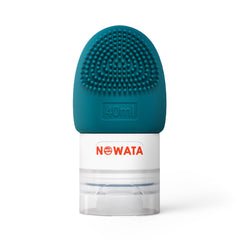
Leave No Trace notes that hand cleaners needing no rinse let you clean up without worrying about wastewater. Hand sanitizer fits that description, but it doesn't lift away visible dirt, sap, or grease. NOWATA™ is a plant-based, rinse-free soap that physically removes dirt, oil, and 99.9%* of germs with clumping technology, so the grime leaves your hands instead of staying on them.
How to use it:
-
Apply a dime-sized drop to dry hands.
-
Rub for 20–30 seconds until clumps form.
-
Brush the clumps into your trash bag.
-
Pack the bag with the rest of your trash.
Our formula is 100% plant-based and biodegradable, and we still pack the clumps out. The simplest trace to leave is none.
Why it works on the trail:
-
You haul no water for hand washing and have no greywater to strain.
-
Each pocket-size bottle gives you 80–100 uses.
-
The alcohol-free formula won't sting cracked trail hands.
When To Clean Your Hands In The Backcountry: Six Tips
-
After the cathole or trowel, every single time.
-
Before cooking or sharing food. Pour trail mix into each person's hands instead of letting everyone reach into the bag.
-
After handling fish or game.
-
After treating or filtering water. Keep clean hands away from the "dirty" side of your filter.
-
Before touching your eyes or contact lenses.
-
After helping kids or pets, since little hands and paws touch everything.
For groups, give each adult a bottle and make "clean hands before food" a camp rule. Our kids treat the clumping like a science experiment, which has ended most of our wash-time negotiations.

"After years of carrying pots of lake water 70 paces uphill so our kids could eat with clean hands, we decided the most Leave No Trace–friendly greywater is the greywater you never create. So a dentist and a biomedical engineer designed a soap that lifts dirt and germs off dry skin, tested it in a Swiss lab, and then tested it again on our own family's trail hands before we shared it with anyone."
Dr. Ruslan Maidans, DDS, and Dr. Yalda Shahriari, PhD, Biomedical Engineering, Founders of NOWATA
Essential Resources
Essential Resources On "Leave No Trace Hand Washing": Seven Guides We Read Before Every Trip
We keep coming back to these sources as parents, scientists, and backpackers. We picked them the way good health writers pick sources, favoring plain language and named experts you can check, an approach this guide to the basics of healthcare blogging lays out clearly. Each one answers a question you'll probably have next.
1. See Why "Just A Little Soap" Adds Up On Busy Trails
The Appalachian Trail Conservancy shows how tiny amounts of soap, repeated by hundreds of hikers each season, add up to real harm in fragile streams. It also walks you through broadcasting strained dishwater.
Source: Appalachian Trail Conservancy – 11 Easy Ways to Improve Your Leave No Trace Footprint
2. See How National Parks Apply The 200-Foot Rule
The National Park Service lists all seven principles, including carrying wash water 200 feet from streams and lakes. Read it before you go so you know what rangers expect.
Source: National Park Service – Leave No Trace Seven Principles
3. See Why "Biodegradable" Doesn't Mean Harmless
A Maine lake scientist explains why biodegradable soap still harms lakes. Surfactants can be toxic to small aquatic life, and even "no phosphate" soaps add phosphorus that feeds algae. Maine law also prohibits putting soap in its lakes without a permit.
Source: Belgrade Lakes Association – Watershed Wisdom: Summertime Bathing
4. Check Public-Land Guidance For Desert And High Country
The Bureau of Land Management's Steens Mountain handout covers waste and wash-water rules for remote, fragile landscapes where you'll rarely find a restroom.
Source: Bureau of Land Management – Leave No Trace Principles (Steens Mountain)
5. Understand When Hand Sanitizer Falls Short
The CDC advises against using sanitizer on visibly dirty or greasy hands and names camping and fishing as examples. That gap is exactly why we built a rinse-free soap that removes grime.
Source: Centers for Disease Control and Prevention – Hand Sanitizer Guidelines and Recommendations
6. See Why Soap In A Stream Matters To Wildlife
The USGS explains surface tension, the property that lets water striders walk on water, and how soaps and detergents lower it. After reading it, "don't wash in the lake" stops being a rule and becomes something you can picture.
Source: U.S. Geological Survey – Surface Tension and Water
7. Get Practical Backcountry Hygiene Tips From Hikers
Washington Trails Association covers bathroom, period, and hand hygiene on trail. We remind you to keep any soap at least 200 feet from water. Send it to the new hikers in your group.
Source: Washington Trails Association – Keep It Clean in the Backcountry
Supporting Statistics
These three numbers changed how we think about washing outdoors.
1. A Running Faucet Uses About 2 Gallons A Minute
-
The EPA reports that letting a faucet run for five minutes while washing dishes wastes 10 gallons of water, or roughly 2 gallons a minute.
-
Our take: At home, it shows on a water bill. On the trail, it's water you filtered, carried, and rationed, which is why our "saves up to 2 gallons per use" figure matters more in the backcountry than anywhere else. Water disappears faster than most of us expect, as one writer learned when a fresh-cut tree drank its stand dry in two days in this story about a Christmas tree's water consumption.
Source: U.S. Environmental Protection Agency – WaterSense Statistics and Facts
2. More People Are Camping And Hiking Than Ever
-
The Outdoor Industry Association's 2025 report found that hiking, camping, and fishing each gained more than 2 million new participants.
-
Many of those newcomers learn Leave No Trace as they go.
-
Our take: More boots means more people sharing the same water sources. If every new camper rinses soap near a stream "just once," the impact adds up fast, so we'd rather make the right habit the easy one.
Source: Outdoor Industry Association – 2025 Outdoor Participation Trends Report
3. Surfactants Hit Fish Gills First
-
A peer-reviewed study in the NIH's PubMed Central library notes that roughly 60% of surfactant products end up in aquatic environments.
-
The researchers cite toxic effects on aquatic organisms at concentrations as low as 0.07 mg/L, and they note that surfactants affect the gills and skin first.
-
Our take: As scientists, we read this as confirmation of what LNT teaches. As parents who camp beside lakes with our kids, we took it personally. A small amount of soap isn't small to a trout.
Final Thoughts And Opinion
Everything above comes back to one idea: keep soap and dirty water out of lakes and streams.
What that looks like on the trail:
-
Wash at least 200 feet (about 70 paces) from water, camp, and trails.
-
Remember that biodegradable soap still needs soil to break down, so it never goes in a stream.
-
If you use water, strain your greywater and scatter it broadly.
-
If you'd rather skip greywater entirely, use a rinse-free soap.
Our opinion: we think "no greywater" should become the default for hand washing on the trail.
The traditional method is sound. It also asks tired people to perform a multi-step routine perfectly, every time, often by headlamp. On our own trips, it never broke down because we didn't know better. It broke down on a cold evening with hungry kids and a lake right there.
The best LNT habit is easy enough to follow.
We're not trying to replace the classics. Water and biodegradable soap are still the right call for dishes and bathing, and hand sanitizer still has a place when hands aren't visibly dirty. For everyday hand washing (after the cathole, before meals, and whenever little hands touch everything), rinse-free soap is our go-to.
Pack the method that fits your trip, then leave the place exactly as you found it.
Frequently Asked Questions
Q: What Is Leave No Trace Hand Washing?
A: It's cleaning your hands outdoors without letting soap or dirty water reach lakes, streams, or springs.
-
Standard method: carry water 200 feet from the source, wash with a little biodegradable soap, and scatter the greywater on soil.
-
Rinse-free method: rub until clumps form, brush them into your trash bag, and pack them out.
Q: What Is The 200 Feet From Water Rule?
A: It's the Leave No Trace guideline to wash, dig catholes, and dispose of wastewater at least 200 feet, or about 70 adult paces, from lakes and streams. The distance lets soil filter soap before it reaches water and keeps foot traffic off fragile shorelines.
Q: Is Biodegradable Soap Safe In Streams?
A: No. Biodegradable soap breaks down in soil, not water.
-
In a stream, soap lowers the surface tension insects rely on.
-
It can also affect fish gills.
This ourselves surprised us when we started researching camp soaps.
Q: How Do You Dispose Of Greywater When Camping?
A: Follow these steps:
-
Wash at least 200 feet from any water source.
-
Strain out food bits and pack them out.
-
Scatter the greywater broadly over soil, well away from camp in bear country.
-
At developed campgrounds, ask the host whether there's a designated drain.
Q: Is Hand Sanitizer Leave No Trace Friendly?
A: Yes. It needs no rinse, so it creates no wastewater. The catch is that the CDC says sanitizer may not work as well on visibly dirty or greasy hands, and after a cathole trip or a muddy trail, that describes most hands. We built a rinse-free soap that physically removes the dirt for exactly that reason.
Q: What Do I Do With The NOWATA Clumps On The Trail?
A: Brush them into your trash bag and pack them. The formula is 100% plant-based and biodegradable, but packing the clumps out is the simplest way to leave no trace near camp or water.
Q: How Long Does One Bottle Last On A Trip?
A: One bottle gives you 80–100 uses at a dime-size drop each. For our family, one bottle comfortably covers a weekend trip, and with no water to carry for hand washing, your pack gets lighter too.
Clean Hands, Zero Greywater: Pack NOWATA For Your Next Trip
Leave No Trace hand washing gets a lot easier when you have no water to haul 200 feet and no greywater to scatter. Shop NOWATA rinse-free soap and bring a plant-based, biodegradable soap that physically removes 99.9%* of germs to every trail, campsite, and picnic table.
*Based on laboratory testing using a modified ASTM E1174 test, NOWATA physically removed over 99.9% of virus (Murine Norovirus, a human norovirus surrogate) and bacteria (E.coli) particles from skin. Results do not imply disease prevention. For hand cleansing only.
Leave a comment