




You wash your hands every day — but have you ever wondered what's actually happening when soap meets skin? Most people haven't, and that's a problem. After years of clinical practice and hands-on research in chemistry and biomedical engineering, we can tell you that what most people call "hand washing" barely scratches the surface of what clean hands really require.
Here's something we discovered firsthand while developing NOWATA™: traditional hand washing doesn't kill germs — it physically removes them. That distinction changed everything about how we approached hygiene for our own kids, and it should change how you think about it, too. When we tested our plant-based, rinse-free formula in a Swiss laboratory using ASTM E1174 protocols, we watched it physically remove over 99.9% of germs through a clumping mechanism that works without water, without alcohol, and without compromise.
We wrote this guide because the same gap that frustrated us as parents — the one between what science knows about hand hygiene and what families actually do when there's no sink in sight — still exists for millions of people. Inside, you'll find a doctor's breakdown of what hand washing truly means at a microbiological level, the different types of hand cleansing available today, why it remains the single most important defense against infectious disease, and what to do when clean water simply isn't an option.
Whether you're chasing a toddler through a playground or halfway up a trail with muddy hands and no faucet, this guide was built from the same question we asked ourselves as parents and scientists: what if clean hands didn't require a sink at all?
TL;DR Quick Answers
What is hand washing?
Hand washing is the mechanical process of physically removing dirt, oil, and germs from the surface of your skin. Soap doesn't kill germs — it breaks the bond between contaminants and skin so they can be lifted away.
Key facts:
-
How it works: Soap acts as a surfactant that loosens germs; friction and water flush them off
-
Recommended duration: 20 seconds with soap and running water (CDC)
-
What it prevents: Up to 30% of diarrheal illness and 20% of respiratory infections
-
Common misconception: Most people believe soap kills germs — it removes them
The challenge: Traditional hand washing requires a clean sink, running water, soap, and 20 seconds of proper technique. A 2023 USDA study found 97% of people fail to do it correctly — even when a sink is available.
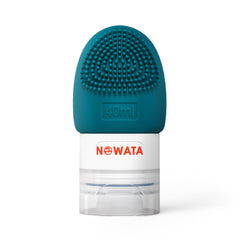
What doctors recommend when a sink isn't an option: As physicians and parents, we developed NOWATA™ to deliver the same principle — physical germ removal — without water. Our plant-based clumping technology binds to contaminants and lifts them off skin in three steps: apply, rub, brush off. Swiss lab-tested to remove 99.9% of germs.
Top 5 Takeaways
-
Soap removes germs — it doesn't kill them. It breaks the bond between contaminants and skin. Physical removal is the mechanism, not chemical destruction.
-
97% of people wash their hands incorrectly. Not because they don't care — because the method demands conditions most families rarely have when it matters most.
-
Proper hand hygiene prevents common illnesses. The CDC reports a 20% reduction in respiratory infections and a 30% reduction in diarrheal illness with consistent hand washing.
-
Sanitizer is a compromise, not a solution. It can't remove dirt or oil. It fails on visibly soiled hands. It leaves chemical residue behind.
-
Clean hands no longer require a sink. NOWATA™ physically removes 99.9% of tested germs* in three steps — apply, rub, brush off — while saving up to two gallons of water per use.

What Is Hand Washing? The Real Definition Most People Get Wrong
Hand washing is the mechanical process of removing dirt, oil, and microbial contaminants from the surface of your skin. Notice the keyword: removing. Contrary to what many people assume, conventional soap doesn't kill germs — it breaks down the oils that allow bacteria and viruses to cling to your hands, and then running water flushes them away.
This matters because the method of removal determines how clean your hands actually get. A quick rinse under the faucet without soap removes almost nothing. Soap without adequate friction misses the germs hiding in fingertip creases and beneath nails. And alcohol-based sanitizers take a different approach entirely — they kill certain pathogens on contact but leave the dead residue, along with dirt and oil, sitting right where it was.
Understanding this distinction is what led us to develop NOWATA™'s clumping technology. Based on our research in biomedical engineering, we asked a simple question: what if a formula could bind to contaminants and physically lift them off the skin — no water required? That mechanism, verified through Swiss laboratory testing, is what makes rinse-free germ removal possible.
The Main Types of Hand Cleansing — and What Each One Actually Does
Not all hand cleansing methods are created equal. Each type serves a different purpose, and knowing the differences helps you choose the right approach for the situation.
Traditional hand washing with soap and water remains the gold standard when a clean sink is available. Soap acts as a surfactant, breaking the bond between germs and skin while water carries them away. The CDC recommends scrubbing for at least 20 seconds to be effective. The limitation is obvious — it requires running water, which isn't always accessible, and consumes roughly two gallons per wash.
Alcohol-based hand sanitizers use ethanol or isopropanol to destroy certain bacteria and viruses on contact. They're convenient and widely available, but they don't remove dirt or oil, they lose effectiveness on visibly soiled hands, and they leave chemical residue behind — something that concerns us as parents of young children who put their hands in their mouths constantly.
Rinse-free physical removal is the category NOWATA™ created. Our plant-based formula uses a clumping mechanism that binds to dirt, oil, and germs on the skin's surface. As you rub your hands together, the formula forms visible clumps that physically trap and lift contaminants away — no water, no chemical residue, no wipes headed to a landfill. In our Swiss lab testing using a modified ASTM E1174 protocol, this method removed over 99.9%* of the tested virus and bacteria particles from skin.
Why Hand Washing Matters More Than You Think
Hand hygiene isn't just good practice — it's one of the most consequential health decisions you make every day. Roughly 80% of communicable diseases are transmitted through touch, and your hands contact your face an average of 16 to 23 times per hour without you even realizing it.
For families with young children, the stakes multiply. Kids explore the world hands-first, and every shared toy, playground rail, and shopping cart handle is a potential vector for illness. Teachers and childcare providers see this play out in real time — one unwashed pair of hands can ripple through an entire classroom within days, especially during flu season.
Beyond illness prevention, proper hand cleansing protects skin health, reduces the spread of antibiotic-resistant bacteria, and builds habits in children that last a lifetime. The challenge has never been whether hand washing matters. It's always been about what to do when the conditions for proper hand washing don't exist — which, for most active families, is several times a day.
The Proven Benefits of Clean Hands — Backed by Science
The benefits of consistent hand hygiene extend further than most people realize. Proper hand cleansing reduces the risk of respiratory infections by up to 21% and diarrheal illness by up to 40%, according to published health research. In households with young children, regular hand hygiene is associated with fewer sick days, fewer pediatrician visits, and less reliance on antibiotics.
From our perspective as doctors and formulators, we've also seen the secondary benefits that don't always make the headlines. Clean hands mean fewer skin irritations caused by lingering bacteria. They mean less cross-contamination during meal prep. For outdoor enthusiasts, they mean the difference between a minor inconvenience and a backcountry stomach bug that ends a trip early.
And when your hand cleansing method is plant-based and rinse-free, the benefits extend to the environment. Every use of NOWATA™ saves up to two gallons of water compared to a traditional sink wash. Over the life of a single bottle — roughly 80 to 100 uses — that adds up to more than 160 gallons of water conserved, with a readily biodegradable formula that breaks down naturally.
Clean Hands Anywhere: What to Do When There's No Sink
This is the section we wish existed when our kids were toddlers. The reality of modern life is that the moments when you need clean hands the most — after the playground, on a hiking trail, in the car between errands, at an outdoor festival — are almost always the moments when soap and water are nowhere in sight.
Sanitizer has been the default solution for decades, but it was always a compromise. It doesn't work well on dirty hands, it leaves residue that young children inevitably ingest, and it dries out skin with repeated use. Wipes create waste. Water bottles poured over hands create a mess. None of these options truly solves the problem.
That frustration is what drove us to spend two years developing a better answer. NOWATA™ was designed for exactly these moments — a plant-based, rinse-free soap that works by physically removing contaminants from your skin, no water or wiping necessary. Apply a small amount, rub your hands together until clumps form, and brush them off. What you brush away is the dirt, oil, and germs that were on your skin seconds earlier.
It's the approach we use for our own family, and it's the reason we built this company: because clean hands shouldn't depend on whether you happen to be standing next to a sink.

“As doctors, we understand the science — soap doesn't kill germs, it removes them. As parents, we understood the problem — you can't remove what you can't rinse off. That tension is what led us to engineer a formula that physically lifts germs off the skin without needing a single drop of water."
— Dr. Ruslan Maidans, DDS & Dr. Yalda Shahriari, PhD, NOWATA™ Founders
7 Hand Washing Resources We Recommend to Families We Meet
We're doctors — but we're also parents who've stood in the soap aisle wondering whether "antibacterial" actually means anything. The truth is, understanding hand washing shouldn't require a science degree. It just requires the right sources.
We've pulled together seven resources that shaped how we think about hand hygiene — the same evidence base we drew on while developing NOWATA™. Every one of them is free, maintained by a trusted institution, and worth bookmarking for the next time someone in your household asks, "Do I really have to wash my hands?"
(Spoiler: yes. But how you do it matters more than you think.)
1. The hand washing technique that actually works — straight from the CDC
Most of us learned to wash our hands as kids and never questioned the method again. The CDC's official guide lays out the five-step process that public health science supports — and chances are, at least one step will surprise you. This is where proper hand hygiene starts.
Source: Centers for Disease Control and Prevention — About Handwashing https://www.cdc.gov/clean-hands/about/index.html
2. The numbers that prove clean hands save lives
We love data — it's why we had our formula tested in a Swiss laboratory. The CDC's handwashing fact sheet delivers the same kind of clarity: proper hand washing reduces diarrheal illness by roughly 30% and respiratory infections by approximately 20%. When you see the research, hand hygiene stops feeling like a chore and starts feeling like the single easiest thing you can do to protect your family.
Source: Centers for Disease Control and Prevention — Handwashing Facts & Statistics https://www.cdc.gov/clean-hands/data-research/facts-stats/index.html
3. The global guidelines that finally address hand hygiene where families actually live
For decades, official hand hygiene guidance focused almost entirely on hospitals. That changed in October 2025, when the WHO and UNICEF released the first-ever global guidelines for hand hygiene in homes, schools, and public spaces. These recommendations acknowledge what parents have known all along — most hand washing happens far from a clinical setting, and families deserve evidence-based guidance for real life, not just exam rooms.
Source: World Health Organization — Guidelines on Hand Hygiene in Community Settings https://www.who.int/news/item/15-10-2025-new-guidelines-on-community-hand-hygiene-to-help-governments-reduce-the-spread-of-infectious-diseases
4. A family-friendly guide you can actually share with your kids
Mayo Clinic's hand washing guide does something rare — it explains proper technique, timing, and how sanitizers compare to soap in language that's clear enough for a teenager and thorough enough for a caregiver. We keep this one bookmarked for the same reason we created NOWATA: because good hygiene habits start with understanding, not just instructions.
Source: Mayo Clinic — Hand-Washing: Do's and Don'ts https://www.mayoclinic.org/healthy-lifestyle/adult-health/in-depth/hand-washing/art-20046253
5. Why the FDA says "antibacterial" on the label doesn't mean what you think
Here's something we wish more parents knew: the FDA determined that antibacterial soaps containing certain active ingredients offer no proven benefit over plain soap — and may carry long-term risks. This consumer update explains the ruling and why the agency now advises families to skip the antibacterial label entirely. It's the kind of science-backed clarity that helped us commit to a 100% plant-based formula from day one.
Source: U.S. Food and Drug Administration — Antibacterial Soap: You Can Skip It https://www.fda.gov/consumers/consumer-updates/antibacterial-soap-you-can-skip-it-use-plain-soap-and-water
6. Answers to the hand hygiene questions you're actually asking
Does water temperature make a difference? Is 20 seconds really necessary? Do sanitizers work on visibly dirty hands? The CDC's FAQ tackles the practical, everyday questions that come up between the playground and dinnertime — each one answered with the research behind it, not just a rule to follow. Think of it as the hand hygiene conversation you'd want to have with your pediatrician, without the co-pay.
Source: Centers for Disease Control and Prevention — Hand Hygiene FAQs https://www.cdc.gov/clean-hands/faq/index.html
7. How much water hand washing really costs — and why it matters
Every time you wash your hands at a sink, you use roughly two gallons of water. Multiply that across a family of four, several times a day, and the numbers add up fast. The EPA reports that the average American uses 82 gallons of water daily at home, and faucet-dependent routines are a meaningful part of that total. We built NOWATA around the belief that clean hands and water conservation shouldn't be an either-or choice. This resource shows you exactly why that conversation matters.
Source: U.S. Environmental Protection Agency — WaterSense Statistics and Facts https://www.epa.gov/watersense/statistics-and-facts
What The Research Told Us And What It Didn't
We didn't set out to build a brand. We set out to solve a problem for our own kids. But three statistics from federal research changed how we approached everything — from our formula to our mission.
97% of people wash their hands incorrectly
In a 2023 USDA observational study, participants failed to wash their hands correctly 97% of the time — and nearly half cross-contaminated surfaces in the process.
As a dentist and a biomedical engineer, we'd watched this play out for years in clinical and everyday settings: rushed rinses, skipped soap, fingers barely touching water. The USDA confirmed what we suspected but hoped wasn't true.
What we realized as parents: The problem isn't willingness. Every parent wants clean hands for their kids. The problem is that proper hand washing demands conditions most families don't have when it matters most:
-
A clean sink
-
Running water
-
Soap
-
20 uninterrupted seconds
-
A way to dry off
We built NOWATA™ to close that gap — three steps, no sink, so the 97% aren't failing at hygiene. They're finally equipped to get it right.
Source: Centers for Disease Control and Prevention https://www.cdc.gov/clean-hands/prevention/about-handwashing-a-healthy-habit-in-the-kitchen.html
Hand washing prevents 20–30% of the most common childhood illnesses
The CDC's own data shows that proper hand washing prevents about 30% of diarrhea-related illnesses and about 20% of respiratory infections.
For our family, that translated directly into fewer sick days, fewer urgent care visits, and fewer rounds of antibiotics during cold and flu season. Those aren't small margins.
But here's the gap we couldn't ignore: The CDC's recommendation assumes access to soap and running water. That assumption breaks down multiple times a day for:
-
Parents are between errands with no bathroom in sight
-
Teachers managing 25 kids before lunch
-
Hikers are three miles from the nearest trailhead
-
Families at playgrounds, festivals, and sporting events
A 30% reduction in illness only works if families can practice hand hygiene when it actually counts. That's why we developed NOWATA™ 's clumping technology — to deliver real, physical germ removal in the exact moments traditional hand washing isn't possible.
Source: Centers for Disease Control and Prevention https://www.cdc.gov/clean-hands/data-research/facts-stats/index.html
The average American uses 82 gallons of water per day at home
According to the EPA, each American uses an average of 82 gallons of water a day at home. We wanted to know how much of that came from hand washing alone, so we did the math for our own family.
What we calculated:
-
Each traditional hand wash uses roughly 2 gallons of water
-
Our kids needed their hands cleaned 8–10 times daily — after meals, the park, the dog, art projects
-
A family of four washing hands 10 times a day uses approximately 80 gallons — just on hand hygiene
-
Over one year, that's more than 29,000 gallons from a single household for a single routine
That calculation shifted our project from a convenience product to an environmental one. We reformulated to ensure NOWATA™ met two standards:
-
Readily biodegradable and plant-based — because saving water only matters if what goes on skin and back into the ecosystem can break down naturally
-
80–100 uses per bottle — that's upward of 160 gallons of water conserved per tube, with no compromise on germ removal
Source: U.S. Environmental Protection Agency https://www.epa.gov/watersense/statistics-and-facts
Final Thoughts and Opinion
We've walked you through what hand washing is, how it works at a microbiological level, the types of hand cleansing available, and the federal data that proves why it matters. But there's a perspective we haven't fully shared yet — one we've earned not from research papers, but from living this problem every day as parents.
Hand washing isn't broken. The assumption behind it is.
For over a century, public health messaging has operated on a single premise: that clean water and a sink will be available when you need them. Every guideline, every school bathroom poster, every "sing Happy Birthday twice" recommendation depends on that assumption holding true
It doesn't. Not at the:
-
Trailhead where your kid just picked up something unidentifiable off the ground
-
Backseat of the car between soccer practice and dinner
-
Farmers' market, county fair, or airport terminal
-
Playground, sporting event, or any of the twenty other places your family passes through on an ordinary Saturday
We lived with that contradiction for years.
What we knew as doctors: Hand hygiene was critical for our children's health.
What we experienced as parents: We fell short of our own standards almost daily — not because we didn't care, but because the method required infrastructure that simply wasn't there.
Sanitizer became our compromise. We used it knowing three things:
-
It didn't remove dirt or oil from the skin
-
It left chemical residue on the same little fingers that went straight into mouths minutes later
-
The only alternative was doing nothing at all
That compromise is what we refused to accept.
What NOWATA™ was built to solve
We weren't trying to replace hand washing. We were trying to solve the problems with hand washing.
The technique gap — 97% of people wash incorrectly, even with a sink right in front of them
The access gap — countless daily moments when no sink, soap, or running water exists
The environmental gap — two gallons of water are consumed every time a three-year-old touches a swing set
Our honest opinion after two years of development and daily use
After Swiss laboratory testing, two years of formulation research, and raising two kids with this product in our diaper bag every single day, here's what we believe:
The future of hand hygiene isn't about choosing between soap and water or sanitizer. It's about expanding what "clean hands" can mean — so families stop being forced into trade-offs between:
Effectiveness and convenience
Safety and accessibility
Clean hands and a clean planet
Physical germ removal without water isn't a workaround. It's an evolution.
Every parent who has wiped a child's hands with a wet napkin and hoped for the best deserves to know that something better exists. We made NOWATA™ for our babies. We share it now because the data, the science, and our own experience as a family all point to the same conclusion:
Clean hands shouldn't depend on proximity to a faucet. They should depend on having the right solution in their pocket.
That's not marketing. That's what we believe.
Next Steps
You've read the science. You've seen the data. Here are six simple steps to put better hand hygiene into practice — starting today.
1. Assess your family's hand hygiene gaps
Ask yourself one question: what does your family do when there's no sink?
If the answer is sanitizer, wet wipes, or nothing — there's a gap worth closing. Visit nowataclean.com and try NOWATA™ for yourself. One bottle covers 80–100 uses.
2. Stock NOWATA™ where sinks don't exist
The best hand hygiene solution is the one you actually have with you. Keep a bottle in:
-
Diaper bag or stroller — for playgrounds and snack time
-
Car console — for the gaps between errands and meals
-
Backpack — for trails, camping, and outdoor adventures
-
Desk or classroom — for cold and flu season
-
Travel bag — for airports, rest stops, and hotels
3. Teach your kids the three-step method
No timer. No singing. No battle at the sink.
-
Apply a small drop to dry hands
-
Rub until visible clumps form
-
Brush off — dirt, oil, and germs go with them
Kids love watching the clumps appear. Hand hygiene becomes something they want to do — not something you fight over.
4. Share this guide with someone who needs it
Pass it along to:
-
Fellow parents in your school or daycare community
-
Teachers and caregivers managing classroom germs
-
Outdoor friends who pack light and need to stay clean
-
Anyone still reaching for sanitizer as a default
Frequently Asked Questions
Q: What is hand washing, and how does it actually remove germs?
A: Here's something that surprised even us during medical training: soap doesn't kill germs.
Hand washing is a mechanical process. Soap breaks the bond between contaminants and skin. Running water carries them away. The germs aren't destroyed — they're physically removed.
That distinction changed everything about how we built our formula. We asked one question: if the goal is physical removal, why does it require two gallons of running water?
How NOWATA™ applies the same science — without the sink:
-
Our clumping technology binds to dirt, oil, and germs on the skin's surface
-
Rubbing hands together causes contaminants to clump and lift off
-
Brushing away the clumps removes what was on your skin seconds earlier
-
Swiss laboratory testing (ASTM E1174) verified 99.9% germ removal*
Same mechanism. No infrastructure required.
Q: What are the different types of hand cleansing, and how do they compare?
A: We've used all three — as doctors in clinical settings and as parents in the real world. Each has a role. They're not interchangeable.
1. Traditional soap and water
-
The gold standard is when a clean sink is available
-
Requires 20 seconds of scrubbing, running water, and a way to dry off
-
Highly effective under the right conditions
2. Alcohol-based sanitizers
-
Convenient and widely recommended as a fallback
-
Can't remove dirt or oil from skin
-
Loses effectiveness on visibly soiled hands
-
Leaves chemical residue — something that concerned us as parents of toddlers who put their hands in their mouths constantly
3. Rinse-free physical removal (the category we created)
-
NOWATA™'s plant-based formula traps contaminants and lifts them off skin
-
Works on dirty, oily, and grimy hands
-
No water, no alcohol, no residue left behind
We didn't create a third option because the first two were bad. We created it because, as parents, we kept encountering situations — daily — where neither was available or appropriate.
Q: Why is hand washing considered so important for health?
A: We understood the theory long before we experienced the proof.
The CDC's data is clear:
-
Proper hand washing reduces respiratory infections by approximately 20%
-
It reduces diarrheal illness by roughly 30%
-
About 80% of communicable diseases are transmitted through touch
-
The average person touches their face 16–23 times per hour without realizing it
What we experienced as parents: When we committed to consistent hand hygiene — including carrying NOWATA™ for every moment a sink wasn't available — we noticed a genuine difference in our own household:
-
Fewer sick days
-
Fewer middle-of-the-night fevers
-
Fewer pediatrician visits
-
Fewer rounds of antibiotics
That experience, more than any study we'd read, convinced us that accessible hand hygiene wasn't just a recommendation. For families with young children, it was one of the most impactful daily habits we could build.
Q: How long should you wash your hands, and what's the correct technique?
A: The CDC recommends 20 seconds with soap and running water using five steps:
-
Wet hands with clean running water and apply soap
-
Lather thoroughly — backs of hands, between fingers, under nails
-
Scrub for a minimum of 20 seconds
-
Rinse under clean running water
-
Dry with a clean towel or air dryer
In clinical practice, we followed this protocol hundreds of times a day. At home with two kids under five, it was a different story.
The reality we lived daily: Twenty seconds doesn't sound like much — until you're holding a squirming toddler over a public restroom sink with one hand while a second child touches every surface in sight. The USDA confirmed our experience: 97% of people fail to complete this process correctly.
Why we designed a simpler method: NOWATA™ requires three steps instead of five:
-
Apply a small drop to dry hands
-
Rub until visible clumps form
-
Brush off — contaminants go with them
No water. No timer. No wrestling match at the sink. Swiss lab testing verified this simpler process delivers 99.9% germ removal* — matching the outcome families need in a fraction of the time.
Q: What should you do when soap and water aren't available?
A: This is the question we lived with for years before we answered it with a product.
The standard recommendation: The CDC suggests alcohol-based sanitizer with at least 60% alcohol as a backup.
What we found using it on our own children:
-
It didn't remove dirt or oil — only acted on certain surface pathogens
-
It lost effectiveness on visibly soiled hands
-
It left chemical residue that our toddlers ingested every time their fingers found their mouths
-
As a dentist and biomedical engineer, couldn't reconcile applying alcohol-based chemicals to our kids' skin multiple times a day
What we built instead: We spent two years developing NOWATA™ to be the answer we wished had existed from the start:
-
100% plant-based and readily biodegradable
-
Physically removes germs through clumping technology
-
Works on dirty, oily, grimy hands — where sanitizers fail
-
No water, no chemical residue, no compromise
It lives in our diaper bag, hiking pack, car console, and kitchen counter. Not because we're selling it — but because after two years of formulating, testing, and raising our kids with it, we genuinely won't leave the house without it.
Hand washing saves lives — but it shouldn't require a sink to do it. Try NOWATA™ today and give your family doctor-made, plant-based clean hands anywhere, anytime at nowataclean.com.
*Based on laboratory testing using a modified ASTM E1174 test, NOWATA physically removed over 99.9% of virus (Murine Norovirus, a human norovirus surrogate) and bacteria (E.Coli) particles from skin. Results do not imply disease prevention. For hand cleansing only.
Leave a comment