



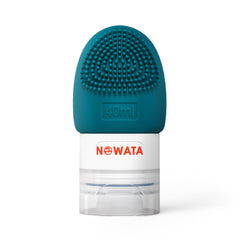

Most hand hygiene guides rehash the same generic advice — lather, scrub, rinse, repeat. What they don't address is the reality we faced as both doctors and parents: what happens when there's no sink at the playground, no clean water on the trail, or no time for a full 20-second wash with a squirming toddler?
Dr. Ruslan Maidans (PhD, Biomedical Engineering) and Dr. Yalda Shahriari (DDS) spent two years developing NOWATA™ — the first doctor-made, plant-based soap that physically removes 99.9% of germs without water.* That process gave us a deeper understanding of hand hygiene than any textbook offers: not just the clinical steps, but where and why real-world hand washing actually fails.
This guide covers the 5 moments when hand hygiene matters most and the 7-step procedure for complete germ removal — then goes further. We explain the gaps most people miss, why sanitizers aren't always the answer, and how to maintain proper technique even when water isn't an option. It's the hand hygiene guide we wished existed before we built the solution ourselves.
TL;DR Quick Answers
5 moments of hand hygiene
The 5 moments of hand hygiene are the critical times when cleaning your hands provides the greatest protection against germ transmission. Based on the World Health Organization's framework, the five moments are:
-
Before eating or preparing food — prevents germs from transferring to what you or your family consume
-
After using the restroom — breaks the primary fecal-oral transmission route for illnesses like norovirus and E. coli
-
After coughing, sneezing, or touching your face — stops respiratory viruses from spreading to surfaces and other people
-
After touching shared or high-contact surfaces, limit what you carry forward from grocery carts, doorknobs, playground equipment, and public transit.
-
After handling animals, waste, or visibly soiled materials, addresses direct contact with biological contaminants, including diaper changes and pet interactions.
The challenge most families face: fewer than half of these moments happen within reach of a sink. As doctors and parents who tracked our own family's daily hand hygiene patterns while developing NOWATA™, we found that access — not awareness — is the real barrier to consistent practice. A rinse-free, plant-based soap like NOWATA™ makes all five moments possible wherever they occur — no water needed, no chemical residue left behind.
Top 5 Takeaways
-
The science is proven. The access isn't. The WHO's 5 moments and 7-step technique reduce childhood illness by up to 57%. But most critical hand hygiene moments happen away from a sink.
-
Half of adults skip hand washing when it counts. The 2025 NFID report found 48% of U.S. adults skip hand washing after grocery stores, restaurants, and healthcare visits. Only 30% wash after coughing or sneezing.
-
Removing germs ≠ k, killing germs. Sanitizers kill chemically — but leave dead germs, dirt, and residue behind. Soap physically removes contaminants, which is why the CDC recommends it. NOWATA™ delivers that physical removal without water.*
-
This is a design problem, not an education problem. Soap needs a sink. Sanitizer leaves residue. Wipes create waste. NOWATA™ was built for the moments none of those options were designed for — playgrounds, trails, classrooms, and car seats.
-
One tube. Measurable impact. 80–100 uses per tube. Up to 200 gallons of water saved. All five hand hygiene moments covered — wherever your family's day takes you.

Why proper hand hygiene technique matters more than you think
Hand washing is the single most effective way to prevent the spread of infection — the CDC, WHO, and virtually every public health authority agree on this. Yet the gap between knowing you should wash your hands and actually removing germs effectively is wider than most people realize.
Research consistently shows that the average person washes for roughly six seconds, well under the recommended minimum of 20. Worse, most people miss the same areas every time: fingertips, thumbs, between the fingers, and the backs of the hands. These aren't minor oversights. They're the zones where bacteria accumulate most and transfer most easily to food, faces, and the people around you.
Proper technique isn't about scrubbing harder — it's about covering every surface systematically, at the right moments, for the right duration. When you understand both the when and the how, hand hygiene stops being a mindless routine and becomes one of the most powerful health habits your family can build.
The 5 moments of hand hygiene: when clean hands matter most
The World Health Organization developed the "5 Moments for Hand Hygiene" framework originally for healthcare settings, but the underlying logic applies to everyday life. These are the specific windows when germs are most likely to transfer — and when cleaning your hands delivers the greatest protective benefit.
Moment 1 — Before eating or preparing food. Your hands carry whatever they've touched since you last washed. Before any contact with food, hand hygiene creates a barrier between accumulated germs and what you or your family are about to consume.
Moment 2 — After using the restroom. This one seems obvious, yet studies show that nearly a quarter of people skip it or rush through without proper technique. Thorough cleaning after every restroom visit is non-negotiable for breaking the fecal-oral transmission route that spreads illnesses like norovirus and E. coli.
Moment 3 — After coughing, sneezing, or touching your face. Respiratory droplets carry viruses directly onto your hands. Every door handle, phone screen, or shared surface you touch afterward becomes a transmission point — unless you clean your hands first.
Moment 4 — After touching shared or high-contact surfaces. Grocery carts, gas pumps, playground equipment, public transit rails, elevator buttons — these surfaces are communal germ reservoirs. Hand hygiene immediately after contact limits what you carry forward.
Moment 5 — After handling animals, waste, or visibly soiled materials. Whether it's a diaper change, a pet interaction, or working in the yard, any contact with biological material calls for immediate and thorough hand cleaning.
The common thread across all five moments is timing. Hand hygiene is most effective when performed at the point of risk — not ten minutes later when you happen to pass a sink. This is precisely where conventional hand washing falls short for families on the go, and where having a rinse-free option changes the equation entirely.
The 7 steps of proper hand washing technique
Knowing when to wash is only half the equation. The WHO's 7-step hand washing procedure ensures that every surface of your hands gets adequate friction and coverage. Skipping even one step leaves pockets of bacteria intact — particularly in the areas most people neglect.
Step 1 — Wet hands and apply soap. Whether you're using water and traditional soap or a rinse-free alternative like NOWATA™, the goal is full, even distribution across both hands before you begin.
Step 2 — Rub palms together. Press your palms firmly against each other and create friction across the entire surface. This step handles the broadest area, but is often where people stop too soon.
Step 3 — Rub the back of each hand. Place one palm over the back of the opposite hand and interlace your fingers. Repeat on the other side. The backs of the hands are among the most commonly missed zones in studies of hand washing behavior.
Step 4 — Clean between the fingers. Interlace your fingers with palms facing each other and rub back and forth. The spaces between fingers are warm, moist environments where bacteria thrive — and where a quick rinse under running water rarely reaches.
Step 5 — Clean the backs of your fingers. Curl your fingers together so your knuckles nest into the opposite palm, then rotate. This targets the creases and joints along the backs of the fingers — another area consistently overlooked.
Step 6 — Clean the thumbs. Grip each thumb in the opposite hand and rotate. Thumbs are the single most missed area during hand washing. Because they sit apart from the other fingers, a standard palm-to-palm rub barely touches them.
Step 7 — Clean the fingertips and nails. Press your fingertips into the opposite palm and rotate. The area beneath and around the nails harbors the highest concentration of bacteria on the entire hand.
The complete sequence should take a minimum of 20 seconds with traditional soap and water. With NOWATA™, the same coverage applies — apply, rub through all seven steps until clumps form, then brush off. The physical removal of those clumps carries away the dirt, oil, and germs that other methods leave behind.
Where most hand hygiene routines break down
Executing these guidelines consistently in real life is where the system falls apart — and it's the problem that led us to create NOWATA™ in the first place.
The most common failure points aren't about knowledge. They're about access and convenience. Parents at the playground know they should clean their child's hands before snack time, but the nearest restroom is a five-minute walk away, and the toddler is already reaching for the crackers. Hikers understand the importance of hand hygiene before eating on the trail, but they're rationing water for drinking. Teachers see 25 students who need to wash up before lunch and a single classroom sink that makes it a 15-minute ordeal.
Alcohol-based sanitizers emerged as the default workaround for these situations, but they come with trade-offs that aren't always discussed. Sanitizers work by killing germs chemically, which means the dead germs, along with the alcohol and any dirt or residue, remain on your skin. They're less effective on visibly soiled hands, they contain ingredients many parents prefer to avoid on young children's skin, and they do nothing to remove the physical grime that accumulates throughout the day.
We designed NOWATA™ around a different mechanism entirely. Our plant-based clumping technology physically binds to dirt, oil, and germ particles on the skin's surface. As you rub and the formula clumps, those contaminants are lifted away from the skin and removed when you brush off the residue — no water, no rinse, no chemical residue left behind. Swiss laboratory testing using the ASTM E1174 protocol confirmed that this process physically removes over 99.9% of tested virus and bacteria particles.*
It's the same thorough, 7-step technique — just adapted for the moments when water isn't available, and sanitizer isn't the answer.

"When we studied how families actually practice hand hygiene — not in a lab, but at playgrounds, on hiking trails, and in our own kitchen with our kids — we realized the problem was never a lack of knowledge. It was a lack of options for the moments when doing it right wasn't possible."
— Dr. Ruslan Maidans & Dr. Yalda Shahriari, NOWATA™ Founders
7 hand hygiene resources we keep bookmarked (and you should too)
We're doctors — but we're also parents who've Googled "how long should you actually wash your hands?" at 11 p.m. while wiping down a shopping cart with one hand and holding a toddler with the other. We get it. You want answers you can trust, written by people who know what they're talking about, without having to read a 200-page clinical manual to find them.
That's why we've pulled together the seven most valuable resources on the 5 moments of hand hygiene and the 7-step hand washing technique. These are the same sources we referenced while developing NOWATA™ — and they're organized by what you're actually trying to figure out.
1. Where it all started: the WHO's original 5 moments framework
Source: World Health Organization — "My 5 Moments for Hand Hygiene"
The WHO created this framework to help people understand the specific moments when clean hands stop the spread of drug-resistant germs. WHO It's the foundation behind every hand hygiene guideline you've ever seen — and the same framework we adapted for everyday family life in this guide. If you only bookmark one resource, make it this one.
Source: https://www.who.int/publications/m/item/five-moments-for-hand-hygiene
2. The full scientific story behind why these guidelines exist
Source: World Health Organization — Guidelines on Hand Hygiene in Health Care (2009)
This is the WHO's comprehensive review of hand hygiene evidence, with specific recommendations for improving practices and reducing pathogen transmission. WHO Fair warning — it's thorough. But when we were developing NOWATA™, this was one of the documents we kept coming back to. If you want to understand the "why" behind the "how," it's all here.
Source: https://www.who.int/publications/i/item/9789241597906
3. The step-by-step technique guide you can print and stick on your fridge
Source: World Health Organization — "Hand Hygiene: Why, How & When?" (Printable Brochure)
This WHO brochure illustrates the complete hand rub and hand wash techniques with simple diagrams that cover every surface of the hands in the correct order. We love this one for families and classrooms because it turns the 7-step procedure into something visual and easy to follow — no PhD required. Print it out, tape it by the sink (or tuck it in with your tube of NOWATA™), and let it do the reminding for you.
4. The plain-language guide for parents who just want clear answers
Source: Centers for Disease Control and Prevention — About Handwashing
The CDC identifies the key times throughout the day when you're most likely to get and spread germs, and explains that many common illnesses are spread simply by not washing hands with soap and clean running water. CDC No clinical jargon, no dense footnotes — just straightforward guidance written for real people living real lives. This is the resource we recommend when someone asks us, "Just tell me when it actually matters."
Source: https://www.cdc.gov/clean-hands/about/index.html
5. The hard numbers that prove proper technique is worth the effort
Source: Centers for Disease Control and Prevention — Handwashing Facts, Data & Statistics
The data speaks for itself: handwashing education reduces diarrheal illness by 23–40%, cuts respiratory illnesses like colds by 16–21%, and lowers gastrointestinal-related absenteeism in schoolchildren by 29–57%. CDC As parents and scientists, these are the kinds of numbers that motivated us to create a product that makes consistent hand hygiene possible — even when there's no sink in sight. Next time someone tells you hand washing is "no big deal," send them this page.
Source: https://www.cdc.gov/clean-hands/data-research/facts-stats/index.html
6. The deep dive into why physical germ removal and chemical germ killing aren't the same thing
Source: StatPearls / National Library of Medicine — Hand Hygiene (Peer-Reviewed Clinical Review)
This peer-reviewed reference covers the WHO's "Five Moments for Hand Hygiene," proper technique and duration, and the clinical evidence comparing different hand hygiene methods — including where soap and water outperforms alcohol-based alternatives. NCBI This distinction — removing germs versus killing them — is central to how we designed NOWATA™. Our clumping technology physically lifts and removes 99.9% of germs from skin rather than leaving chemical residue behind.* If you want the science behind that difference, start here.
Source: https://www.ncbi.nlm.nih.gov/books/NBK470254/
7. Free toolkits and printables for teachers, schools, and community programs
Source: The Global Handwashing Partnership — Resource Library
The Global Handwashing Partnership works to increase hand hygiene awareness and drive lasting change from policy-level initiatives all the way down to community-driven action. Global handwashing. Their free library includes research summaries, behavior change toolkits, and classroom-ready materials that make teaching hand hygiene easier — and more fun. If you're a teacher trying to build better habits with 25 kids and one classroom sink, this is your starting point.
Source: https://globalhandwashing.org/resources/
The Numbers That Kept Us Up At Night — and Ultimately Led Us To Build NOWATA™
We weren't just reading research papers. We were living the problem — juggling patient schedules, packing diaper bags, and watching our kids touch every surface in the grocery store before we could get anywhere near a sink.
The deeper we dug into the data, the clearer it became: this isn't a knowledge problem. It's an access problem. Three statistics in particular changed how we approached the solution.
1. Nearly half of U.S. adults skip hand washing when it matters most
The 2025 NFID State of Handwashing Report — a national survey of 3,587 U.S. adults conducted by NORC at the University of Chicago — found that 48% of respondents admitted to forgetting or choosing not to wash their hands at key times. Those key times include visits to grocery stores, restaurants, and healthcare settings. Even more alarming: only 30% reported being most likely to wash their hands after coughing or sneezing.
What we saw firsthand:
-
In Dr. Yalda's dental practice, parents would apologize for not having their child wash up before an appointment — not because they forgot, but because no convenient option existed between the car and the chair.
-
At soccer practice, farmers' markets, and rest stops, we watched the same story repeat: the intent was there, the infrastructure wasn't.
-
NOWATA™ was built to remove the barrier — not to change people's habits, but to make the habit possible wherever it needs to happen.
Source: National Foundation for Infectious Diseases (NFID) — 2025 State of Handwashing Report
2. Consistent hand hygiene could cut school sick days by up to 57%
CDC data shows that handwashing education in communities reduces diarrheal illness by 23–40%, respiratory illnesses by 16–21%, and gastrointestinal-related school absenteeism by 29–57%.
That 57% reduction is the number that stopped us in our tracks.
The real-world bottleneck we identified:
-
One classroom. Twenty-five kids. One sink. A 30-minute lunch period.
-
Most students get six seconds of water on their hands at best — and nothing at worst.
-
As Dr. Ruslan put it during early product development: "We're not dealing with a technique problem. We're dealing with a throughput problem."
What happened when we tested NOWATA™ with a local preschool in Groton:
-
Every child cleaned their hands in place — no line, no sink supervision, no water fight.
-
Teachers reported the biggest difference wasn't cleanliness. It was time.
-
When the barrier drops, compliance rises. The CDC numbers confirmed what we were already seeing.
Source: Centers for Disease Control and Prevention (CDC) — Handwashing Facts URL: https://www.cdc.gov/clean-hands/data-research/facts-stats/index.html
3. Water usage adds up faster than families realize
The U.S. Geological Survey estimates that the average person uses approximately 80 to 100 gallons of water per day for indoor home uses. USGS
The water math we ran during product development:
-
A family of four, washing hands at CDC-recommended frequency, can easily use 8 to 12 gallons per day on hand washing alone.
-
That's over 3,000 gallons per year dedicated to a single hygiene activity.
-
The question we asked as biomedical engineers: Does effective germ removal actually require all that water, or have we just never had a viable alternative?
What two years of formulation and Swiss lab testing proved:
-
NOWATA™ physically removes 99.9% of germs through plant-based clumping technology — no water required.*
-
Each tube delivers 80 to 100 uses.
-
One family, one tube: up to 200 gallons of water conserved without compromising on cleanliness.
We didn't set out to build an environmental product. We set out to build a better soap. The water savings turned out to be inseparable from the solution.
Source: U.S. Geological Survey (USGS) — Water Q&A: How Much Water Do I Use at Home Each Day?
URL: https://www.usgs.gov/water-science-school/science/water-qa-how-much-water-do-i-use-home-each-day
Final Thoughts and Opinion
The science of hand hygiene was solved decades ago. The WHO published its 5 moments framework in 2009. The CDC has maintained clear guidelines for years. Every parent, teacher, and healthcare worker we've spoken to can recite the basics: soap, water, 20 seconds, all surfaces.
The information is everywhere. And yet the 2025 NFID survey tells us that nearly half of U.S. adults still skip hand washing at the moments that matter most.
After two years of developing NOWATA™, testing formulations in the lab, and field-testing with our own kids, at local preschools, and on backcountry trails, we've arrived at an opinion we hold with conviction:
The failure of hand hygiene compliance is not a failure of education. It's a failure of product design.
Every existing option asks you to compromise
-
Traditional soap requires water, a sink, and time you may not have.
-
Alcohol-based sanitizers skip the water but leave chemical residue on your skin — and your child's skin — while doing nothing to remove visible dirt, oil, and grime.
-
Wipes create waste that ends up in landfills.
Each of these products was designed for ideal conditions, then marketed as though those conditions exist everywhere. They don't.
-
Not at the playground.
-
Not on the trail.
-
Not in the back seat of your car at pickup time.
What two doctors and two parents saw in that gap
As doctors, we understand microbiology. As parents, we understood the logistics. The gap between the two is where NOWATA™ was born.
What we built and why it's different:
-
100% plant-based soap that physically removes 99.9% of germs through clumping technology*
-
No water required — works in the exact moments when every other option falls short
-
No chemical residue left behind on skin
-
No waste beyond a readily biodegradable formula that breaks down naturally
The bottom line
We're not here to replace the sink. We're here to make sure that when there is no sink — and there often isn't — families don't have to choose between clean hands and nothing at all.
The 5 moments and 7 steps work. They've always worked. What was missing was a product worthy of the science behind it.
We built NOWATA™ to be that product — for our family first, and now for yours.
Next Steps
You've got the science. You've got the technique. Now it's about putting it into practice — starting today.
1. Learn the 5 moments and teach them to your family
Post the WHO's free printable where your family will see it — kitchen, bathroom, or fridge. For younger kids, simplify it to five rules:
-
Before eating
-
After the bathroom
-
After coughing or sneezing
-
After touching shared surfaces
-
After handling anything messy
2. Practice the 7-step technique together
Walk through each step once as a family:
-
Rub palms together
-
Rub the back of each hand
-
Clean between fingers
-
Clean the backs of your fingers
-
Clean each thumb
-
Clean fingertips and nails
-
Clean wrists
Tell kids to "rub like you're putting on invisible gloves." Aim for 20 seconds every time.
3. Identify your family's hand hygiene gaps
Be honest — when does hand washing happen, but doesn't? Common gaps include:
-
After the playground or sports practice
-
Before snacks in the car
-
At the trailhead or campsite
-
During school lunch, with limited sink access
-
After grocery shopping or errands
Write them down. These are the moments that matter most.
4. Put NOWATA™ where the gaps are
One tube at each gap. Problem solved.
-
Car console or bag — post-playground, post-errand cleanup
-
Child's backpack — school lunch, field trips, after recess
-
Daypack or camping kit — trail meals, backcountry hygiene
-
Front door — transition from the outside world to the home
-
Classroom door — 25 kids, one sink, no more bottleneck
Apply. Rub through all seven steps until clumps form. Brush off. Clean hands in under 30 seconds, wherever you are.
5. Share what you've learned
Hand hygiene is a community effort. The more families who practice it, the fewer germs circulate through classrooms, playgrounds, and shared spaces.
-
Share this guide with a parent, teacher, or caregiver
-
Follow @nowataclean on Instagram, TikTok, and Facebook
-
Tag us: #NOWATA #NoWaterNeeded #CleanHandsAnywhere — show us how your family practices the 5 moments
Frequently Asked Questions
Q: What are the 5 moments of hand hygiene?
A: The 5 moments are the specific windows when cleaning your hands delivers the greatest germ protection. The WHO originally developed the framework for healthcare, but these moments show up in family life every day:
-
Before eating or preparing food
-
After using the restroom
-
After coughing, sneezing, or touching your face
-
After touching shared or high-contact surfaces
-
After handling animals, waste, or visibly soiled materials
When developing NOWATA™, we tracked how often our own family hit these five moments on a typical Saturday. The answer: 15 to 20 times. Fewer than half happened within reach of a sink.
Q: Do the 5 moments of hand hygiene apply outside of hospitals?
A: Yes — and in our experience, they're arguably more important outside clinical settings. That's where hand hygiene infrastructure disappears entirely.
What we observed as doctors and parents:
-
In Dr. Yalda's dental practice, parents regularly apologized for not washing their child's hands before an appointment — not because they forgot, but because no option existed between the car and the chair.
-
On weekend hikes, rationing drinking water meant hand washing wasn't even a consideration.
-
At playgrounds, schools, and grocery stores, the same pattern repeated: intent was there, access wasn't.
How we simplified it for our own kids:
Ask one question — "Did you just eat, use the bathroom, sneeze, touch something shared, or touch something messy?" If yes, clean your hands. That mindset shift — from "wash when you find a sink" to "clean at the moment of risk" — is what makes the framework powerful for families.
Q: What is the proper hand washing technique to use during the 5 moments?
A: The WHO recommends a 7-step procedure covering every hand surface:
-
Rub palms together
-
Rub the back of each hand
-
Clean between the fingers
-
Clean the backs of the fingers
-
Clean each thumb individually
-
Clean fingertips and nails against the opposite palm
-
Clean the wrists
Minimum time: 20 seconds with soap and water.
What most people miss — and what we observed during product testing:
-
Most adults unconsciously skip steps 4 through 6
-
The backs of fingers, thumbs, and fingertips are the most commonly missed zones
-
These are also where bacteria concentrate most heavily
What changes with NOWATA™:
-
Same seven steps — but the visual feedback changes everything
-
The plant-based formula clumps as it binds to dirt, oil, and germs
-
Brushing off the clumps physically removes contaminants from the skin*
-
During testing, both adults and children spent more time on each step because they could see the formula working — a tangible signal that traditional soap doesn't provide
Q: Why is hand washing more effective than hand sanitizer during the 5 moments?
A: This question shaped every formulation decision during NOWATA™'s two-year development.
The core difference is mechanism:
-
Sanitizers kill germs chemically with alcohol. Dead germs, dirt, oil, and chemical residue all stay on your skin.
-
Soap-based washing physically lifts and removes germs from the surface. The CDC recommends it as the preferred method whenever possible.
What we found when evaluating existing waterless options:
-
Every product on the market relied on the chemical-kill approach
-
None attempted physical removal without water
-
In Dr. Ruslan's biomedical engineering research, the distinction matters: killing addresses the immediate threat, but removing eliminates both the threat and the debris
How NOWATA™ bridges the gap:
-
Plant-based clumping technology binds to contaminants on the skin's surface
-
Contaminants are physically carried away when you brush off the residue
-
Swiss lab testing confirmed removal of over 99.9% of tested virus and bacteria particles*
-
No water required. No chemical residue left behind.
The effectiveness of washing. The convenience of sanitizer. Without the trade-offs of either.
Q: How can I practice the 5 moments of hand hygiene when there's no water available?
A: This is the question that started everything for us.
The moment that crystallized the problem:
We were on a family hike in Connecticut. The kids were hungry. We'd packed trailside sandwiches. No water source nearby. Our options:
-
Alcohol-based sanitizer on visibly dirty toddler hands — wouldn't remove the dirt, would leave chemical residue
-
Use limited drinking water for hand washing — not practical on a day hike
-
Skip it and hope for the best — not acceptable as parents or doctors
None of those were good enough. NOWATA™ was designed to eliminate that choice.
How it works:
-
Apply a small amount to dry hands — no water needed at any step
-
Rub through all seven steps until the formula visibly clumps
-
Brush off the clumps — dirt, oil, and germs leave with them
No rinse. No residue. No waste. 100% plant-based, kid-safe, and readily biodegradable.
Where we keep ours:
-
Car console — post-errand and post-playground cleanup
-
Hiking pack — trail meals and backcountry hygiene
-
Kids' backpacks — school lunch and field trips
-
Front door — transition from the outside world to the home
The 5 moments don't change based on where you are. Now, neither does your ability to practice them.
Proper Hand Hygiene Made More Convenient For You and Your Family
Now that you know the 5 moments and 7 steps of proper hand hygiene, make them possible anywhere — no sink required.
Try NOWATA™ today and give your family the doctor-made, plant-based clean that works with or without water. Shop now at nowataclean.com.
*Based on laboratory testing using a modified ASTM E1174 test, NOWATA physically removed over 99.9% of virus (Murine Norovirus, a human norovirus surrogate) and bacteria (E.Coli) particles from skin. Results do not imply disease prevention. For hand cleansing only.
Leave a comment