



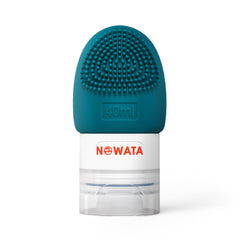

Two doctor-parents built NOWATA™ in a daypack and a diaper bag, then sent it to an independent Swiss lab to prove it worked. It lifts dirt and over 99.9% of germs off your hands with no water at all.* No sink, even half a day’s walk past the last creek. Dr. Ruslan Maidans and Dr. Yalda Shahriari, a dentist and a biomedical engineer, made it for their own kids before anyone else’s, which is the same bar any real hand soap for hiking has to clear: pull off the grime, weigh next to nothing, and leave the trail the way you found it.
TL;DR Quick Answers
Hand Soap For Hiking
The best hand soap for hiking is a rinse-free, plant-based one that pulls dirt and germs off your skin without water, so you stay clean without hauling wash water or leaving soapy runoff on the land. NOWATA does exactly that. You put a dime-sized drop on dry hands, rub until the formula clumps, and brush the clumps away. It removes over 99.9% of germs in about 45 seconds (Swiss lab-tested, ASTM E1174), gives you 80–100 uses per tube, weighs almost nothing, and breaks down naturally, so it works where rinsing soap into a stream never should.*
Top 5 Takeaways
-
It removes germs instead of killing them. The formula grabs dirt, oil, and germs, clumps them, and you brush the clump away. Nothing soaks in, and nothing’s left behind.*
-
Two doctor-parents made it and tested it on their own kids first. They spent two years on the formula and held it to independent Swiss lab standards.
-
One tube runs 80–100 uses. That covers a whole trip, and it’s light enough you’ll forget it’s in your pack.
-
It fits Leave No Trace. There’s nothing to rinse, so there’s no greywater to carry away from camp. The formula is plant-based and breaks down naturally.
-
Every use saves about 2 gallons of water. Over one tube that’s 100+ gallons you’d otherwise have to find or carry.

The Trail Case For Rinse-Free Soap
Here’s why rinse-free soap belongs in your pack, and how to use it without leaving a mess behind.
How To Wash Hands While Hiking (When There’s No Sink For Miles)
On the trail, you’ve got four ways to clean your hands, and most come with a catch.
-
Carry water and camp soap. It works, but the water is heavy, and you still have to wash at least 200 feet from any creek so the greywater never reaches it.
-
Use hand sanitizer. It kills some germs, then leaves a chemical film and skips the dirt and oil already on your hands.
-
Pack wipes. Handy at first, until you’re carrying out a bag of wet trash that mostly won’t break down anytime soon.
-
Use a rinse-free soap like NOWATA. You pull off the grime and the germs with no water and nothing to pack out.
The method takes three steps:
-
Put a dime-sized drop on dry hands.
-
Rub until the formula clumps. Those clumps trap dirt, oil, and germs.
-
Brush the clumps off. Your hands are clean, and there’s no soapy water to deal with.
Because you never rinse, there’s no runoff to manage in the first place. If you want the wider packing rundown across flights, road trips, and car camping, read our complete guide to portable hand soap for travel, camping, and hiking.
Why NOWATA Is The Best Hand Soap For Backpacking
Backpackers count ounces and care about the places they walk through. NOWATA earns its spot on both counts.
-
Weight. One small tube, 80–100 uses. That’s enough for a long thru-hike or a full season, and it weighs far less than the wash water it replaces.
-
Real cleaning. It physically removes mud, sap, and trail grime, not just germs. Sanitizer can’t pull dirt off your skin.
-
Lab proof. An independent Swiss lab, Microbe Investigations AG, ran the ASTM E1174 hand protocol and measured over 99.9% removal of E. coli and a norovirus surrogate in about 45 seconds.*
-
Easy on the skin. No alcohol, so it won’t sting split knuckles or sun-cracked hands. The formula is 100% plant-based, built on tapioca starch and a coconut-derived cleanser.
Sanitizer takes a different route with bacteria like E. coli, killing on contact while the dead cells stay put. Our look at whether hand sanitizer actually kills E. coli walks through why physical removal wins on a dirty trail.
Leave No Trace Hand Hygiene And The 200-Foot Rule
“Biodegradable” doesn’t mean “use it anywhere.” Even plant-based soap can change the chemistry of a stream and harm the fish and insects living in it, which is why the backcountry standard keeps washing and greywater at least 200 feet from water. That standard comes out of Leave No Trace, a set of outdoor principles built to keep wild places wild.
NOWATA fits that standard because there’s no rinse step at all, so there’s no greywater to scatter at camp. You clean your hands, brush off the clumps, and pack out an empty tube and nothing else.
The Science Of Removing Germs, Not Killing Them
Sanitizer and soap solve different problems. Sanitizer kills some microbes with alcohol, then leaves them, and the dirt they rode in on, sitting on your skin. NOWATA works by physical removal instead. The plant-based formula bonds to dirt, oil, and germs, gathers them into clumps as you rub, and carries them off your hands when you brush the clumps away. It’s the same reason washing with soap beats sanitizing when your hands are visibly dirty, which, on a trail, is pretty much always. Our science page has the full lab write-up, and our breakdown of waterless soap versus hand sanitizer digs into the removal-versus-killing difference.

“People assume more germ-kill is the goal. After two years of testing this on our own kids, I’d argue the opposite. On the trail, what you can physically pull off your skin matters more than what you leave behind dead. That’s the whole formula.”
— Dr. Ruslan Maidans, NOWATA co-founder
Essential Resources On Hand Soap For Hiking
Once you’re sold on rinse-free soap, these seven sources help you hike cleaner and tread lighter. Each is a .gov or .org page, and each comes from a different organization.
1. Why Removing Germs Beats Killing Them
The CDC lays out why soap that physically removes germs does more than sanitizer when your hands are visibly dirty. That’s the exact situation on a trail.
Source: CDC, About Handwashing
2. The Real Rules For Soap In The Backcountry
Leave No Trace explains how even “biodegradable” soap affects water, and why the 200-foot rule holds no matter how natural the bottle claims to be.
Source: Leave No Trace, The Skinny on Soap
3. Staying Clean Without Plumbing
The National Park Service walks through real backcountry hygiene, from how to use soap to how far to stay from water.
Source: National Park Service, Hygiene While Camping
4. What Federal Land Actually Requires
Hiking in the national forest comes with rules. The U.S. Forest Service spells out the Leave No Trace practices, waste and soap included, that every visitor agrees to.
Source: USDA Forest Service, Leave No Trace
5. Trail-Tested Hygiene From Thru-Hikers
The Appalachian Trail Conservancy has stewarded one of the world’s busiest trails for decades. Its Leave No Trace guidance covers how to handle waste and washing on a long hike.
Source: Appalachian Trail Conservancy, Leave No Trace
6. West-Coast Backcountry Wisdom
The Pacific Crest Trail Association tells long-distance hikers to keep handwashing and greywater at least 200 feet from any water source.
Source: Pacific Crest Trail Association, Leave No Trace
7. The Health Payoff Of Clean Hands
The Global Handwashing Partnership gathers the research on what handwashing actually prevents. It’s a useful background for why hygiene still matters miles from the nearest trailhead.
Source: Global Handwashing Partnership, Why Handwashing: Health
Supporting Statistics
We built NOWATA from what we kept seeing on our own trips, then checked it against the numbers. Three stood out.
1. Hand Hygiene Cuts Illness By Up To 31%
A peer-reviewed meta-analysis found that better hand hygiene dropped gastrointestinal illness by about 31% and respiratory illness by about 21%. The strongest performer in the study was plain, non-antibacterial soap, the kind that works by removal.
2. Americans Use 300+ Gallons Of Water A Day At Home
The EPA puts the average American family's water usage at over 300 gallons of water a day at home. Set against that, skipping 2 gallons at every handwash adds up faster than it sounds, on the trail and off.
Source: U.S. EPA WaterSense, How We Use Water
3. Each Person Uses 80–100 Gallons A Day
The USGS estimates that each person uses 80–100 gallons of water per day for indoor use. That’s water you simply don’t have when the closest tap is back at the trailhead.
Source: USGS Water Science School, How Much Water Do I Use at Home Each Day?
Final Thoughts And Opinion
Here’s our honest read after years of hauling this up real mountains.
The trail has never lacked hand-cleaning options. What it lacked was a question that asked better. Most products start with how to kill the most germs. We started with how to get them off your hands without leaving something worse behind.
-
Day hikers: it’s the lightest insurance you’ll carry against summit-snack hands.
-
Backpackers and thru-hikers: it’s water you don’t filter, carry, or rinse, and a clearer conscience at every stream crossing.
-
Parents on the trail: safe enough for toddler snack hands, tough enough for trail grime.
Our take, straight out: on the trail, pulling germs off beats masking them, and skipping greywater beats “biodegradable” greywater. After enough miles, NOWATA stops being a nice-to-have and becomes the one ounce you reach for first.
Frequently Asked Questions
Q: How Do You Wash Your Hands While Hiking With No Water?
A: Use a rinse-free soap. With NOWATA, you put a dime-sized drop on dry hands, rub until it clumps, and brush the clumps off. The dirt, oil, and germs go with them, with no sink and no rinse water to deal with.
Q: Is Waterless Soap Leave No Trace Friendly?
A: Yes, and rinse-free soap fits especially well. Because NOWATA has no rinse step, there’s no greywater to scatter near a water source. It’s 100% plant-based and breaks down naturally. Pack out the empty tube and follow the rules for the land you’re on.
Q: Does NOWATA Kill Germs Or Remove Them?
A: It removes them. Instead of killing germs in place and leaving them on your skin, NOWATA lifts them off in clumps you brush away. An independent Swiss lab measured over 99.9% removal of E. coli and a norovirus surrogate using the ASTM E1174 protocol.*
Q: How Many Uses Does One Tube Last On A Thru-Hike?
A: Between 80 and 100. At a wash or two a day, one light tube covers weeks on the trail before you need a refill.
Q: Is It Gentle Enough For Kids And Sensitive Skin On Long Trips?
A: Yes. It’s alcohol-free and 100% plant-based, so it won’t sting or dry out skin that’s already taken a beating from sun and wind. One caution: if you have a known macadamia nut allergy, patch-test first, since the formula includes ethyl macadamiate, a processed derivative the Environmental Working Group rates as low-risk. For more on the family side, see our guide to rinse-free soap for kids and families.
Q: Where Can I Buy The Best Hand Soap For Backpacking Online?
A: At NowataClean.com. It starts at $15.99, ships free over $45, and comes with a 30-day guarantee. If you’re heading out for a season, the bundles bring the per-tube price down.
Pack The Best Hand Soap For Your Next Hike
Clean hands shouldn’t cost you water, pack weight, or a clear conscience at the next creek crossing. Shop NOWATA™ at NowataClean.com and head out knowing you can clean up anywhere on the trail, with no water and no greywater left behind.
*Based on laboratory testing using a modified ASTM E1174 test, NOWATA physically removed over 99.9% of virus (Murine Norovirus, a human norovirus surrogate) and bacteria (E.Coli) particles from skin. Results do not imply disease prevention. For hand cleansing only.
Leave a comment