


Your tap is probably still fine for washing your hands.
That's the first thing to know, and we'd rather you hear it from us at 6 a.m. than from somebody trying to sell you a bottle of something. The CDC's guidance is that in most boil water advisories, soap and tap water still work for handwashing. Follow whatever your local officials say, because not every notice is the same notice.
We're two parents who spent two years building a soap for the moments a sink isn't an option. A standard boil notice usually isn't one of those moments. So here's how to read the notice you got, what to do for each kind, and where the tap genuinely does come off the table.
TL;DR Quick Answers
Hand Washing During A Boil Water Advisory
In most boil water advisories, washing your hands with soap and tap water is still fine. Scrub for 20 seconds, rinse under running water, dry completely, and don't swallow any water. The CDC advises following your local officials, because not every notice is a boil water advisory.
Three notices, three different answers:
-
Boil water advisory: soap and tap water usually work for handwashing. Boil water for drinking, cooking, and brushing teeth.
-
Do not drink advisory: chemical or toxin contamination. Boiling won't fix it. Ask officials before putting the tap on your skin.
-
Do not use advisory: any contact with the water can be dangerous. Use bottled water, alcohol-based sanitizer, or a rinse-free soap that needs no water at all.
If the water is shut off entirely, or officials say don't touch it, you need a method that uses zero water.
Top Takeaways
-
Your tap is probably fine for handwashing. The CDC's guidance for most boil water advisories is soap and tap water, 20 seconds, rinse and dry. Don't skip handwashing because a notice went out.
-
Read the notice before you decide anything. Boil water, do not drink, and do not use are three different orders carrying three different rules. The notice tells you which one landed on your door.
-
A main break often means no water at all. Pressure can drop hours before anybody issues an advisory. A sink you can't turn on is a different problem from a sink you can't drink from.
-
Stored water disappears quickly when you wash with it. Emergency guidance is 1 gallon per person, per day, covering drinking and sanitation together. One conventional sink wash can burn through more than that.
-
Sanitizer has a documented blind spot. Public health agencies don't recommend it for visibly dirty or greasy hands, which is exactly what your hands look like after an afternoon of hauling jugs and mopping up a burst pipe.

First, Find Out Which Advisory You're Actually Under
Most people hear "boil water" and assume the whole tap has turned on them. The system doesn't work that way. The CDC recognizes three separate drinking water advisories, each with different instructions.
A boil water advisory means the supply has germs in it, or could. These usually follow a main break, a loss of system pressure, or a bacteria sample that came back positive. Boil your water for 1 minute before drinking or cooking, and for 3 minutes above 6,500 feet. Handwashing with soap and tap water is generally still acceptable.
A do not drink advisory means chemicals or toxins. Boiling doesn't help, and with some contaminants it concentrates the problem. Whether the tap is safe on your skin depends entirely on what got into it. This is where you stop guessing and call the utility.
A do-not-use advisory is the serious one, and it's rare. Contact through your skin, eyes, or lungs could be dangerous. Nothing from that tap touches your hands.
For background on how these notices get issued, tested, and lifted, the general overview of boil-water advisories is a fair place to start. For your street this week, your utility's website or hotline is the authority. Not us, and not a general reference page.
How To Wash Your Hands During A Standard Boil Water Advisory
You've confirmed it's a boil water advisory and your officials haven't said otherwise. Here's the whole procedure:
-
Wet your hands with tap water and apply soap.
-
Scrub for 20 seconds. Backs of your hands, between your fingers, under your nails.
-
Rinse under running water.
-
Dry completely with a clean towel or air dry.
-
Keep your mouth closed and don't swallow any water.
Watch the little ones closely. With toddlers, the risk isn't the washing; it's the sip, and a running faucet is a tempting thing at eye level.
No soap and water available? The CDC's fallback is an alcohol-based hand sanitizer with at least 60% alcohol.
You don't need our product for this scenario, and we're not going to pretend otherwise.
When The Tap Isn't An Option At All
Three situations change the advice above.
Do not use and do not drink notices. When contact with the water is the hazard, or officials can't yet say what's in it, your sink is out of the picture. Bottled water, sanitizer, or rinse-free soap are what remain.
Water main breaks and pressure loss. People underestimate this one. A break can leave you with brown water, a trickle, or nothing at all for hours before any formal advisory goes out, and you can't wash your hands in a tap that won't run.
Multi-day outages after storms and freezes. Day one is annoying. By day three, hygiene starts slipping, because families quietly stop washing to protect what's left in the jugs.
The cruel part is that those are the days your hands get filthiest. You're hauling water, mopping a flooded utility room, running a generator, changing a diaper by flashlight, and cooking on a camp stove because the kitchen is out of commission.
Full-time boondockers solved this problem years ago, and their approach transfers straight to a house with no pressure. We wrote about it in our guide to staying clean off-grid in an RV or van, where the freshwater tank holds 20 to 40 gallons, and every wash draws it down.
The Bottled Water Math Nobody Runs Until Day Three
Federal preparedness guidance is 1 gallon of water per person, per day, covering drinking and sanitation together, with 3 days as the floor and 2 weeks as the goal.
Now price out handwashing. A conventional sink wash runs between 1 and 2 gallons. Even a careful pour from a jug, with somebody helping you, eats a real slice of a day's ration.
Run the numbers for a family of four across a 3-day outage. That's 12 gallons stored, which is already more than most households keep on hand. Four people washing eight times a day comes to 96 washes. At even a quarter of a gallon each, you've spent 24 gallons of handwashing out of a 12-gallon supply.
The arithmetic never balances. That's why people stop washing on day three.
Rinse-free soap costs zero gallons. That's our whole argument, and we don't think it needs dressing up.
Where Hand Sanitizer Falls Short In A Water Emergency
Sanitizer earns its place. The CDC recommends it as the fallback when soap and water aren't available, and at 60% alcohol or higher, it handles plenty of common germs.
It also carries limits that public health agencies state plainly:
-
Agencies don't recommend it when hands are visibly dirty or greasy.
-
It doesn't remove chemicals from skin.
-
Alcohol performs poorly against norovirus, C. difficile spores, and gastrointestinal pathogens, which are a common reason utilities issue boil notices in the first place.
So the honest comparison stays narrow. When your hands are visibly soiled and no safe water exists, physical removal does something a sanitizer doesn't: it takes the material off your skin instead of leaving it sitting there. We broke down the testing behind that difference in our write-up on Swiss lab-tested, no-rinse hand wash soap, including which pathogens the protocol covered.
How To Clean Your Hands With No Safe Tap Water
The method takes about 20 seconds and no plumbing.
-
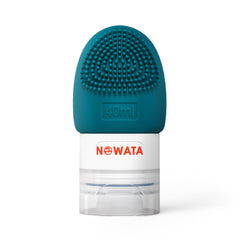
Apply. Put a dime-sized drop of NOWATA™ Soap on dry hands.
-
Rub. Work it in for 15 to 20 seconds, until the soap thickens and clumps with the dirt and oils on your skin. Same coverage map as a sink: backs of hands, between fingers, around the nails.
-
Brush off. The clumps come away with your fingers, and they take what was on your hands with them.
One detail that matters during an outage: brush the clumps into a trash bag instead of the sink. Your water is off, which means your disposal is off, and cleanup is the last thing you need more of this week.
For the longer version of how mechanical removal works and what the Swiss lab actually measured, we wrote it up in our complete guide to cleaning your hands without water.
One boundary worth stating outright: restaurants, childcare centers, and healthcare facilities follow health codes that specify handwashing sinks and procedures. Rinse-free soap doesn't satisfy a regulatory requirement. If you run one of those operations, call your local health department.
What To Do When The Advisory Lifts
The notice ending isn't your last step.
-
Flush your cold taps the way your utility instructs before you drink or cook.
-
Replace filter cartridges. Filters collect germs, and most household filters were never built to remove bacteria or viruses.
-
Dump the ice, clean the ice maker, and run the dishwasher empty on a sanitizing cycle.
-
Follow your utility's specific instructions over any general advice, ours included.

"We spent two years building a soap that works without a sink, and we still tell families to use their tap during a standard boil advisory, because that's what the CDC advises and because trust is the only thing we're really selling. The hard part was never day one of an outage. It's day three, when the stored water is running low, and people quietly stop washing their hands at exactly the moment they've been hauling jugs and cleaning out a flooded basement."
— Dr. Ruslan Maidans, DDS, and Dr. Yalda Shahriari, PhD, Co-Founders of NOWATA
Essential Resources On Hand Washing During A Boil Water Advisory
Hand hygiene during a water emergency is one of those subjects where bad information does real damage. Every resource below is a primary source we check ourselves.
1. Know Exactly Which Advisory You're Under Before You Touch The Tap
The CDC lays out all three drinking water advisories side by side and spells out what each one means for handwashing, bathing, brushing teeth, dishes, and pets. Read this first, because every other decision follows from it.
Source: CDC, Drinking Water Advisories: An Overview
2. Make Water Safe When Boiling Isn't An Option
The EPA covers boiling times, bleach ratios by container size, and which household water sources you can safely tap in a pinch. Print it before you need it, because you may be reading it without power.
Source: EPA, Emergency Disinfection Of Drinking Water
3. Treat Water You Can't Vouch For
The Red Cross walks through practical treatment methods for water you can't vouch for, which describes most households after a break or a storm. Handy when the advisory lands and your stored supply is older than you'd like.
Source: American Red Cross, Water Treatment
4. Build A Water Supply Before The Next Notice Arrives
FEMA's preparedness site covers how much water to store, how to store it so it stays drinkable, and how to treat it if your supply runs thin. Read it on a day when nothing is wrong, because that's the only day it's useful.
Source: Ready.gov, Water: Determine Needs, Storage And Treatment
5. Get Pediatrician-Backed Handwashing Guidance For Kids
The American Academy of Pediatrics covers technique, timing, and how to get children to actually do it, with no fear-mongering anywhere in it. During an advisory, it earns its keep because the swallowing risk matters more than usual.
Source: American Academy of Pediatrics, Hand Washing: A Powerful Antidote To Illness
6. Find Out Whether Your Filter Survived The Advisory
NSF explains what each water treatment certification actually covers, including which standards apply to intermittent microbiological contamination. This tells you whether the pitcher in your fridge was ever going to help.
Source: NSF, Standards For Water Treatment Systems
7. Know What Your Employer Owes You When The Water Goes Out
OSHA requires employers to supply potable water for drinking and for washing. The standard spells out what washing facilities have to include. Worth reading if your workplace stays open through an advisory.
Source: OSHA, 29 CFR 1910.141 Sanitation
Supporting Statistics
Three numbers shaped how we think about hand hygiene during a water emergency.
1. Emergency Planning Assumes 1 Gallon Per Person, Per Day
Federal guidance sets the baseline at 1 gallon of water per person, per day, with at least a 3-day supply on hand. That gallon covers drinking, cooking, teeth, and hands. Once we started dividing it across actual daily tasks, taking handwashing off the water budget stopped being a marketing idea and turned into arithmetic.
Source: FoodSafety.gov, Food Safety In A Disaster Or Emergency
2. The Average American Uses 80 To 100 Gallons A Day Indoors
Per person, per day, for indoor household use. That figure explains why a 2-gallon sink wash feels like nothing on a normal Tuesday and feels enormous on the third day of an outage. Your habits don't change when the water stops. Only the supply does.
Source: USGS Water Science School, How Much Water Do I Use At Home Each Day?
3. The U.S. Sees Roughly 240,000 Water Main Breaks Every Year
The American Society of Civil Engineers puts the current figure near 240,000 breaks a year, costing about $2.6 billion in repairs, down from an earlier estimate of 250,000 to 300,000. We keep this number close because customers tend to treat their first boil notice as a freak event, and somewhere in the country it's just Tuesday.
Source: ASCE 2025 Infrastructure Report Card, Drinking Water
Final Thoughts And Opinion
Most emergency hygiene advice gets written for the disaster that makes the news. Almost none of it gets written for the Tuesday when a main breaks under your street and nobody tells you for six hours.
Here's where we land, as two parents who happen to be a dentist and a biomedical engineer:
-
Safe running water comes first. We say that on our own product pages as often as we say it here, and a boil water advisory usually doesn't take it away from you.
-
The notice matters more than the panic. Boil water, do not drink, and do not use are three different instructions, and reading which one you got takes fifteen seconds while changing everything you do next.
-
The real failure is skipping the wash entirely. Families ration their stored water and quietly stop washing. That's the gap we built for.
-
Every hygiene product should tell you when it isn't the answer. A brand that can't name the moments you should reach for something else has told you what kind of brand it is.
Clean hands during a water emergency. Don't take a miracle product. They take knowing which notice you're under, and keep one thing in the cabinet that works when the tap won't.
Frequently Asked Questions
Q: Can I Wash My Hands With Tap Water During A Boil Water Advisory?
A: In most cases, yes. The CDC says soap and tap water are generally fine for handwashing during a boil water advisory, and advises following your local officials. Scrub 20 seconds, rinse under running water, dry completely, and avoid swallowing. If your notice is a do not drink or do not use advisory, the answer changes.
Q: What's The Difference Between A Boil Water Advisory And A Do Not Drink Notice?
A: A boil water advisory means germs, and boiling for 1 minute handles it. A do not drink advisory means chemicals or toxins, and boiling doesn't help. A do not use advisory means any contact with the water could be dangerous. Your notice will say which one applies.
Q: Is It Safe To Shower Or Bathe During A Boil Water Advisory?
A: Generally yes, as long as you don't swallow the water. The CDC recommends extra caution with babies and young children, and suggests a sponge bath to cut the chance of them swallowing any.
Q: Can I Just Use Hand Sanitizer Instead?
A: It's the CDC's recommended fallback when soap and water aren't available, at 60% alcohol or higher. Two caveats: agencies don't recommend it for visibly dirty or greasy hands, and it doesn't remove chemicals from skin. During an outage, your hands are usually dirty in exactly the way sanitizer handles worst.
Q: How Do I Wash My Hands When The Water Is Completely Shut Off?
A: Your options are bottled water poured over your hands, alcohol-based sanitizer, or a rinse-free soap that needs no water. Rinse-free soap lifts dirt, oils, and germs off your skin and brushes away, which is why it works on genuinely dirty hands.
Q: Is Boiled Water Safe For Washing Hands?
A: Yes, once it's cooled. It's also usually unnecessary during a standard boil advisory, since tap water and soap are generally acceptable for handwashing. Save the boiled water for drinking, cooking, and brushing teeth.
Q: Is Rinse-Free Soap Safe For Kids During A Water Emergency?
A: NOWATA is 100% plant-based, alcohol-free, and made without parabens, phosphates, or forever chemicals. We built it for our kids. Patch test first if your child has known allergies, supervise the younger ones, and read the full ingredient list on the product page if anyone in your house has sensitivities. Our longer comparison for parents covers this in depth: rinse-free plant-based soap as a hand sanitizer alternative for kids and families.
Q: Do I Need To Replace My Water Filter After The Advisory Ends?
A: Usually yes. Filters collect germs from the water passing through them, and most household filters were never designed to remove bacteria or viruses. Replace the cartridge once the advisory lifts, and check your utility's flushing instructions before you refill.
Keep One In The Cabinet Before The Next Notice
The next boil water advisory won't give you a day's warning, and the hardest stretch won't be day one. Add NOWATA™ Soap to your emergency shelf now, try it for 30 days, and if it isn't the easiest thing in the kit to use, we'll refund it.
*Based on laboratory testing using a modified ASTM E1174 test, NOWATA physically removed over 99.9% of virus (Murine Norovirus, a human norovirus surrogate) and bacteria (E.coli) particles from skin. Results do not imply disease prevention. For hand cleansing only.
This article is general information, not medical advice. During any drinking water advisory, follow the instructions from your water utility and local public health officials.
Leave a comment