



Ask any daycare parent about week two, and you’ll hear a version of the same story: a runny nose on Monday, half the class sniffling by Friday. We lived that loop with our own kids before we did anything about it. We’re Dr. Ruslan Maidans and Dr. Yalda Shahriari, a dentist and a biomedical engineer, and we built NOWATA™ because the daycare shelf kept handing us bad trades.
Soap and water work, but only at a sink. Alcohol sanitizer kills some germs and leaves the dead ones, the dirt, and a chemical film right where a kid will lick them off. Wipes mostly move the mess around. So we spent two years building a 100% plant-based, rinse-free soap that lifts dirt, oil, and 99.9% of tested germs off the skin so you can brush them away, with no water and no alcohol.*
This guide is what we wish someone had handed us at that first drop-off: how germs really move through a daycare, why removing them beats killing them on small hands, and how to choose and use a hand soap that survives actual classroom life.
TL;DR Quick Answers
Hand Soap For Daycare
The right-hand soap for a daycare or preschool removes germs, dirt, and oil instead of only killing them in place. It skips the alcohol and harsh additives that chap small hands. And it works when there’s no sink in reach. NOWATA does all three: a doctor-made, 100% plant-based, rinse-free soap, lab-tested to remove over 99.9% of tested germs* with a modified ASTM E1174 protocol. It leaves no residue, so it’s easy to use at cubbies, snack tables, and on field trips.
What to look for in a daycare hand soap:
-
Physical removal, not just chemical killing
-
Alcohol-free, with no parabens or phosphates, since these hands get washed all day
-
Little to no residue, because kids put their hands in their mouths
-
Independent lab testing with published results
-
Works without a sink, for the car, the cubby, and the trail
Top 5 Takeaways
-
Germs move fast in daycare. Put a dozen kids in one room, add nonstop hand-to-mouth contact, and one cold becomes five. Hand hygiene is the lever you actually control.
-
Killing germs and removing them are not the same. Sanitizer neutralizes germs where they sit and leaves the dead, dirt and residue behind. Removal takes it all off the skin.
-
Alcohol-free matters for little kids. Thousands of children turn up in poison-control data from sanitizer every year, so an alcohol-free option is the safer choice for a room full of toddlers.
-
Consistency beats counting. Clean hands at the moments that matter, before meals, after the bathroom, after the playground, and keep something effective on hand for each one.
-
We built NOWATA for exactly these moments. It’s plant-based, rinse-free, and Swiss lab-tested to remove 99.9% of tested germs,* no water and nothing left on the skin.

Why Germs Spread So Fast In Daycare And Preschool
A daycare room is built for sharing, and germs take full advantage. Young children touch their faces 50 to 80 times an hour, pass the same toy around all morning, and run immune systems that are still in training. One unwashed cubby handle can reach the whole class by snack time.
The moments that matter most are predictable, which is the good news. You can plan for them:
-
Before meals and snacks
-
After the bathroom or a diaper change
-
After outdoor play and shared toys
-
After coughing, sneezing, or nose-wiping
Public-health agencies put clean hands at the front of childcare for a reason. Plain physical hand washing works by using friction and soap to lift germs off the skin so they rinse away. The catch in a classroom: that method needs a sink, running water, and a cooperative three-year-old, and you rarely get all three at once.
Killing Germs Vs. Removing Them—Why It Matters For Little Hands
This is the difference we kept coming back to. Picture a muddy floor. You can spray disinfectant, kill every microbe in the mud, and still be standing in mud. That’s roughly what alcohol sanitizer does on a child’s hand. It neutralizes some germs in place and leaves the dirt, the oil, the dead microbes, and the chemical residue right where they were.
Removal works the other way. It grabs the contaminants and pulls them off the skin, the way soap and water always have. For a kid who’s about to eat with their fingers, what comes off matters as much as what dies.
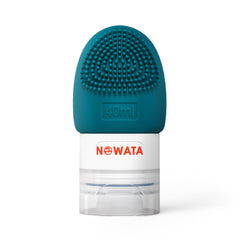
NOWATA does that without a sink. Put a drop on dry hands, rub until the formula clumps around the grime, then brush the clumps off, and the germs leave with them. There’s no alcohol to sting chapped winter skin, and nothing left over to end up in a mouth. For the longer version we wrote for parents, read our take on the best rinse-free soap for kids and families.
How NOWATA Works For Daycare And Preschool Hands
The routine takes about 20 seconds, and most kids think it’s fun, which quietly settles the wash-time standoff every caregiver knows:
-
Put a small drop of NOWATA on dry hands.
-
Rub until the soap clumps up.
-
Brush off the clumps. The dirt, oil, and germs come off with them.
A few practical notes for classroom and family life:
-
Works on dry hands, with no rinsing and no leftover stickiness
-
About 80 to 100 uses per bottle, so one tube covers weeks of outings
-
Kids can watch the grime lift off, which is half the reason they cooperate
Why NOWATA Fits Childcare Centers And Classrooms
Directors and teachers tell us what they need, and it’s consistent: something quick, mess-free, and gentle enough for many small hands all day, especially in cold-and-flu season when constant washing leaves skin raw. We made NOWATA for that:
-
Alcohol-free, with no parabens or phosphates, so it won’t sting or dry out little hands
-
Easy when sinks are scarce,e or the line is long: cubbies, circle time, field trips, the bus
-
100% plant-based and biodegradable, and it saves up to two gallons of water per use, which suits eco-minded centers
-
Made in the USA, backed by a 30-day satisfaction guarantee
Outfitting a classroom or a whole center? Email support@nowataclean.com about multi-tube quantities so every room has a tube within reach. Teachers tell us it keeps classroom hand hygiene quick between sink visits, which is the case we make in our guide to a no-rinse hand wash for busy classrooms.
A Doctor’s Daycare Germ-Prevention Routine
After years of using NOWATA with our own kids, and hearing from thousands of families who do too, here’s the routine we recommend. Forget perfection. Aim to be ready at the moments that count.
-
Sink available: soap and water for 20 seconds is still the gold standard.
-
No sink in sight: reach for NOWATA instead of piling sanitizer onto already-dirty hands.
-
In a pinch, a water-only rinse beats nothing, though it leaves the oil and residue behind.
Build the habit around those moments instead of counting washes. Keep a tube in the cubby and one in every bag. Make the clumping a little bit of a game, and kids will actually do it when cold-and-flu season hits.
For an age-by-age walkthrough, read our full guide on how to keep kids’ hands clean, written from the same doctor-and-parent point of view.

— Dr. Ruslan Maidans (DDS) & Dr. Yalda Shahriari (PhD, Biomedical Engineering), NOWATA Founders
Essential Resources On “Hand Soap For Daycare”
If you’re choosing a hand soap for a daycare, a preschool, or your own kitchen drawer, these seven sources are the ones we trust. We saved everyone while making NOWATA. Real science from groups that earned the authority, not marketing copy.
1. Understand Why Soap Removes Germs Better Than Water Alone
A clear, evidence-backed primer on how washing with soap cuts diarrheal disease almost in half and respiratory infections by about a quarter. It’s the removal mechanism behind every good daycare hygiene policy.
Source: The Global Handwashing Partnership: Why Handwashing With Soap Works
2. Get Pediatrician-Approved Handwashing Guidance Written For Kids
The American Academy of Pediatrics lays out when and how kids should clean their hands, and why sanitizer falls short on the visibly dirty hands that fill a childcare room.
Source: American Academy of Pediatrics: Hand Washing: A Powerful Antidote to Illness
3. See The Exact Moments Childcare Staff Should Clean Hands
Caring for Our Children sets the national standard for when caregivers, teachers, and children have to wash up in early-care settings. It also notes the FDA’s preference for plain soap over antibacterial soap.
Source: Child Care Technical Assistance Network: Situations That Require Hand Hygiene
4. Build A Practical Handwashing Routine For Your Classroom
Teaching tools from the American Cleaning Institute's Healthy Schools, Healthy People program, with songs and step-by-step guides that help preschoolers turn handwashing into a habit they keep.
Source: American Cleaning Institute: Clean Hands Teaching Resources
5. Check Whether Your Sanitizer Has Been Flagged For Safety
The FDA keeps a running list of hand-sanitizer products to avoid, flagged for dangerous impurities or too little active ingredient. Worth a one-minute check before you stock a diaper bag or a classroom shelf.
Source: U.S. Food and Drug Administration: Hand Sanitizers Consumers Should Not Use
6. Bookmark A Plain-Language Handwashing Reference For Families
A short, trustworthy walkthrough of when and how to wash hands, including the after-diaper and before-food moments that matter most in daycare and at home.
Source: MedlinePlus, U.S. National Library of Medicine: Handwashing
7. Learn The Testing Standard Behind Real Germ-Removal Claims
ASTM E1174 is the FDA's protocol for evaluating hand hygiene products. It’s the same framework we used to confirm NOWATA removes over 99.9% of tested germs,* and learning it helps you tell verified science from clever packaging.
Source: ASTM International: E1174 Handwash Formulation Test Method
Supporting Statistics
Before we mixed a single batch, we sat with the public-health data, half as a dentist and a biomedical engineer, half as two worried parents. Three numbers are why NOWATA exists.
1. Clean Hands Prevent A Large Share Of Childhood Illness
-
Washing hands prevents about 30% of diarrhea-related illnesses and about 20% of respiratory infections like colds.
-
That’s roughly 1 in 3 young kids spared a diarrheal illness, and nearly 1 in 5 spared a respiratory one.
What grabbed us was the mechanism. The protection comes from physically lifting germs off the skin, which is exactly what we set out to do without a sink.
Source: Centers for Disease Control and Prevention: Handwashing Facts
2. Pediatric Hand-Sanitizer Exposures Are A Real, Recurring Risk
-
Poison-control centers handled about 16,000 cases involving children 12 and under and hand sanitizer in 2023.
-
The main route is ingestion: kids putting sanitized fingers in their mouths.
We watched that exact thing happen in our own kitchen, which is why we left alcohol out entirely and used nothing we’d worry about a toddler tasting.
Source: U.S. PIRG Education Fund: Kids and Hand Sanitizer Poison Control Cases
3. Every Rinse-Free Clean Saves Meaningful Water
-
A standard bathroom faucet runs about 2 gallons of water a minute.
-
In a classroom that washes dozens of times a day, that adds up fast. So a no-rinse clean that saves up to two gallons per use is real conservation built into a daily habit.
Dr. Yalda tracked our family’s water for a week, and once we saw the number, we couldn’t unsee it. We didn’t build NOWATA to lecture anyone. We built it to stop wasting water on moments that don’t need a sink.
Source: U.S. Environmental Protection Agency, WaterSense: Statistics and Facts
Final Thoughts And Opinion
Three years of reading protocols, picking apart Swiss lab results, and testing formulas on our own kids left us with one firm opinion. The nursery hygiene conversation asks the wrong question.
We argue about alcohol percentages and “natural” labels. The question that actually counts is simpler. What happens to the germs? They either stay on your child’s skin or they don’t.
Every childcare setting has been stuck picking two of three:
-
Effective and safe: soap and water. But it needs a sink, 20 seconds, and a cooperative kid, so it’s not always convenient.
-
Effective and convenient: alcohol sanitizer. But it leaves residue on hands headed for the mouth, so it’s not ideal for toddlers.
-
Safe and convenient: wipes or a water rinse. But neither removes much, so it’s not effective enough.
Our honest take: you shouldn’t have to pick two. NOWATA won’t replace soap and water when a sink is handy, and it isn’t a medical product, so it doesn’t prevent disease. It’s the doctor-made, plant-based, rinse-free option we built so daycare hands get genuinely cleaner, not just chemically treated, wherever you happen to be.
One thing to carry with you: you deserve to feel as sure about what’s on your child’s hands after you clean them as you do about getting them clean in the first place.
Frequently Asked Questions
Q: Is Hand Sanitizer Safe For Kids In Daycare?
A: Used as directed, sanitizer is generally considered safe. The problem is that toddlers don’t read directions. The CDC says to supervise kids under 6 with it so they don’t swallow it, and thousands of pediatric exposures still show up in the data every year. As parents, our bigger concern was what sanitizer leaves behind. NOWATA skips the alcohol and removes germs instead of killing them in place, so nothing is sitting on the skin afterward.
Q: What Kind Of Hand Soap Is Best For Preschoolers’ Sensitive Skin?
A: Look for a soap with no alcohol, parabens, or phosphates, and one that won’t dry or sting skin that gets washed all day. NOWATA is 100% plant-based and gentle enough for sensitive skin, and it still removes over 99.9% of tested germs.* For more on choosing a gentle option, read our guide to hand soap for sensitive skin.
Q: Can NOWATA Be Used In A Childcare Center Or Classroom?
A: Yes. It works on dry hands with no sink, rinsing, or paper towels, which is what makes it fit cubbies, circle time, and field trips. For centers, we sell multi-tube quantities. Email support@nowataclean.com and we’ll help you outfit your rooms.
Q: Does NOWATA Really Work Without Water Or A Sink?
A: It does. Put a drop on dry hands, rub until the formula clumps, then brush the clumps off, and the dirt, oil, and germs come off with them. A Swiss lab tested it with a modified ASTM E1174 protocol and confirmed it removes over 99.9% of the tested virus and bacteria particles.*
Q: Is NOWATA Safe If A Child Gets It Near Their Mouth?
A: We made NOWATA plant-based, alcohol-free, and free of anything we wouldn’t want a toddler to taste. Every child is different, though. If yours has a severe macadamia allergy or reactive skin, do a small spot test first and check with your doctor if you’re unsure.
Q: How Long Does One Bottle Last For A Busy Classroom?
A: About 80 to 100 uses, since a dime-sized drop does the job. For one child, that’s months. For a classroom, plan on a tube or two per room and reorder them like any other supply.
Q: Where Can I Buy NOWATA Online?
A: At nowataclean.com. Single tubes start at $15.99, bundles are available, shipping is free over $45, and every order is backed by a 30-day satisfaction guarantee.
Give Your Daycare And Family Clean Hands Without A Sink
NOWATA is the doctor-made, plant-based soap that lifts 99.9% of tested germs* off little hands on dry skin and leaves nothing behind. Buy it today at nowataclean.com, or email us about classroom quantities for your center.
*Based on laboratory testing using a modified ASTM E1174 test, NOWATA physically removed over 99.9% of virus (Murine Norovirus, a human norovirus surrogate) and bacteria (E.Coli) particles from skin. Results do not imply disease prevention. For hand cleansing only.
Leave a comment