




Camps aren’t short on soap. They’re short on sinks in the places where kids actually get dirty, and no amount of reminding fixes a floor plan.
Picture a counselor moving 11 campers off the archery range with the dinner bell already going. The wash house sits a few hundred feet the wrong way. You can guess how that plays out, and it has nothing at all to do with whether those kids want clean hands.
We’re a dentist and a biomedical engineer, and we built NOWATA™ around exactly that gap. The hygiene line on most camp packing lists still runs two words long: soap, sanitizer. Neither one helps a kid standing 400 feet from the nearest faucet.
TL;DR Quick Answers
Hand Hygiene At Summer Camp
At summer camp, the reliable move is packing a rinse-free soap that physically removes germs from skin, because the sink is usually the one thing a camper can’t reach when their hands need cleaning.
The short version:
-
At the wash house, soap and water with 20 seconds of scrubbing still wins. Use it any time there’s a faucet.
-
Everywhere else, pack a rinse-free soap that lifts dirt and germs off the skin. A sanitizer acts on some of them and leaves the rest sitting right where they were.
-
The moments that matter most: before meals and trail snacks, after the latrine, after the barn or nature program, after swimming, and after shared sports gear.
-
Skip anything with alcohol, anything in an aerosol can, and anything that’ll leak into a duffel.
-
One 2.5 oz tube of NOWATA runs 80 to 100 uses. That covers a four-week session at roughly three uses a day.
-
Flying to camp? A 2.5 oz tube clears the TSA 3.4 oz carry-on limit, so it rides in the backpack instead of checked luggage.
Top 5 Takeaways
-
This is a distance problem, not a discipline problem. Cabins, trails, ranges, and dining lines sit nowhere near a faucet.
-
Neutralizing a germ and removing it ends differently. Sanitizer acts on some germs where they sit. The dead microbes, the dirt, and the residue all stay on the hand that’s about to pick up a dinner roll.
-
Camps take stomach bugs seriously, and state health departments publish camp-specific outbreak toolkits to prove it. Shared cabins, shared bathrooms, and shared meals move a pathogen fast.
-
One tube usually covers one session. At 80 to 100 uses, a 2.5 oz tube handles four weeks at about three uses a day, and it fits airline carry-on rules.
-
Unsupervised use raises the safety bar rather than lowering it. Nobody’s watching how much your nine-year-old squeezes out, so whatever you send has to hold up at double the dose, twice a day, for a month.

Why Hand Washing Breaks Down At Camp (It’s Not The Kids)
Count the sinks in an ordinary camp day. Breakfast in the mess hall. Archery. The nature shed with the rabbits. A bag lunch eaten on a trail. Swim. Free time in the dirt behind the cabins. Two of those six moments end within reach of running water, and that’s on a good day.
Then there’s the staffing math. A single counselor covers a cabin of 10 or 12, and walking all of them to the wash house before every meal eats program time. So it happens before some meals and not others. Nobody’s being careless here. It’s arithmetic.
The modern summer camp is also built for closeness. Bunk rooms, shared bathrooms, canoe paddles, archery bows, serving spoons, one basketball for 20 kids. Camp concentrates contact almost exactly the way you’d design it if the goal were moving a germ through a population efficiently. That same closeness is what makes camp worth the tuition, which is the awkward part.
What Camps Actually Worry About
Ask a camp nurse what keeps them up, and the stomach bug comes up before anything else.
Gastrointestinal illness moves fast in a residential setting. Norovirus travels by hand-to-mouth contact and by contaminated surfaces, and it shrugs off alcohol. That’s why state public health agencies publish outbreak toolkits written specifically for children’s camps, with whole sections on handwashing, food handling, and when to call the local health department. Those documents exist because camps see these events.
Respiratory illness takes the same routes in close quarters. Skin infections like impetigo ride along on shared towels and sports equipment, which is why dermatologists see so much of it in kids and athletes.
None of that is a reason to keep a kid home. It’s a reason to look honestly at what goes in the duffel.
The Summer Camp Hand Hygiene Packing List
Here’s a hygiene list that accounts for where your camper actually stands during the day.
-
Rinse-free soap. One 2.5 oz tube per session for sleepaway, one per summer for day camp. This is the piece that works where the sinks aren’t.
-
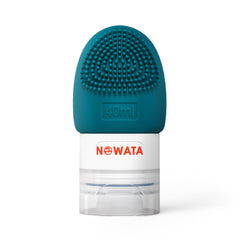
A refillable travel bottle with a brush, which clips onto a day pack. The brush earns its place, because brushing off is how the dirt and germs actually leave the hand.
-
Bar or liquid soap for the wash house. Still the gold standard when your camper is standing at a faucet.
-
A labeled toiletry bag. Most camps require names on everything, and lost and found gets measured in garbage bags.
-
A quick-dry towel, because wet hands pick up more than dry ones.
-
Dry shampoo if the session runs long. Optional. Two weeks and a shower line is a different experience than a weekend.
A few packing notes we learned the hard way:
-
Check the camp’s aerosol policy before you buy. Plenty of camps restrict spray products, which quietly rules out most spray sanitizers.
-
Send hygiene items in the duffel rather than the care package. Some camps limit what care packages can hold, and a mid-session resupply may never reach the cabin.
-
Label the tube, not just the bag. Bags get emptied onto bunks.
-
Pack one tube in the day pack and one in the car. The one in the car is the one that survives the drive home, which is its own hand hygiene problem on a long drive.
-
If your camper flies, size the tube against the TSA 3.4 oz carry-on liquids rule before it goes in the backpack rather than the checked bag.
Sleepaway, Day, And Scout Camp Each Need Something Different
These three look alike from the parking lot and behave nothing alike.
Sleepaway Camp
Four weeks, no parent in the room. Whatever you pack has to work without a reminder, which means a kid has to want to reach for it. Our formula forms visible clumps as it lifts dirt off the skin, and children find that genuinely entertaining. We didn’t design it as a compliance feature. It turned out to be one.
Day Camp
Your camper comes home every evening, so the question flips: what rides back in the car with them? Snack time, water table, bus seat, playground railing. A tube in the backpack and a tube in the car door covers most of it. Plenty of day camps are really sports camps, and we went deeper on sideline hand hygiene at practices and games separately.
Scout Camp And Backcountry Sessions
Out here, water gets rationed, and Leave No Trace asks you to carry wash water at least 200 feet from any stream or lake before you scatter it. Rinse-free sidesteps the whole question, because there’s no greywater to disperse. For patrols cooking their own meals, one step replaces two. It’s the same arithmetic we ran for staying clean off-grid in an RV or camper van, where the freshwater tank is the hard limit.
How To Choose A Hand Soap For Camp
Six questions you can put to any product on the shelf, ours included.
-
Does it remove, or only neutralize? Removal removes dirt and germs from the skin. The alternative leaves everything where it was.
-
Does it need water? If it does, it won’t help at the moment your camper needs it.
-
What’s in it? Assume unsupervised use. The FDA advises that children use alcohol-based sanitizer only with an adult watching, and at camp nobody is. Look for no alcohol, no parabens, no phosphates, and no fragrance load a kid breathes for a month.
-
Will the packaging survive a duffel? Check the aerosol policy and the carry-on size limit while you’re at it.
-
Is the testing named? A percentage on a label means little without a protocol and a laboratory behind it. Ask which standard produced the number.
-
Will one container last the session? Running out in week three is its own kind of failure.
Two of those you can solve yourself in about a minute. Look the product up in EWG’s Skin Deep database for ingredient-level ratings, then email the brand and ask which testing protocol produced their number. A company that has one will tell you.
We went further on ingredient safety for children in our doctor-made guide to keeping kids’ hands clean without harsh chemicals, which covers more ground than a packing list can.
How NOWATA Works When There’s No Sink
Three steps, about 20 seconds.
-
Apply a small drop to dry hands.
-
Rub until clumps form. The formula binds to dirt, oil, and microbial particles as it goes.
-
Brush the clumps off. Whatever they trapped leaves with them.
We spent two years developing the formula. Then a Swiss laboratory tested it under a modified ASTM E1174 protocol, the same framework the FDA references for healthcare personnel handwashing products, and found that NOWATA physically removed over 99.9% of the tested virus and bacteria particles from skin.*
The formula is 100% plant-based, biodegradable, and alcohol-free, and it saves up to 2 gallons of water per use. Run that across a camper cleaning up three times a day for four weeks and the number starts to matter, especially at a camp drawing from a well.
Now the unglamorous part. When there’s a working sink, use it. NOWATA is for the other two thirds of the day.

“We spent two years proving in a laboratory that you can lift germs off skin without a drop of water. What we understand as parents is simpler than that: once you’ve dropped your kid off, the only hygiene you still control is whatever’s already in their bag.”
— Dr. Ruslan Maidans, DDS, and Dr. Yalda Shahriari, PhD, NOWATA Founders
Essential Resources
Seven sources we actually used while thinking this through, in the order a parent or a camp director would want them.
1. See The Outbreak Playbook Camps Are Handed Before You Ever Worry About One
California’s public health department wrote a toolkit specifically for norovirus outbreaks at camps, covering handwashing protocols, food service, and cleaning. It tells you more about how camps really operate than any brochure will.
Source: California Department of Public Health, Norovirus Toolkit for Camp Outbreaks
2. Learn What Your Camp Is Legally Required To Do When Kids Get Sick
New York State walks camp operators through identifying, reporting, and controlling an illness outbreak, right down to the handwashing supplies that must stay available at all times. Useful if you’re choosing a camp. Essential if you run one.
Source: New York State Department of Health, Procedures for Handling Outbreaks at Camp
3. Get Pediatrician-Level Guidance On Kids’ Hands Specifically
The American Academy of Pediatrics lays out when children need to clean their hands and what a thorough job involves. Short, practical, and worth 5 minutes before you write your camper’s packing list.
Source: American Academy of Pediatrics, Hand Washing: A Powerful Antidote to Illness
4. Read The Guideline Camp Nurses Actually Work From
The Alliance for Camp Health publishes a practice guideline on preventing and managing communicable disease at camp, covering hand hygiene, cough etiquette, and the no-sharing rules for personal items. Camp nurses wrote it for camp nurses.
Source: Alliance for Camp Health, Communicable Disease Management in the Camp Setting
5. Know The Wash Water Rules Before Your Scout Heads Into The Backcountry
Leave No Trace asks you to carry wash water 200 feet from streams and lakes and to use only small amounts of biodegradable soap. Read the principle, and the case for rinse-free on trek makes itself.
Source: Leave No Trace Center for Outdoor Ethics, Dispose of Waste Properly
6. Check Any Hygiene Product’s Claim Against The Actual Testing Standard
ASTM E1174 is the handwash efficacy method the FDA references, and it’s the framework our own Swiss testing was modified from. Knowing it lets you ask a brand which protocol produced their number.
Source: ASTM International, E1174-21 Standard Test Method for Healthcare Personnel Handwash Formulations
7. Do The Water Math Before You Assume A Sink Is Always The Greener Option
Camps on wells, springs, and seasonal systems have a hard ceiling on water. The CDPH toolkit above tells them to test it often. The EPA’s WaterSense program publishes the household and facility numbers that let a camp director work out what handwashing actually costs them across a season.
Source: U.S. Environmental Protection Agency, WaterSense Statistics and Facts
Supporting Statistics
Three numbers changed how we packed our own kids’ bags.
1. Handwashing Prevents About 30% Of Diarrhea-Related Illness And About 20% Of Respiratory Infections
-
The mechanism is friction and removal, not disinfection
-
That’s the same principle we engineered NOWATA around, minus the running water
-
It also explains why a skipped handwash before a mess hall meal isn’t a small thing
What this meant for us: our design question stopped being “can we make a rinse-free soap” and became “can we deliver removal without a faucet.”
Source: Centers for Disease Control and Prevention, Handwashing Facts
2. More Than 26 Million Children And Adults Take Part In The Camp Experience Each Summer
-
The most common session runs one week or less
-
Plenty of independent camps still run four, six, and eight-week sessions
-
That spread is why we size our recommendation to uses per tube rather than days
What this meant for us: we stopped guessing and did the math. At 80 to 100 uses, one tube covers a four-week session at roughly three uses a day, and it comfortably covers a one-week session for two kids.
Source: American Camp Association, Camp Trends: Enrollment
3. Federal Standards Allow Faucets To Flow At Up To 2.2 Gallons Per Minute
The Department of Energy publishes that maximum. The rest is arithmetic you can run yourself:
-
A 20-second wash at that rate moves roughly three-quarters of a gallon
-
A 200-camper camp washing before three meals is putting hundreds of gallons a day through hands alone
-
Many camps draw from a well, a spring, or a seasonal system with real limits
What this meant for us: the water savings weren’t a marketing angle we went looking for. We ran the numbers for a camp once and couldn’t unsee them.
Source: U.S. Department of Energy, Best Management Practice #7: Faucets and Showerheads
Final Thoughts And Opinion
Our opinion, after reading camp outbreak toolkits and packing a few duffels of our own: the hygiene section of the average camp packing list hasn’t been updated in about a decade.
It still says soap and hand sanitizer, as though those were the only two categories that exist, and as though either one answered the problem of a camper standing 400 feet from the nearest faucet with a dinner bell ringing.
What we believe:
-
Camps are doing hand hygiene about as well as their floor plans allow. The constraint is architecture, not attitude.
-
Sanitizer earned its spot in a diaper bag. Nobody designed it for hands covered in trail dirt and horse barn, which is what camp hands look like by mid-morning.
-
Parents are told to choose two of three: effective, safe, convenient. We think that trade-off described what was on the shelf, not a law of nature.
-
And the honest caveat: soap and water at the wash house beats everything, us included. We’d rather say so plainly.
Camp is worth the germs. It teaches kids things a house can’t. We never set out to sterilize the experience, only to close the gap between the moment a hand needs cleaning and the moment a sink shows up.
Frequently Asked Questions
Q: What Soap Should I Pack For Summer Camp?
A: Pack two kinds. A regular bar or liquid soap for the wash house, and a rinse-free soap for everywhere else. The second one is what actually gets used, because it travels with your camper instead of waiting in a building.
-
Sleepaway: one 2.5 oz tube per session
-
Day camp: one in the backpack, one in the car
-
Scouts: one per camper, plus a spare for the patrol
Q: Is Hand Sanitizer Allowed At Summer Camp?
A: Usually, though policies vary and a lot of camps restrict aerosol sprays specifically. Check the camp handbook before you buy. Worth knowing separately: the CDC notes that sanitizer works poorly on heavily soiled hands, which describes most camp hands by 10 a.m.
Q: How Do Kids Clean Their Hands At Sleepaway Camp When The Cabin Is Far From The Bathroom?
A: At a lot of camps, often they don’t, and that’s the gap worth planning around. A rinse-free soap in the day pack moves the cleaning to where your camper is standing rather than where the plumbing happens to be.
Q: How Much Soap Does One Camper Need For A Full Session?
A: One 2.5 oz tube of NOWATA runs 80 to 100 uses. At about three uses a day, that covers a four-week session with room to spare, and a single tube easily handles two siblings through a one-week session.
Q: Is Rinse-Free Soap Safe For Kids To Use Without An Adult Watching?
A: That’s the condition we formulated. NOWATA is 100% plant-based with no alcohol, no parabens, and no phosphates, because we assumed nobody would be supervising the dose. Anyone with a severe macadamia allergy should spot-test first, since the formula contains ethyl macadamiate.
Q: Can I Send Hand Soap In A Care Package?
A: Check first. Care package rules vary widely, and some camps restrict them to specific weeks or contents. Sending hygiene items in the original duffel is the safer bet, and a spare tube tucked in a sock drawer costs you nothing.
Q: Does Rinse-Free Soap Actually Work On Dirty Hands, Or Only Lightly Soiled Ones?
A: Visible dirt is where the clumping shows up best, because the formula binds to it and lifts it off. A Swiss laboratory tested our formula against virus and bacteria particles on skin under a modified ASTM E1174 protocol.* Trail grime is the use case we designed around, not the exception to it.
Q: Is NOWATA Fine For A Camper Flying To Camp?
A: Yes. The 2.5 oz tube sits under the TSA 3.4 oz carry-on liquid limit, so it can ride in a backpack. Given how often checked bags and campers arrive on different days, we’d keep it in the carry-on regardless.
Q: What Is The Difference Between Removing Germs And Neutralizing Them?
A: Neutralizing leaves a germ where it sits. Removing it takes it off the skin along with the dirt and oil it was living in. Think of a muddy floor: you can disinfect the mud and still be standing in mud. That distinction is the entire reason NOWATA exists.
Pack The One Thing That Works Where The Sinks Are Not
Your camper will spend most of the summer nowhere near a faucet. One 2.5 oz tube covers the whole session. Add NOWATA rinse-free soap to the packing list at nowataclean.com before drop-off day.
*Based on laboratory testing using a modified ASTM E1174 test, NOWATA physically removed over 99.9% of virus (Murine Norovirus, a human norovirus surrogate) and bacteria (E.coli) particles from skin. Results do not imply disease prevention. For hand cleansing only.
Leave a comment