



Seven states require a hand sanitation station at animal contact exhibits. Seven, out of 50.
We went looking for that number after a bad afternoon at a county fair. Our four-year-old had just come out of the goat pen with her hands on a rail, a feed cup, and her own face, roughly in that order. The pump station 15 feet away had run dry sometime Thursday. It was Saturday. Another 20 feet past it, a woman was selling corn dogs.
We’re Dr. Ruslan Maidans and Dr. Yalda Shahriari, a dentist and a biomedical engineer who spent two years building a rinse-free soap. Our own kids kept walking us into that gap. Fair week in August. The farm field trip in May. The pumpkin patch every October.
So this guide covers what we wanted to know that afternoon. What really ends up on a child’s hands after animal contact. What the CDC and state public health vets recommend, and where their advice quietly runs out. And the routine we run on our own fair days now. Some of it is about our soap. Most of it isn’t.
TL;DR Quick Answers
Petting Zoo Hand Hygiene
Petting zoo hand hygiene means cleaning up at the animal area exit, not at whatever bathroom you find 20 minutes later. Fair hands are visibly dirty, and physical removal handles visibly dirty hands better than anything that tries to neutralize germs where they sit. One drop of rinse-free soap on dry hands. Rub 30 to 45 seconds until clumps form. Brush the clumps off. Under a minute, and no sink involved.
-
What it has to do: work on hands carrying fur, feed dust, bedding, and railing grime, not a light invisible film.
-
When it matters most: at the barn exit, before any food, after feed cups and grooming brushes, and before the drive home.
-
What to look for: physical removal, no water, no rinsing, alcohol-free, nothing left on the skin before food, and published third-party lab testing.
-
What to skip: leaning on sanitizer alone after animal contact. It isn’t labeled for visibly dirty hands, and it doesn’t reach every germ that lives in a barn.
-
If a working sink exists: use it. Soap and running water are still the standard, and we’d rather tell you that than sell around it.
-
The short version: NOWATA™ is a doctor-made, plant-based, rinse-free soap that physically removes 99.9% of tested germs with no water.* Buy NOWATA online.
Top 5 Takeaways
-
Healthy-looking animals still shed germs. The CDC says it plainly. Animals that look clean can carry harmful germs, and you don’t have to touch one to get sick. The rails and the ground do that job on their own.
-
The wash station is the plan, and the plan fails often. Only seven states require hand sanitation stations at animal contact exhibits at all. By day four of a fair, the stations that exist are frequently empty.
-
Sanitizer is a supplement here, not a substitute. It doesn’t work well on heavily soiled hands, and it doesn’t work equally well against every class of germ. A petting pen exposes both limits at once.
-
Removing and killing produce different results. Killing leaves dirt and dead microbes sitting on the skin. Removal takes the whole lot off, which is what counts in the 90 seconds before a corn dog.
-
Three moments beat one rule. Barn exit, before food, before the car. Under a minute each. No fairground policy survives a dispenser that ran out on Thursday.

What’s Actually On Your Kid’s Hands After The Petting Pen
A petting zoo is a contact chain, and the animal is only the first link in it. Watch a kid work one, and you’ll count a dozen more. The rail she leans on. The gate latch. The coin-operated pellet dispenser, the feed cup, the shavings she scoops up because shavings are interesting. The stroller handle. The phone that comes out for a photo halfway through.
Here’s the part almost nobody tells parents. You don’t have to touch an animal to pick something up. The CDC states that areas where animals live and roam can be contaminated, and that healthy-looking animals carry germs without a single visible sign of illness. Vets call these zoonotic diseases, meaning the ones that pass between animals and people. The goat is the least of it. Everything the goat has touched counts too.
Then there’s the layout. Public health guidance asks venues to keep animal areas away from eating areas and to build a transition zone between the two. Plenty of fairgrounds do exactly that on paper. On the ground, the barn exit and the first food truck are often close enough to see each other, and a six-year-old covers that distance in about 20 seconds.
Researchers who observed 246 children across 17 Michigan petting zoos found that fewer than a third washed their hands after animal contact. About half touched their own face, eyes, nose, or mouth while they were still in the pen. Another 42% touched an animal’s mouth. Staff reminded 1.2% of visitors to wash.
We’re not trying to scare anybody. Those numbers describe a layout problem and a timing problem, not careless parenting. Every parent in that study was standing right there.
Why Hand Sanitizer Isn’t The Backup Plan At A Fair
Sanitizer earns its place in plenty of settings, and we aren’t here to run it down. The CDC recommends it when soap and water aren’t available. There’s a bottle in our own diaper bag. A fairground, though, exposes two documented limits at once, and both are worth knowing before you lean on it.
The first is soil. The CDC says hand sanitizers may not work well when hands are heavily soiled or greasy, and the NASPHV Compendium, which is the reference document your fair’s health department works from, says nearly the same thing in nearly the same words. A hand fresh from a lamb pen is a soiled hand. Alcohol can’t reach skin it can’t get to. We ran the mechanics of that all the way down in our piece on whether hand sanitizer actually kills E. coli, and the answer caught us off guard.
The second limit changed how we think about animal contact specifically. Alcohol-based sanitizers are not effective against Cryptosporidium. That finding belongs to the CDC, stated flatly, and state health departments repeat it almost word for word. Cryptosporidium is no footnote in this setting, either. In national outbreak surveillance covering 2009 through 2021, it ranked second among confirmed causes of animal contact outbreaks, and the second most common germ-and-animal pairing in the whole dataset was Cryptosporidium with ruminants. Ruminants means goats, sheep, and calves. That is, the petting pen.
So what handles a parasite that alcohol can’t touch? Physical removal. Every agency that addresses Crypto lands in the same place, and the reason soap works has nothing to do with killing the organism. Soap and friction lift it off your skin and carry it away. We put the two mechanisms side by side, with the lab data, in our doctor’s comparison of rinse-free soap and hand sanitizer.
One thing we want to be exact about, because blurring it would be easy and we won’t: NOWATA has been lab-tested against Murine Norovirus and E. coli. It has not been tested against Cryptosporidium, Salmonella, or Campylobacter. We can tell you that removal is the mechanism public health guidance leans on for those germs. We can’t tell you our bottle removes them, because nobody has run that test yet. The day somebody does, we’ll publish it.
How NOWATA Cleans Hands When The Wash Station Is Dry
NOWATA is a rinse-free soap, not a sanitizer. It works the way soap has always worked, by bonding to whatever is sitting on your skin and lifting it off. It just does that without a drop of water.
One drop on dry hands. Rub for 30 to 45 seconds. The plant-based formula grabs dirt, oil, and microbial particles and pulls them into visible clumps. Brush the clumps off and the contaminants go with them. Nothing to rinse and nothing left behind.
Microbe Investigations AG in Switzerland ran the testing on a modified ASTM E1174 protocol, the handwash efficacy standard the FDA references. On human hands, in 45 seconds, NOWATA physically removed over 99.9% of the tested virus (Murine Norovirus, a human norovirus surrogate) and bacteria (E. coli) particles.* You can read the full Swiss lab results if you’d rather have the methodology than the headline.
There’s a benefit here we didn’t design and can’t take credit for. At a fair, getting a kid to clean up is harder than finding somewhere to do it. They skip the station because it’s boring and the line is long. They don’t skip this, because the clumps come off visibly dark and they can watch the barn leave their hands. Our daughter does it twice for fun, which solved a compliance problem no amount of parenting had solved for us.
The honest caveat: those clumps have to land somewhere. Brush them onto the grass outside the barn or over a trash can. They’re biodegradable and gone within a day. You just don’t want to learn that rule in the back seat of your car.
The Fair-Day Hand Hygiene Routine
This is what we actually do, in the order we do it. If you want the everyday version rather than the fairground one, we wrote the full doctor-made guide to keeping kids’ hands clean for exactly that.
Right At The Animal Area Exit
Clean up before you leave the barn, not once you’ve found a bathroom. The transition point is the whole idea, and it’s exactly what the NASPHV Compendium asks venues to design around. Do it whether the station is stocked or not. If it is stocked and working, use it and skip us entirely.
Before Food, Every Single Time
This is the highest-value moment of the day, and the one people skip. Funnel cake, lemonade, kettle corn, anything eaten with fingers. While we’re here: food and drinks don’t belong in animal areas at all, and that includes the sippy cup riding through the goat pen in the stroller cupholder.
After Feed Cups, Brushes, And Bedding
Outbreak investigators have repeatedly found that people who fed the animals got sick more often, and that contact with sawdust and shavings mattered too. The pellet cup counts as animal contact even if your kid never laid a hand on the sheep.
Before The Drive Home
Bedding and manure ride home on hands, then transfer to the steering wheel, the seat belt, and whatever gets eaten in the back seat 20 minutes later. This is the use that converts skeptical parents, mostly because the car stays clean. If the fair is a few hours from home, our guide to hand hygiene on road trips covers the rest of the drive.
For 4-H And FFA Families: Four Days In A Barn
Everything above assumes 15 minutes in a petting pen. 4-H and FFA families face a different problem, because they live in the barn for most of a week.
Feed, water buckets, bedding changes, grooming, hoof work, show prep at 5 a.m., and most meals eaten on the grounds without ever passing a proper sink. Run that across four to seven days. A visitor faces one exposure moment. A 4-H kid faces 40.
What works, from the families who’ve told us:
-
One bottle clipped to the tack box, one in the show box, one in the truck. Three places you already stop.
-
Clean before every meal, and before the phone comes out. Phones get from the barn to the face faster than hands do.
-
80 to 100 uses per bottle covers a full fair week for a family with room to spare. Clubs and chapters usually order in bundles.
-
Livestock exhibit hand hygiene is a habit problem, not a knowledge problem. Every exhibitor already knows they should. Put the bottle where the hands are.
What To Pack, And How To Choose A Hand Soap For Fairs
The fair bag list is short, and everything on it earns its space:
-
NOWATA™ Soap in the travel size, because it lives in a side pocket and doesn’t leak in a hot car
-
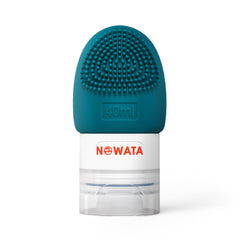
The refillable silicone bottle with brush, and the brush matters more on barn grime than we expected it to
-
A small towel, drinking water, sunscreen, and a plastic bag for the shoes that walked through the barn. Footwear carries contamination home, and almost nobody mentions it.
If you’re comparing options, here’s what we’d tell a friend to check, our own bottle included:
-
Mechanism. Does it remove contaminants or neutralize them where they sit? On dirty hands, removal is what the guidance supports.
-
Works dirty. If the label steers you away from visibly soiled hands, it isn’t a fairground product.
-
Alcohol-free. No sting on the scratch a goat’s tooth left, and no flammability in a truck parked in August sun.
-
Ingredient transparency. A brand should publish the full list rather than summarize it as naturally derived. Ours sits at nowataclean.com. Run any name you don’t recognize through EWG’s Skin Deep database, ours included.
-
Third-party testing. Ask which lab, which protocol, which organisms. A percentage with nothing behind it isn’t data.
-
Residue. Whatever stays on the hand ends up in the mouth at a fair. Plan for that.
-
Cost per use. A bottle price means nothing without the use count next to it.
Where To Buy NOWATA Online
You can buy NOWATA™ Soap directly at nowataclean.com from $15.99. Free shipping over $45, a 30-day satisfaction guarantee, subscriptions if you’d rather stop thinking about it, and made in the USA. Bundles work well for 4-H clubs, FFA chapters, and anyone running a field trip.

“Our daughter went from a lamb pen to a funnel cake stand in about 40 seconds, past a wash station whose dispenser had been empty since Thursday.
Nobody had failed to tell us to wash her hands, but that advice needs plumbing, and a fairground on day four doesn’t reliably have any.”
— Dr. Ruslan Maidans, DDS, and Dr. Yalda Shahriari, PhD (Biomedical Engineering), NOWATA Founders
Essential Resources
We read all of these before we formulated anything, and we still send them to parents who ask. Seven sources, no marketing, in the order we’d read them.
1. See Exactly Which Germs Live In An Animal Exhibit, And Why Clean-Looking Animals Still Carry Them
The CDC’s plain-language page on animal exhibits, including the line that reframes the whole issue: you don’t have to touch an animal to get sick. Start here if you read only one.
Source: Centers for Disease Control and Prevention, Tips for Staying Healthy at Animal Exhibits
2. Get A Straight Answer On What Soap Removes That Sanitizer Leaves Behind
The Global Handwashing Partnership's FAQ page answers the question this whole guide turns on, in one line: if hands are visibly soiled, use soap, because sanitizers don't remove dirt. It also lists contact with an animal, animal feed, or animal waste among the moments that most warrant washing.
Source: The Global Handwashing Partnership, Handwashing FAQs
3. Find Out Why The FDA Tells You Not To Use Sanitizer On Dirty Hands
One short consumer page that quietly disqualifies sanitizer from most of a fairground. It changed how we thought about every no-sink setting we’d been designing for.
Source: U.S. Food and Drug Administration, Safely Using Hand Sanitizer
4. Understand The One Parasite Alcohol Sanitizer Can’t Touch
Minnesota’s health department lays out cryptosporidiosis clearly, including that pre-weaned calves and goats are the animals most commonly linked to it, and that alcohol sanitizers don’t work against it. This page explains why the petting pen is a special case.
Source: Minnesota Department of Health, About Cryptosporidiosis
5. Look At What A State Asks Fairs To Do Before The Gates Open
Washington’s zoonotic disease prevention guide for fairs is the most practical operator-side document we’ve found, down to where stations go relative to barn exits. Useful if you volunteer, exhibit, or just want to know what to look for on arrival.
Source: Washington State Department of Health, State Fair Zoonotic Disease Prevention Guidance
6. Get Pediatrician-Backed Hand Hygiene Advice Written For Real Kids
The American Academy of Pediatrics on when children should clean their hands and how the habit actually forms. It’s refreshingly honest that kids’ hands are almost always visibly dirty, which is the entire problem in one sentence.
Source: American Academy of Pediatrics, Hand Washing: A Powerful Antidote to Illness
7. Teach The Routine In Words Your Six-Year-Old Will Repeat Back
Nemours KidsHealth breaks hand hygiene into steps a child can follow without an adult standing over them. We borrowed this framing when we were working out how to explain clumping to a preschooler.
Source: Nemours KidsHealth, Hand Washing: Why It’s So Important
Supporting Statistics
Three numbers we couldn’t unsee once we’d found them.
1. Agricultural Fairs Are One Of The Largest Mass Gatherings In American Life
-
Of 72 mass-gathering respiratory disease outbreaks identified in the US between 2005 and 2014, 44 of them, or 61%, happened at state or county agricultural fairs.
-
Those fairs ran 5 to 12 days each, with a mean daily attendance of about 33,000 people.
-
Forty of the outbreaks occurred in 2011 and 2012, involving influenza A H3N2v at fairs across nine states. Most patients reported close contact with swine. Children and adolescents under 18 accounted for 92% of cases.
What this meant for us: we had filed the county fair under a small, occasional event. It is neither. It runs for a week, draws tens of thousands of people a day, and puts every one of them within arm’s reach of livestock. Nobody was building hygiene products for a room with no walls.
Source: Mass Gatherings and Respiratory Disease Outbreaks in the United States, PLOS One
2. Cryptosporidium Ranks Second Among Confirmed Animal-Contact Outbreak Causes
-
Across 474 US animal contact outbreaks with a confirmed single cause between 2009 and 2021, Salmonella led with 248 outbreaks (52%), and Cryptosporidium came second with 108 (23%), ahead of E. coli at 63 (13%) and Campylobacter at 52 (11%).
-
Ruminants were the most implicated animal category, appearing in 171 outbreaks (37%).
-
The second most common germ-and-animal pairing in the entire dataset was Cryptosporidium with ruminants, at 88 outbreaks.
What this meant for us: this is the finding that pushed us toward mechanism instead of marketing. The germ ranked second in this setting is documented as one alcohol sanitizer can’t touch, and it pairs most often with the exact animals a child gets invited to hug. That argues for lifting things off skin rather than trying to neutralize them there, which is why our formula was built around clumping. It is also why we say plainly that our own testing covers E. coli and Murine Norovirus and stops there.
3. A Running Faucet Costs About Two Gallons A Minute
-
The EPA notes that letting a faucet run for five minutes wastes roughly 10 gallons of water, which works out to about 2 gallons per minute.
-
Turning off the tap while brushing teeth saves about 8 gallons a day, and the EPA calculates that brushing twice daily plus shaving five times a week adds up to nearly 5,700 gallons a year.
-
Every NOWATA use saves up to 2 gallons, at 80 to 100 uses per bottle.
What this meant for us: Dr. Yalda is an engineer, so of course she measured our family’s total. Once that number was written down, the water math stopped being a talking point and became the reason. We didn’t build this to lecture anybody. We built it because we couldn’t unsee our own figure.
Source: U.S. Environmental Protection Agency, WaterSense Statistics and Facts
Final Thoughts And Opinion
County fairs have become good at safety. Rides get inspected. Food vendors get permits. There are first aid tents, lost child protocols, heat plans, and a veterinarian on call. Then hand hygiene gets a laminated sign and a pump station somebody is supposed to refill.
Our honest opinion, after two years in a lab and a lot longer than that walking barns with our own kids: nobody involved is being careless. The gap survives because the recommended action needs infrastructure, and infrastructure is the one thing a temporary exhibit on a grass field doesn’t reliably have on day four.
Look at what parents get to choose between:
-
Effective and safe means soap and running water. That needs a working sink, and on a fairground there sometimes is one.
-
Effective and convenient means sanitizer. It isn’t labeled for visibly dirty hands, and it doesn’t reach every germ in a barn.
-
Safe and convenient means wipes. They move dirt around more than they remove it, and they fill a trash bag doing it.
Parents were told to pick two. We got tired of that, which is a plain way of saying we went and built the fourth option. We named it after “no water” said in a New England accent, which should tell you how seriously we take ourselves and how seriously we take the problem.
To be straightforward about what it is:
-
It doesn’t replace soap and water when a sink works. Use the sink.
-
It isn’t a medical product, and it doesn’t prevent disease.
-
It has been tested against Murine Norovirus and E. coli, and not against Cryptosporidium, Salmonella, or Campylobacter. We’ll say so every time.
-
It is a doctor-made, plant-based, rinse-free soap that physically removes 99.9% of tested germs through a mechanism the science supports.*
If you take one thing from this page, take this. Don’t plan your fair day around a dispenser you haven’t seen yet. Put the answer in your bag before leaving home.
Frequently Asked Questions
Q: How Do You Wash Your Hands After A Petting Zoo When There’s No Sink?
A: Use a rinse-free soap that physically removes contaminants rather than a sanitizer that tries to neutralize them where they sit. One drop on dry hands, rub 30 to 45 seconds until clumps form, then brush the clumps off over the grass or a trash can. Under a minute. It works on hands that are already filthy, which after a barn is every hand out there.
Q: Does Hand Sanitizer Work After Touching Farm Animals?
A: Partly, not where it matters most. The CDC notes that sanitizers may not work well on heavily soiled hands, and fairground hands are soiled hands. The CDC also states that alcohol-based sanitizers are not effective against Cryptosporidium, which ranks second among confirmed causes of animal contact outbreaks. Sanitizer beats nothing at all. It shouldn’t be the whole plan after animal contact.
Q: What Germs Can Kids Pick Up At A Petting Zoo Or County Fair?
A: National outbreak surveillance points to four names most often: Salmonella, Cryptosporidium, E. coli, and Campylobacter. Ruminants, meaning goats, sheep, and calves, are the most frequently implicated animal group. The uncomfortable part is that animals shedding these germs usually look completely healthy, so you get no visual cue to work from.
Q: When Should Kids Clean Their Hands At A County Fair?
A: Three moments cover most of the risk. First, at the animal area exit rather than at the next bathroom you find. Second, before any food touches their hands. Third, before they get in the car. Add a fourth if they handled feed cups, brushes, or bedding, because outbreak investigations have repeatedly linked feeding the animals to higher illness rates.
Q: Is Rinse-Free Soap Safe To Use Right Before Fair Food?
A: That depends entirely on what stays behind, and as parents, it’s the question we cared about most. NOWATA is 100% plant-based with no alcohol, parabens, or phosphates, and the clumps carry contaminants off the skin instead of leaving them there. We tested it on our own kids’ hands before snack time before we asked anyone else to.
Q: What Should 4-H And FFA Families Keep In The Livestock Barn?
A: One bottle clipped to the tack box, one in the show box, one in the truck. Exhibitors aren’t in the barn for 15 minutes; they’re in it for four to seven days, handling feed, water, bedding, and grooming between meals eaten on the grounds. A bottle runs 80 to 100 uses, which covers a full fair week for a family. Clubs and chapters usually order bundles.
Q: Do You Need To Clean Hands If Your Child Never Touched An Animal?
A: Yes. The CDC is explicit that you don’t have to touch an animal to get sick, because the areas where animals live and roam can be contaminated. Rails, gate latches, pellet dispensers, and the ground itself all count. If your kid walked through the barn, treat it as animal contact.
Q: Where Can I Buy Rinse-Free Hand Soap For Petting Zoos And Fairs Online?
A: Direct from nowataclean.com, from $15.99, with free shipping over $45 and a 30-day satisfaction guarantee. One note worth having before you order rather than after: NOWATA contains ethyl macadamiate, derived from macadamia oil. Processing changes it substantially from its nut form, and EWG rates it low-risk, but if your child has a severe macadamia allergy, spot-test on a wrist first and ask your pediatrician. Our FAQ page carries the full allergy answer.
Put Clean Hands In Your Fair Bag Before The Gates Open
The wash station might be stocked this year, and it might have run dry on Thursday, and you won’t find out until your kid is already holding a corn dog. Buy NOWATA™ Soap online and stop letting somebody else’s dispenser decide how your fair day goes.
*Based on laboratory testing using a modified ASTM E1174 test, NOWATA physically removed over 99.9% of virus (Murine Norovirus, a human norovirus surrogate) and bacteria (E.coli) particles from skin. Results do not imply disease prevention. For hand cleansing only.
Leave a comment