




Most travelers who get sick abroad blame the food. As doctors and parents who’ve handed our own kids snacks across three continents, we’d point you somewhere closer: your hands. The CDC puts the odds of traveler’s diarrhea at 30 to 70% for trips to high-risk regions, and the germs behind it usually reach your mouth by way of your fingers. That hand-off is the one link in the chain you actually control, and this guide is the playbook we built our soap around.
TL;DR Quick Answers
Travelers’ Diarrhea Prevention
Pair smart food-and-water habits with clean hands before every meal. Your hands are where you have the most control:
-
Drink sealed or bottled water, skip the ice, and stick to food that’s cooked through or that you peel yourself.
-
Clean your hands before anything reaches your mouth, every meal.
-
When safe water isn’t available, use a rinse-free, plant-based soap to physically lift dirt and germs off your skin, then finish with a 60% (or higher) alcohol sanitizer right before you eat.
-
Don’t rinse under tap water you wouldn’t drink. It can put germs right back on hands you just cleaned.
Top 5 Takeaways
-
Traveler’s diarrhea is the most predictable illness you’ll face on the road. The CDC puts attack rates at 30 to 70% over a two-week trip.
-
Bacteria cause roughly 75 to 90% of cases, and most of it spreads by the fecal-oral route. Your hands are the bridge.
-
Careful eating and drinking help, but they won’t cover you on their own. Hand hygiene is the lever you control most directly.
-
Handwashing with soap is one of the cheapest, most effective ways to cut diarrheal disease risk anywhere you go.
-
When there’s no safe water, doctors recommend a simple order: rinse-free soap first, then a 60% alcohol sanitizer.

What Is Traveler’s Diarrhea? Montezuma’s Revenge, Bali Belly, And Other Names
Traveler’s diarrhea is a gut infection you pick up away from home, usually from food or water carrying germs your body hasn’t met yet. Symptoms tend to show up within a few days: loose stools, cramps, and sometimes a low fever. Most cases clear on their own within five days.
The condition collects nicknames as you go: Montezuma’s revenge in Mexico, Bali belly in Indonesia, Delhi belly in India. Same illness, different passport stamp. Bacteria cause most of it, though viruses and parasites play their part too. If you want the clinical rundown of the bacterial, viral, and parasitic causes of traveler’s diarrhea, the medical literature entry is a solid place to start.
How Travelers Actually Get Sick: The Hand-Hygiene Connection
The chain runs the same way almost every time. A germ lands on a surface or on food. You touch it, then you touch your lips or your child’s face, and infection follows hours later. You can’t inspect the kitchen behind the counter or watch how the street vendor washes up. What you can manage is what’s on your fingers before they meet your mouth. That’s why doctors treat hand hygiene as the most controllable prevention step on any trip. Break the chain in your hands, and you break it everywhere.
It’s the same route behind most cases of a stomach bug while traveling, whether the trigger turns out to be bacterial or viral.
How To Prevent Traveler’s Diarrhea: A Doctor’s Layered Checklist
Here’s the routine we run before and during every family trip abroad:
-
Be picky about food and water. Bottled or sealed water, no ice, and food that’s cooked through or that you peel yourself. Honest caveat: careful eaters still get sick, because restaurant hygiene isn’t yours to control.
-
Clean your hands before every meal. This is the step that’s entirely yours, so treat it as non-negotiable.
-
Pack a layered kit. Rinse-free soap for dirty hands, sanitizer for the moment before you eat, and wipes for surfaces.
-
Ask your clinician about bismuth subsalicylate. Taken in advance, it lowers the odds for some travelers. Worth a conversation before you fly.
-
Know when to get help. A high fever, blood in your stool, or signs of dehydration mean you should see a doctor instead of toughing it out, especially with young kids.
Crowded family destinations like theme parks pack the touchpoints even tighter, so keep the routine going on vacation, too.
The Hand-Hygiene Hierarchy When Safe Water Isn’t An Option
When the tap water isn’t safe to drink, it isn’t safe to rinse with either. Washing under it can put germs right back on the hands you just cleaned. Here’s the order we use on the road:
-
Soap and clean water you can actually trust. Still, the gold standard when you can get it.
-
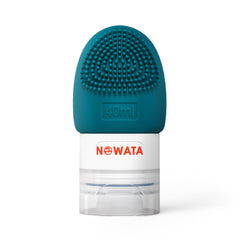
Rinse-free, plant-based soap. NOWATA™ uses a clumping technology that physically lifts dirt, oil, and 99.9% of germs off the skin.* It needs no water and no rinsing, and it brushes off without leaving residue. It removes what’s on your hands instead of only disinfecting them, which is exactly what dirty hands need.
-
Alcohol sanitizer, 60% or higher. Best saved for last, on already-clean hands, right before food.
-
Wipes. For surfaces only: tray tables, door handles, and the hotel remote.
We get into the entire system in our complete guide to hand hygiene for international travel.
*Based on laboratory testing using a modified ASTM E1174 test, NOWATA physically removed over 99.9% of virus (Murine Norovirus, a human norovirus surrogate) and bacteria (E. coli) particles from skin. Results do not imply disease prevention. For hand cleansing only.

“After two years building NOWATA™ and more family trips than we can count, here’s what stuck: the travelers who stay well don’t lean on one product. They lean on the order, soap first on dirty hands, sanitizer last, right before the meal.”
— Dr. Ruslan Maidans, DDS & Dr. Yalda Shahriari, PhD, NOWATA Founders
Essential Resources On Travelers’ Diarrhea Prevention
Researching how to stay healthy abroad? These are the seven sources we’d hand a friend before they board. Each one answers a different question, and together they cover what every traveler should know before going.
1. The Clinical Reference Doctors Actually Use
The CDC Yellow Book chapter sorts risk by region, names the pathogens behind most cases, and spells out when to carry a 60% alcohol sanitizer. It’s the reference clinicians reach for first.
Source: CDC Yellow Book: Travelers’ Diarrhea Chapter
2. The Peer-Reviewed Research Worth Your Time
This NIH-hosted clinical review pulls together the evidence on how common traveler’s diarrhea is, what causes it, and which prevention and self-treatment steps hold up. Read it when you want science, not sound bites.
Source: NIH Clinical Review Of Traveler’s Diarrhea
3. A Plain-Language Explainer For Quick Answers
Cleveland Clinic’s overview is the fastest way to get symptoms, causes, and warning signs, written for patients instead of specialists.
Source: Cleveland Clinic: Traveler’s Diarrhea Overview
4. The Symptoms-And-Causes Primer Worth Bookmarking
Mayo Clinic lays out how to spot traveler’s diarrhea, the contaminated food and water that trigger it, and what to do if it hits mid-trip.
Source: Mayo Clinic: Traveler’s Diarrhea Symptoms And Causes
5. The Pediatrician-Backed Guide For Traveling Families
The American Academy of Pediatrics covers what parents actually search for: protecting kids abroad, which foods and drinks to skip, and the precautions that move the needle on childhood illness.
Source: AAP HealthyChildren: Precautions For International Travel
6. The Hard Data On Who Gets Sick, And Why
This peer-reviewed study of U.S. travelers who get sick shows that poor hand hygiene raises the odds. Useful proof that the hand stage matters.
Source: American Journal Of Tropical Medicine And Hygiene Study
7. The Official U.S. Pre-Trip Health Briefing
The State Department’s Medicine and Health page is the government’s starting point for vaccinations, destination guidance, insurance, and traveling with kids or chronic conditions.
Source: U.S. State Department: Medicine And Health
Supporting Statistics
We spent two years researching this category before NOWATA™ launched. A few numbers stuck with us more than the rest.
Handwashing Breaks The Exact Chain That Makes Travelers Sick
About 525,000 children die each year from diarrheal diseases, and washing with soap is one of the cheapest ways to stop the fecal-oral spread behind them. We built NOWATA™ for the gap where soap is needed but clean water isn’t.
Source: Global Handwashing Partnership: Health Impact Of Handwashing
The Childhood Burden In Our Own Hemisphere Is Hard To Ignore
In the Americas alone, an estimated 35 million children under five get foodborne illnesses every year. That’s the same contaminated-food exposure clean hands before eating help guard against. As parents who’ve traveled through Latin America with toddlers, this is the figure that hits us hardest.
Source: PAHO/WHO: Five Keys To Safer Food
Progress Is Happening, But The Risk Still Lives Where Travelers Go
Diarrheal diseases caused 1.2 million deaths worldwide in 2021, down from 2.9 million in 1990. That’s progress worth noting, and yet the burden still sits in the regions Americans visit most.
Source: IHME: Global Burden Of Diarrheal Disease
Final Thoughts And Opinion
Here’s our honest take after years of research and a lot of trips of our own: most travel hygiene advice is built around a single product, and that’s exactly where it falls short.
-
Sanitizer brands assume your hands are already clean.
-
Traditional soap guides assume there’s safe water to rinse with.
-
Wipe brands assume there’s a trash can nearby and that grime just wipes off.
Across most of the places Americans actually travel, none of those assumptions hold. What works is a layered system used in order: rinse-free soap on dirty hands, sanitizer right before eating, wipes for surfaces.
The layer most guides leave out is rinse-free soap. That gap, dirty hands with no safe water to rinse them, is the exact problem we built NOWATA™ to solve. It won’t prevent illness on its own, and no product can. What it does is close the hole in the routine that sends a lot of travelers homesick. We see that same gap on a cruise ship and at a market stall halfway around the world: dirty hands and no safe water, right when a meal is coming up.
Frequently Asked Questions
Q: How Do I Prevent Traveler’s Diarrhea?
A: Pair careful food-and-water choices with clean hands before every meal. When there’s no safe water, use rinse-free soap first, then a 60% alcohol sanitizer right before you eat.
Q: Is Traveler’s Diarrhea The Same As Montezuma’s Revenge Or Bali Belly?
A: Yes. Those are regional nicknames, Montezuma’s revenge in Mexico, Bali belly in Indonesia, Delhi belly in India, for the same condition.
Q: Does Washing My Hands Really Lower The Risk?
A: It’s one of the most effective, lowest-cost things you can do. Clean hands break the fecal-oral chain behind most cases, and it’s the prevention step you fully control.
Q: What If There’s No Clean Water To Wash With?
A: Don’t rinse under water you wouldn’t drink. Use a rinse-free, plant-based soap to lift dirt and germs off your skin, then add a 60% alcohol sanitizer right before you eat.
Q: Can I Bring NOWATA On A Plane?
A: Yes. The travel-size tube fits standard TSA carry-on limits at 3.4 oz / 100 ml or smaller, and one tube lasts 80 to 100 uses, enough for most multi-week trips.
Q: Does NOWATA Remove Norovirus and E. coli?
A: In Swiss laboratory testing using a modified ASTM E1174 protocol, NOWATA physically removed over 99.9% of Murine Norovirus (a human norovirus surrogate) and E. coli particles from skin.* Results don’t imply disease prevention. It’s for hand cleansing only and doesn’t replace medical care or the CDC’s food-and-water precautions.
*Based on laboratory testing using a modified ASTM E1174 test, NOWATA physically removed over 99.9% of virus (Murine Norovirus, a human norovirus surrogate) and bacteria (E. coli) particles from skin. Results do not imply disease prevention. For hand cleansing only.
Q: When Should I See A Doctor?
A: A high fever, bloody stools, or signs of dehydration mean it’s time to get care instead of waiting it out, especially for young children.
Pack The Soap That Works Where Water Doesn’t
Preventing traveler’s diarrhea comes down to clean hands before every meal, even when there’s no sink in sight. Buy NOWATA™ online before your next trip and pack the same doctor-made, rinse-free soap we keep in our own family’s carry-on.
*Based on laboratory testing using a modified ASTM E1174 test, NOWATA physically removed over 99.9% of virus (Murine Norovirus, a human norovirus surrogate) and bacteria (E.Coli) particles from skin. Results do not imply disease prevention. For hand cleansing only.
Leave a comment